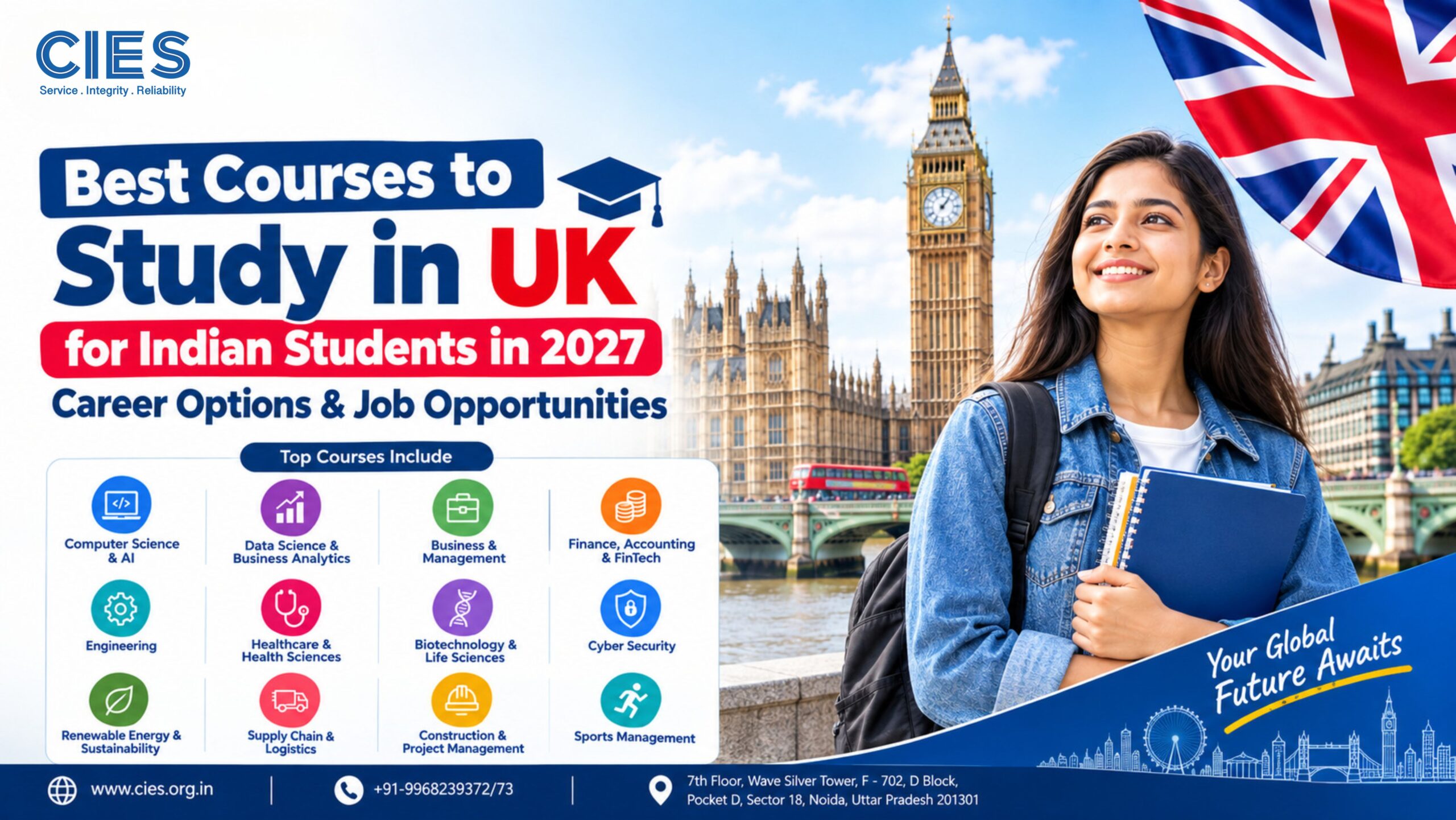
Looking for the best courses to study in UK for Indian students in 2027? The UK offers a wide range of undergraduate and postgraduate programmes in areas such as Artificial Intelligence, Computer Science, Data Science, Business Analytics, Finance, Engineering, Healthcare, Cyber Security, Biotechnology, Sustainability and Supply Chain Management.
For Indian students, choosing the right UK course should involve more than looking at university rankings or current popularity. Your academic background, career objective, tuition budget, location preference, course curriculum, practical experience and future employment plans should all be considered before applying.
This guide explains the best courses to study in the UK in 2027 for Indian students, potential career options, job-related skills, factors to consider when selecting a course, the current Graduate visa position and how to plan your UK study application.
Quick Answer: What Are the Best Courses to Study in the UK in 2027?
There is no single best UK course for every Indian student. The most relevant areas to research for 2027 include:
- Computer Science & Artificial Intelligence – technology and software careers
- Data Science & Business Analytics – data and analytical careers
- Business & Management – management, consulting and business careers
- Finance, Accounting & FinTech – finance and financial technology
- Engineering – technical, infrastructure and engineering careers
- Healthcare & Health Sciences – healthcare, research and management
- Biotechnology & Life Sciences – pharmaceutical and research careers
- Cyber Security – information and digital security
- Renewable Energy & Sustainability – environmental and energy careers
- Supply Chain & Logistics – procurement and operations
- Construction & Project Management – infrastructure and project careers
- Sports Management – sports business, events and marketing
The right course depends on your academic profile, career goals, budget and eligibility.
Table of Contents
- Why Study in the UK in 2027?
- Best Courses to Study in UK for Indian Students
- Computer Science & Artificial Intelligence
- Data Science & Business Analytics
- Business & Management
- Finance, Accounting & FinTech
- Engineering
- Healthcare & Health Sciences
- Biotechnology & Life Sciences
- Cyber Security
- Renewable Energy & Sustainability
- Supply Chain & Logistics
- Construction & Project Management
- Sports Management
- Career & Job Opportunities
- How to Choose the Right UK Course
- UK Graduate Visa 2027
- UK Study Application Process
- Frequently Asked Questions
Why Study in the UK in 2027?
The UK is a popular destination for Indian students because it provides access to internationally recognised universities, specialised programmes and a wide variety of academic disciplines.
Depending on the university and course, students can find programmes with practical projects, industry exposure, placements, research opportunities and career support.
- Globally recognised UK qualifications
- Wide choice of undergraduate and postgraduate courses
- Specialised master’s programmes
- Industry-focused modules and projects
- International learning environment
- Opportunities to develop professional skills
- Potential post-study work options for eligible graduates
Important: UK immigration rules can change. Students should check the latest official UK Government guidance before making decisions about study, work or immigration.
 Best Courses to Study in UK for Indian Students in 2027
 Best Courses to Study in UK for Indian Students in 2027
The following course areas can be considered by Indian students depending on their educational background and career objectives.
1. Computer Science & Artificial Intelligence
Computer Science and Artificial Intelligence are popular study areas for students interested in software, technology, machine learning, automation and digital products.
Popular UK Courses
- MSc Computer Science
- MSc Artificial Intelligence
- MSc Machine Learning
- MSc Software Engineering
- MSc Cloud Computing
- MSc Artificial Intelligence & Data Science
Potential Career Options
- Software Engineer
- Software Developer
- AI Engineer
- Machine Learning Engineer
- Cloud Engineer
- Technology Consultant
Useful skills: Python, SQL, cloud technologies, machine learning, software development and data analytics.
2. Data Science & Business Analytics
Data Science and Business Analytics courses can suit students who enjoy mathematics, statistics, technology and business decision-making.
Popular Courses
- MSc Data Science
- MSc Business Analytics
- MSc Data Analytics
- MSc Business Intelligence
- MSc Financial Data Science
- MSc AI & Data Science
Potential Career Options
- Data Analyst
- Data Scientist
- Business Analyst
- Business Intelligence Analyst
- Analytics Consultant
- Risk Analyst
3. Business & Management
Business and management courses can be considered by students interested in leadership, consulting, marketing, entrepreneurship, operations and international business.
Popular Courses
- MSc Management
- MSc International Business
- MSc Marketing
- MSc International Marketing
- MSc Entrepreneurship
- MBA
- MSc Operations Management
Potential Career Options
- Business Analyst
- Management Consultant
- Marketing Professional
- Business Development Professional
- Project Manager
- Operations Professional
4. Finance, Accounting & FinTech
Students interested in financial markets, accounting, investment, banking and financial technology can explore specialised finance courses in the UK.
Popular Courses
- MSc Finance
- MSc Accounting & Finance
- MSc Investment Management
- MSc Financial Technology
- MSc Banking
- MSc Financial Risk Management
Potential Career Options
- Financial Analyst
- Investment Analyst
- Risk Analyst
- FinTech Analyst
- Finance Associate
- Accounting Professional
5. Engineering
Engineering remains a broad field with opportunities to specialise in mechanical, civil, electrical, electronic, aerospace, automotive, chemical and renewable-energy disciplines.
Popular Engineering Courses
- Mechanical Engineering
- Civil Engineering
- Electrical Engineering
- Electronic Engineering
- Aerospace Engineering
- Automotive Engineering
- Chemical Engineering
- Renewable Energy Engineering
- Engineering Management
Potential Career Areas
- Engineering
- Manufacturing
- Infrastructure
- Energy
- Automotive
- Aerospace
- Project Management
6. Healthcare & Health Sciences
Indian students interested in healthcare, research, health policy and healthcare management can explore a range of health-related programmes.
Popular Courses
- Public Health
- Healthcare Management
- Biomedical Sciences
- Clinical Research
- Health Data Science
- Nursing
- Physiotherapy
Important: Some UK healthcare professions are regulated. Check the relevant professional registration requirements before choosing a course.
7. Biotechnology & Life Sciences
Biotechnology and life sciences can be relevant for students with backgrounds in biology, biotechnology, pharmacy, biomedical science and related disciplines.
- MSc Biotechnology
- MSc Biomedical Science
- MSc Molecular Biology
- MSc Bioinformatics
- MSc Pharmaceutical Science
- MSc Clinical Research
- MSc Genetics
Potential Career Areas
- Biotechnology
- Pharmaceutical Research
- Clinical Research
- Laboratory Science
- Bioinformatics
- Life Sciences Research
8. Cyber Security
Cyber security is an important area for students interested in protecting networks, systems, applications and digital information.
Popular Courses
- MSc Cyber Security
- MSc Information Security
- MSc Network Security
- MSc Digital Forensics
- MSc Cyber Security Management
Potential Career Options
- Cyber Security Analyst
- Security Consultant
- Security Engineer
- Information Security Analyst
- Digital Forensics Analyst
- SOC Analyst
9. Renewable Energy & Sustainability
Students interested in climate, clean energy, environmental management and sustainable development can explore programmes connected with sustainability and renewable energy.
- Renewable Energy Engineering
- Sustainability Management
- Environmental Management
- Environmental Science
- Energy Systems
- Sustainable Development
- Environmental Engineering
Potential Career Options
- Sustainability Consultant
- Environmental Consultant
- Energy Analyst
- Renewable Energy Professional
- ESG Professional
- Environmental Project Manager
10. Supply Chain & Logistics
Supply chain and logistics programmes can suit students interested in international trade, procurement, transportation, operations and business management.
- MSc Supply Chain Management
- MSc Logistics Management
- MSc Procurement & Supply
- MSc Operations Management
- MSc International Logistics
Potential Career Options
- Supply Chain Analyst
- Procurement Analyst
- Logistics Manager
- Operations Analyst
- Demand Planner
- Supply Chain Consultant
11. Construction & Project Management
Students with backgrounds in civil engineering, architecture, construction or business can consider specialised programmes in construction and project management.
- MSc Construction Management
- MSc Project Management
- MSc Quantity Surveying
- MSc Civil Engineering
- MSc Infrastructure Management
Potential Career Options
- Project Manager
- Construction Manager
- Quantity Surveyor
- Project Coordinator
- Construction Consultant
12. Sports Management
Sports management combines sports with business, marketing, events, sponsorship, operations and analytics.
- MSc Sports Management
- Sports Business
- Sports Marketing
- Sports Analytics
- International Sports Management
Potential Career Options
- Sports Marketing
- Sports Operations
- Sports Event Management
- Sponsorship
- Sports Business Development
- Sports Analytics
UK Courses & Career Opportunities: Quick Comparison
| Study Area | Popular Courses | Potential Career Areas |
|---|---|---|
| Technology | Computer Science, AI, Software Engineering | Software, AI, Cloud |
| Data | Data Science, Business Analytics | Data & Analytics |
| Business | Management, International Business | Management, Consulting |
| Finance | Finance, Accounting, FinTech | Finance, Banking, Risk |
| Engineering | Civil, Mechanical, Electrical | Engineering, Infrastructure |
| Healthcare | Public Health, Health Sciences | Healthcare, Research |
| Life Sciences | Biotechnology, Biomedical Science | Pharma, Research |
| Cyber Security | Cyber Security, Information Security | Security, Risk |
| Sustainability | Renewable Energy, Sustainability | Energy, ESG |
| Supply Chain | Supply Chain, Logistics | Procurement, Operations |
How to Choose the Right Course to Study in the UK in 2027
Choosing the right UK course should be a structured decision. Use the following factors before submitting your university application.
1. Match the Course With Your Academic Background
Check whether your previous degree and subjects meet the university’s academic requirements. Some courses may require specific subjects, grades, work experience or prerequisite knowledge.
2. Define Your Career Goal
Think about the type of role or industry you want to enter after graduation. Then compare courses based on the skills and knowledge they provide.
3. Compare Course Modules
Two courses with similar names can have very different modules. Read the curriculum carefully and identify whether it includes practical projects, specialist modules, research or industry exposure.
4. Check University Location
Location can influence accommodation costs, transport, lifestyle and access to local employers. Consider the overall cost of studying in the city rather than looking only at tuition fees.
5. Research Practical Experience
- Internships
- Industry projects
- Placement opportunities
- Employer events
- Career services
- Professional certifications
6. Check Current Immigration Rules
If your plans include working in the UK after graduation, understand the current Student visa and Graduate route requirements before choosing your programme.
Job Opportunities After Studying in the UK
The career opportunities available after graduation depend on your course, skills, experience, employer requirements and the wider UK labour market.
Students can improve their employability by combining their academic qualification with practical experience and relevant technical or professional skills.
Skills That Can Support Employability
Technology: Programming, cloud computing, software development, and AI.
Data: Python, SQL, statistics, data visualization, and analytics.
Business: Excel, communication, analytics, and project management.
Finance: Financial modelling, Excel, analytics, and accounting knowledge.
Marketing: Digital marketing, SEO, analytics, and content.
Cyber Security: Networking, cloud security, security operations, and risk management.
UK Graduate Visa 2027: What Indian Students Need to Know
The UK Graduate route is an important consideration for international students who plan to work or look for work after completing an eligible UK course.
Current Graduate Route Position
- Eligible bachelor’s and master’s graduates applying from 1 January 2027 will generally receive 18 months.
- Eligible PhD and doctoral graduates can receive 3 years.
- The Graduate route is unsponsored.
- Eligible graduates can work or look for work.
- The Graduate route itself is not a settlement route.
Always verify the latest rules on GOV.UK before making an immigration decision. Visa policies and requirements may change.
How to Apply to Study in the UK in 2027
Step 1: Choose Your Course
Identify suitable programmes based on your academic background, career objectives, budget and preferred location.
Step 2: Shortlist UK Universities
Compare course content, entry requirements, tuition fees, facilities, location, practical experience and career support.
Step 3: Prepare Your Documents
- Passport
- Academic transcripts
- Degree certificate
- English-language test result, where required
- CV
- Statement of Purpose
- Letters of Recommendation, where required
- Work experience documents, where applicable
Step 4: Submit University Applications
Submit your applications according to the requirements and deadlines of your selected universities.
Step 5: Meet Offer Conditions
If your offer is conditional, complete the required conditions before proceeding with the next stage.
Step 6: Apply for Your Student Visa
Once you have the required university documentation, check the latest UK Student visa requirements and prepare your visa application.
🎓 Need Help Choosing Your UK Course?
Get a personalised profile evaluation and guidance on suitable UK courses and universities.
Frequently Asked Questions
What are the best courses to study in UK for Indian students in 2027?
Popular areas to research include Computer Science, Artificial Intelligence, Data Science, Business Analytics, Finance, Engineering, Healthcare, Cyber Security, Biotechnology, Sustainability and Supply Chain Management. The right course depends on your academic background and career goals.
Which course is best for a job in the UK?
There is no course that guarantees a job. Career outcomes depend on the course, your skills, practical experience, employer requirements and labour-market conditions. Students should research their target occupation before selecting a degree.
What are the best master’s courses in the UK for Indian students?
Students can explore master’s programmes in areas such as Artificial Intelligence, Computer Science, Data Science, Business Analytics, Finance, Engineering, Cyber Security, Public Health, Biotechnology, Supply Chain Management and Sustainability, depending on their previous qualification.
Can Indian students work in the UK after studying?
Eligible international graduates may apply for the UK Graduate route after completing an eligible course. Current rules should be checked before applying because immigration requirements can change.
How long is the UK Graduate Visa for students graduating in 2027?
Under the current rules, eligible bachelor’s and master’s graduates applying for the Graduate route from 1 January 2027 generally receive 18 months. Eligible doctoral graduates can receive three years.
Is IELTS required to study in the UK?
English-language requirements vary by university and course. Some institutions may accept IELTS, while others may accept alternative English-language tests or specific previous-study qualifications. Always check the requirements of your chosen university.
How much does it cost to study in the UK?
The total cost depends on your university, course, city, accommodation and lifestyle. Compare tuition fees and estimated living costs for each university before making your final decision.
When should Indian students apply for the UK 2027 intake?
Students should begin researching courses and universities well before their intended intake. Application deadlines vary by university and course, and some popular programmes can have earlier or limited application windows.
💡 CIES Tip for Indian Students
Don’t choose a UK course only because it is trending. Compare your academic profile, career goal, course curriculum, university, tuition fee, location, practical experience, employability skills and current immigration rules before making your decision.
Conclusion: Choosing the Right UK Course for 2027
For Indian students planning to study in the UK in 2027, selecting the right course should be based on a combination of academic suitability, career objectives, skills development, university choice, budget and future plans.
Courses in technology, AI, data science, business analytics, finance, engineering, healthcare, cyber security, life sciences, sustainability, and supply chain management can provide different academic and professional pathways.
There is no universally best UK course. The best-fit programme is the one that matches your profile, interests and realistic career objectives.
🇬🇧 Planning to Study in the UK in 2027?
Get personalised guidance on UK courses, universities, eligibility, applications, scholarships and student visa requirements.
Book FREE counselling with CIES Overseas Education.
Related Study Abroad Resources
🎓 Get FREE UK Study Counselling
Share your academic profile and get guidance on suitable UK courses and universities.