September 18, 2026

Study Sports Management in the UK and build practical experience through internship-focused programmes designed to connect classroom learning with the sports industry. For Indian students interested in sports business, event management, sports marketing, athlete management and the commercial side of sport, the UK offers a wide range of specialised study options.

At CIES Overseas Education, we help students explore suitable UK universities and courses, understand entry requirements, prepare their applications and plan their student visa journey. If your goal is to study Sports Management in the UK with an internship opportunity, our counsellors can help you identify programmes where internship or work-placement components are included in the course structure.

Quick Answer: Studying Sports Management in the UK can give international students access to specialised sports-business education and practical industry exposure. Some programmes include internships, placements or work-based learning as part of their structure. Always check the exact university course details and placement terms before applying.

Why Study Sports Management in the UK?

The UK has a long-established sports ecosystem covering professional clubs, sporting events, fitness businesses, media, sponsorship, marketing, sports technology and athlete development. This makes the country an attractive destination for students who want to study the business and management side of sport.

A UK Sports Management degree can combine management theory with areas such as sports marketing, finance, event management, leadership, sponsorship, sports law, operations and strategy.

Key Benefits of Studying Sports Management in the UK

  • Specialized sports management and Sports Business programmes
  • Opportunities for practical and industry-focused learning
  • Exposure to the UK’s professional and commercial sports ecosystem
  • Potential internship, placement or work-based learning opportunities on selected courses
  • International classroom environment
  • Career-focused modules covering sports marketing, events and management
  • Opportunities to build professional networks during your studies

What Is Sports Management?

Sports Management is the study of how sports organizations, clubs, events, facilities, athletes and commercial sports businesses are managed. It combines principles from business management with the specific needs of the sports industry.

Depending on the university and programme, students may study sports marketing, sponsorship, event management, sports finance, leadership, operations, media, strategy, governance and athlete management.

What Will You Study in a UK Sports Management Course?

The exact curriculum varies by university, but common subjects can include:

Module Area What You May Learn
Sports Marketing Branding, promotions, fan engagement and marketing strategy
Sports Events Planning, operations, logistics and event delivery
Sports Finance Budgeting, financial planning and commercial decision-making
Sponsorship Commercial partnerships, sponsorship activation and relationship management
Sports Leadership Leadership, teamwork and organisational management
Sports Strategy Strategic planning and business development in sports

What Does “100% Internship” Mean?

If you are searching for Sports Management in the UK with 100% internship, it is important to understand what the offer actually includes. Universities may describe practical experience differently — for example, as an internship, work placement, professional placement, industry project or work-based learning.

Therefore, rather than assuming that every Sports Management course automatically guarantees an internship, students should check whether the selected programme has a formal placement component and what eligibility, availability and employer requirements apply.

CIES Tip: Before accepting an offer, ask the university whether the internship is compulsory or optional, whether it is integrated into the course, how long it lasts, and whether students need to secure the placement themselves.

Sports Management Courses in the UK with Internship Opportunities

Students can find different types of UK programmes related to Sports Management and Sports Business. Depending on your academic background and career goals, you may consider:

  • BA Sports Management
  • BSc Sports Management
  • BA Sports Business Management
  • MSc Sports Management
  • MSc International Sports Management
  • MSc Sports Business
  • Sports Marketing programmes
  • Sports Events Management programmes

Some programmes may offer placement years or industry-based learning, while others may focus more heavily on academic research. Your choice should depend on your previous education, budget, career goals and preferred area of the sports industry.

Who Can Study Sports Management in the UK?

Sports Management can be suitable for students from different academic backgrounds. Depending on the course, universities may accept students who have completed school, undergraduate studies or a relevant degree.

For Undergraduate Students

Students who have completed Class 12 or an equivalent qualification can explore undergraduate Sports Management, Sports Business and related programmes. Specific academic requirements vary between universities.

For Graduates

Graduates can explore postgraduate options such as MSc Sports Management, MSc Sports Business or related programmes. Some universities may accept applicants from business, management, sports, marketing or other academic backgrounds.

English Language Requirements

Most UK universities require international students to demonstrate English-language proficiency. Depending on the institution and program, accepted tests may include IELTS, PTE, TOEFL, or other recognized English-language qualifications.

The required score varies by university and course. Some institutions may also consider previous education in English or other accepted evidence, subject to their own policies.

Need IELTS Preparation?

Prepare for your UK study journey with CIES IELTS coaching, including structured preparation, mock tests and personalised feedback.

Explore IELTS Coaching →

Career Opportunities After Sports Management in the UK

A Sports Management qualification can help students develop skills relevant to different areas of the sports and entertainment ecosystem. Depending on their skills and experience, graduates may explore roles such as:

  • Sports Marketing Executive
  • Sports Event Coordinator
  • Sports Business Development Executive
  • Sports Operations Coordinator
  • Sports Sponsorship Executive
  • Sports Club Administrator
  • Sports Partnership Executive
  • Sports Communications Executive
  • Sports Facility Manager
  • Sports Business Analyst

Actual career opportunities depend on the individual’s qualifications, experience, skills, employer requirements and the relevant immigration and employment rules applicable at the time.

How Much Does It Cost to Study Sports Management in the UK?

The cost of studying sports management in the UK depends on the university, degree level, course duration and location. International students should consider both tuition fees and living expenses when preparing their budget.

Expense What to Consider
Tuition Fees Varies by university and programme
Accommodation Depends on city and accommodation type
Food & Transport Depends on lifestyle and location
Visa & Other Costs Includes applicable visa, health and application-related costs

Because fees and immigration charges can change, students should verify the latest figures with their chosen university and official UK sources before making financial decisions.

How CIES Helps You Study Sports Management in the UK

Choosing the right Sports Management course involves more than simply selecting a university. You need to match your academic profile, budget, career interests and preferred location with the right programme.

CIES Overseas Education provides guidance throughout the study-abroad process, including:

  • Profile evaluation
  • UK university and course selection
  • Course and entry requirement guidance
  • Application assistance
  • SOP and documentation guidance
  • Scholarship guidance where applicable
  • Student visa guidance
  • Pre-departure support
  • Accommodation and air-ticketing support

Want to Study Sports Management in the UK?

Get your profile evaluated and explore UK Sports Management programmes with internship or placement opportunities.

BOOK FREE COUNSELLING

Frequently Asked Questions

1. Can I study Sports Management in the UK with an internship?

Yes. Some UK Sports Management programmes include internships, placements or other forms of practical industry experience. However, the structure differs between universities, so students should verify the specific course details before applying.

2. Is a 100% internship guaranteed with every Sports Management course?

No. An internship or placement is not automatically guaranteed for every course. Students should check whether the programme formally includes a placement and understand its eligibility, availability and employer requirements.

3. What can I do after studying Sports Management in the UK?

Graduates may explore opportunities in sports marketing, event management, sponsorship, sports operations, business development, communications, sports facilities and other sports-business functions.

4. Do I need IELTS to study Sports Management in the UK?

Many UK universities require international students to demonstrate English-language proficiency. IELTS is one commonly accepted test, but requirements vary by institution and course.

5. Can Indian students study Sports Management in the UK?

Yes. Indian students can apply to eligible UK Sports Management programmes if they meet the university’s academic, English-language and other admission requirements and satisfy the applicable student visa requirements.

6. How can CIES help me choose a Sports Management course in the UK?

CIES can evaluate your academic profile and help you explore suitable UK universities and Sports Management programmes based on your education, budget, preferred location and career goals.

CIES Quick Tip for Students

If your main priority is an internship, don’t select a university based only on the phrase “100% internship.” Ask for the exact placement structure, duration, eligibility criteria, location, assessment method and whether the university or student is responsible for securing the placement.

Ready to Start Your UK Sports Management Journey?

If you want to study Sports Management in the UK and are specifically looking for programmes with internship or placement opportunities, CIES Overseas Education can help you explore suitable options.

Get your profile evaluated, explore suitable universities and start your UK study journey with CIES.

Book Your Free Counselling

Fill in the enquiry form below and our study-abroad counsellors can help you explore suitable UK Sports Management courses.

    Disclaimer: Course availability, tuition fees, internship/placement structures, admission requirements, scholarships and visa rules may change. “100% Internship” should be understood only where a specific university/course formally confirms a guaranteed or integrated placement arrangement under its stated terms. Students should verify the latest information with the university and relevant official authorities before applying.
    June 18, 2026

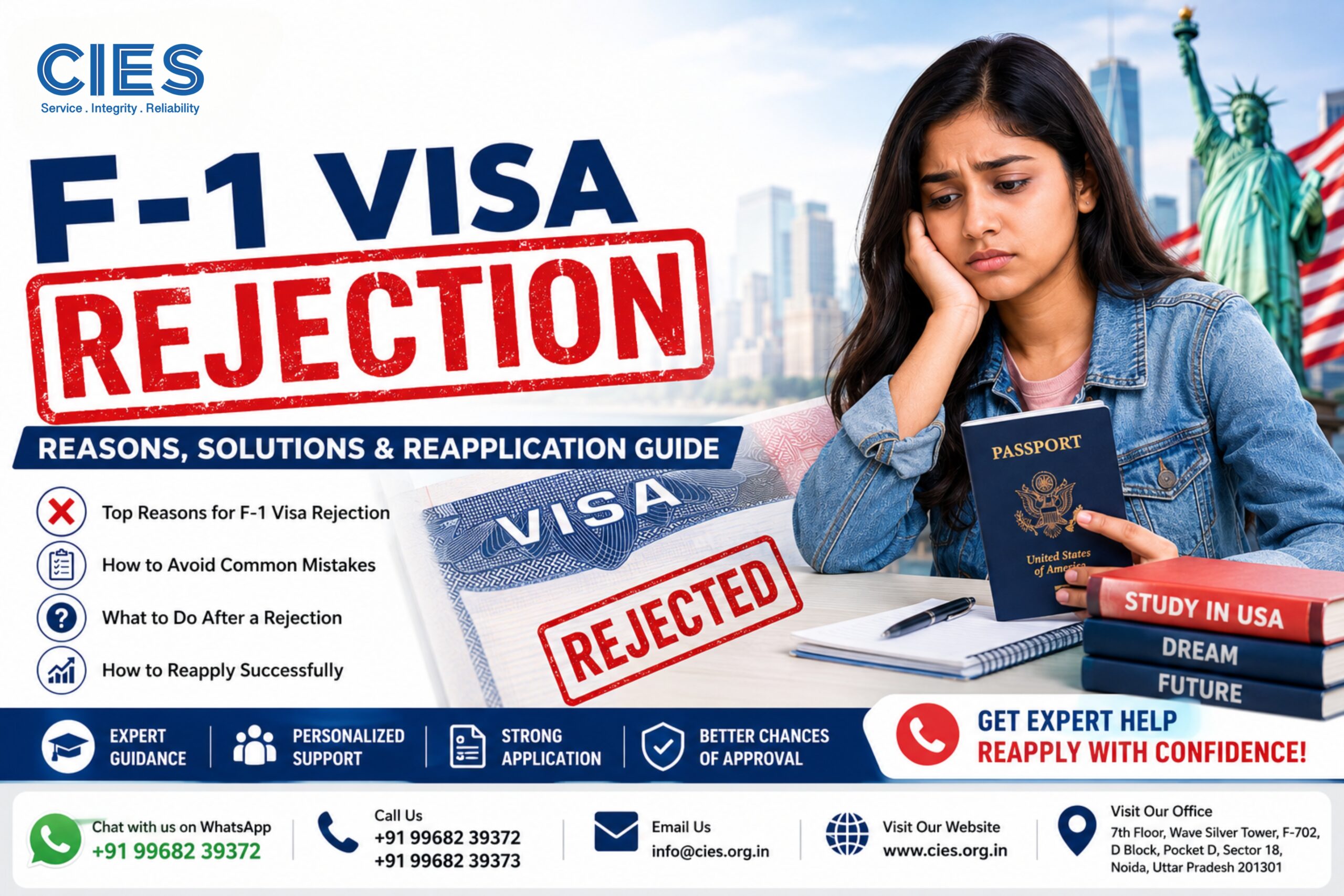
    F-1 visa rejection can be disappointing, but it doesn’t necessarily mean your dream of studying in the United States is over. Every year, many international students, including Indian applicants, face F-1 visa refusals for reasons such as insufficient financial evidence, weak interview performance, or failure to demonstrate strong ties to their home country.

    Understanding the common causes of an F-1 visa rejection and preparing a stronger application can significantly improve your chances of approval on your next application. This guide explains why F-1 visas are refused, how to avoid common mistakes, and what steps to take after a rejection.

    What Is an F-1 Visa Rejection?

    An F-1 visa rejection occurs when a U.S. consular officer determines that an applicant does not meet the eligibility requirements for a student visa under U.S. immigration law.

    A refusal does not permanently prevent you from applying again. Many students receive approval after addressing the issues that led to their initial refusal.

    Top F-1 Visa Rejection Reasons

    1. Insufficient Financial Proof

    Applicants must demonstrate that they have enough funds to cover tuition, living expenses, and other educational costs.

    Common financial issues include:

    • Low bank balance
    • Unverified source of funds
    • Incomplete financial documents
    • Weak sponsorship evidence

    How to Avoid It

    • Provide recent bank statements.
    • Include education loan sanction letters.
    • Submit scholarship documents.
    • Clearly explain your funding source.

    2. Poor Visa Interview Performance

    The visa interview is one of the most important stages of the application process.

    Mistakes include:

    • Nervousness
    • Inconsistent answers
    • Memorized responses
    • Lack of confidence

    Tips to Improve

    • Practice common interview questions.
    • Speak naturally and confidently.
    • Keep answers concise and relevant.

    3. Lack of Genuine Student Intent

    Visa officers must be satisfied that your primary purpose is education.

    Possible Red Flags:

    • Limited knowledge of your course
    • Unclear career goals
    • No valid reason for selecting the university

    Be Prepared to Explain:

    • Why this university?
    • Why this course?
    • How does it support your career?

    4. Failure to Demonstrate Strong Home Country Ties

    Applicants should demonstrate that they intend to comply with the terms of their visa and depart the United States after completing their studies unless they later become eligible for another lawful immigration pathway.

    Examples of Strong Ties:

    • Family relationships
    • Future employment opportunities
    • Property ownership
    • Business interests
    • Career plans in your home country

    5. Incomplete or Incorrect Documents

    Missing or inaccurate documents can negatively affect your application.

    Always verify that you have:

    • Valid Passport
    • Form I-20
    • DS-160 Confirmation
    • SEVIS Fee Receipt
    • Academic Transcripts
    • Financial Documents

    6. Inconsistent Information

    Any mismatch between your documents and interview responses can create concerns.

    Examples:

    • Different sponsor names
    • Incorrect educational history
    • Conflicting financial information

    Consistency is essential.

    7. Weak Academic Profile

    Low grades alone do not automatically result in a refusal, but you should be prepared to explain:

    • Study gaps
    • Backlogs
    • Academic challenges
    • Course changes

    Provide honest explanations supported by evidence whenever possible.

    What Happens After an F-1 Visa Rejection?

    After a refusal:

    • Your passport is usually returned.
    • You receive a refusal notice.
    • The officer may indicate the applicable section of U.S. immigration law.
    • You may submit a new application if you address the previous concerns.

    Can You Reapply After an F-1 Visa Rejection?

    Yes.

    There is generally no mandatory waiting period before reapplying. However, reapplying without addressing the reasons for refusal is unlikely to produce a different outcome.

    Before submitting a new application:

    • Review the refusal reason.
    • Strengthen your financial evidence.
    • Improve interview preparation.
    • Update any changed information.
    • Submit accurate documentation.

    How to Increase Your Chances of Approval

    Choose the Right University

    Understand:

    • Course curriculum
    • University rankings
    • Career outcomes
    • Program duration

    Prepare Strong Financial Documents

    • Bank Statements
    • Fixed Deposits
    • Education Loan Approval
    • Sponsor Income Proof
    • Scholarship Letters

    Practice Interview Questions

    • Why do you want to study in the USA?
    • Why this university?
    • Who is sponsoring your education?
    • What are your future career plans?
    • Why not study in your home country?

    Be Honest

    Never submit fake documents or misleading information.

    Honest answers build credibility.

    Organize Your Documents

    Carry documents in a logical order to make it easier for the officer to request additional information.

    Common Myths About F-1 Visa Rejection

    Myth: One rejection means permanent refusal.
    Fact: Many students receive approval after improving their applications.

    Myth: Hiring an agent guarantees approval.
    Fact: Only a U.S. consular officer can approve or refuse a visa.

    Myth: Memorized answers improve your chances.
    Fact: Honest and natural responses are generally more effective.

    F-1 Visa Rejection Checklist

    ✅ Valid Passport
    ✅ Form I-20
    ✅ DS-160 Confirmation
    ✅ SEVIS Receipt
    ✅ Appointment Confirmation
    ✅ Financial Documents
    ✅ Academic Records
    ✅ Admission Letter
    ✅ Clear Study Plan
    ✅ Confidence & Honesty

    Frequently Asked Questions (FAQs)

    Why is an F-1 visa rejected?

    Common reasons include insufficient financial proof, weak interview performance, inconsistent information, or failure to establish eligibility.

    Can I apply again after an F-1 visa rejection?

    Yes. You may submit a new application after addressing the issues that led to the previous refusal.

    Is there a waiting period?

    There is generally no mandatory waiting period, but it is advisable to reapply only after strengthening your application.

    Will a previous rejection affect future applications?

    No. Each visa application is assessed independently based on its own merits.

    Does an education loan improve approval chances?

    An approved education loan can strengthen your financial evidence, but visa approval depends on your overall eligibility and interview performance.

    Final Thoughts

    An F-1 visa rejection can be discouraging, but it is often an opportunity to build a stronger application. By understanding the reasons for refusal, improving your financial documentation, preparing thoroughly for the interview, and presenting a clear academic plan, you can significantly improve your chances of success.

    Preparation, honesty, confidence, and consistency remain the keys to a successful F-1 visa application.

    FAQ

    Q1. What is the most common reason for an F-1 visa rejection?
    Insufficient financial documentation and weak interview performance are among the most common reasons.

    Q2. Can I reapply after an F-1 visa rejection?
    Yes. You can submit a new application after addressing the issues that led to the previous refusal.

    Q3. How can I avoid an F-1 visa rejection?
    Prepare accurate documents, demonstrate sufficient financial support, answer interview questions honestly, and clearly explain your study plans.

    Q4. Does a previous F-1 visa rejection affect future applications?
    No. A previous refusal does not automatically result in future refusals, as each application is evaluated independently.

    🎓 Rejected F-1 Visa? Don’t Give Up—Your USA Dream Is Still Possible!

    An F-1 Visa rejection is not the end of your study abroad journey. Many students receive approval on their second attempt with stronger documentation, better interview preparation, and expert guidance.

    🚀 How CIES Overseas Education Helps You Reapply Successfully

    ✅ One-to-One Visa Counselling
    ✅ Detailed F-1 Visa Rejection Analysis
    ✅ University & Course Selection Guidance
    ✅ Financial Documentation Review
    ✅ DS-160 Form Assistance
    ✅ SOP & Student Profile Evaluation
    ✅ Mock Visa Interview Preparation
    ✅ Complete F-1 Visa Reapplication Support

    🎁 Book Your FREE F-1 Visa Assessment

    Our experienced counsellors will help you:

    • 🎯 Identify why your F-1 visa was refused
    • 📄 Strengthen your financial documentation
    • 🗣 Prepare confident visa interview answers
    • 📚 Build a stronger student profile
    • 📈 Improve your chances of visa approval
    • 🛂 Create a personalized visa reapplication strategy

    ⭐ Why Students Trust CIES Overseas Education

    ✔ Experienced USA Education Counsellors
    ✔ Personalized Visa Reapplication Strategy
    ✔ End-to-End Admission & Visa Assistance
    ✔ Expert Mock Interview Sessions
    ✔ Scholarship & Education Loan Guidance
    ✔ Trusted by Thousands of Study Abroad Aspirants

    ⏳ Don’t Let One Rejection Stop Your Future!

    Many students receive their U.S. student visa after improving their application. Let our experts help you turn your F-1 visa rejection into a successful approval.


    🎓 Book Your FREE Visa Assessment Now

      June 18, 2026

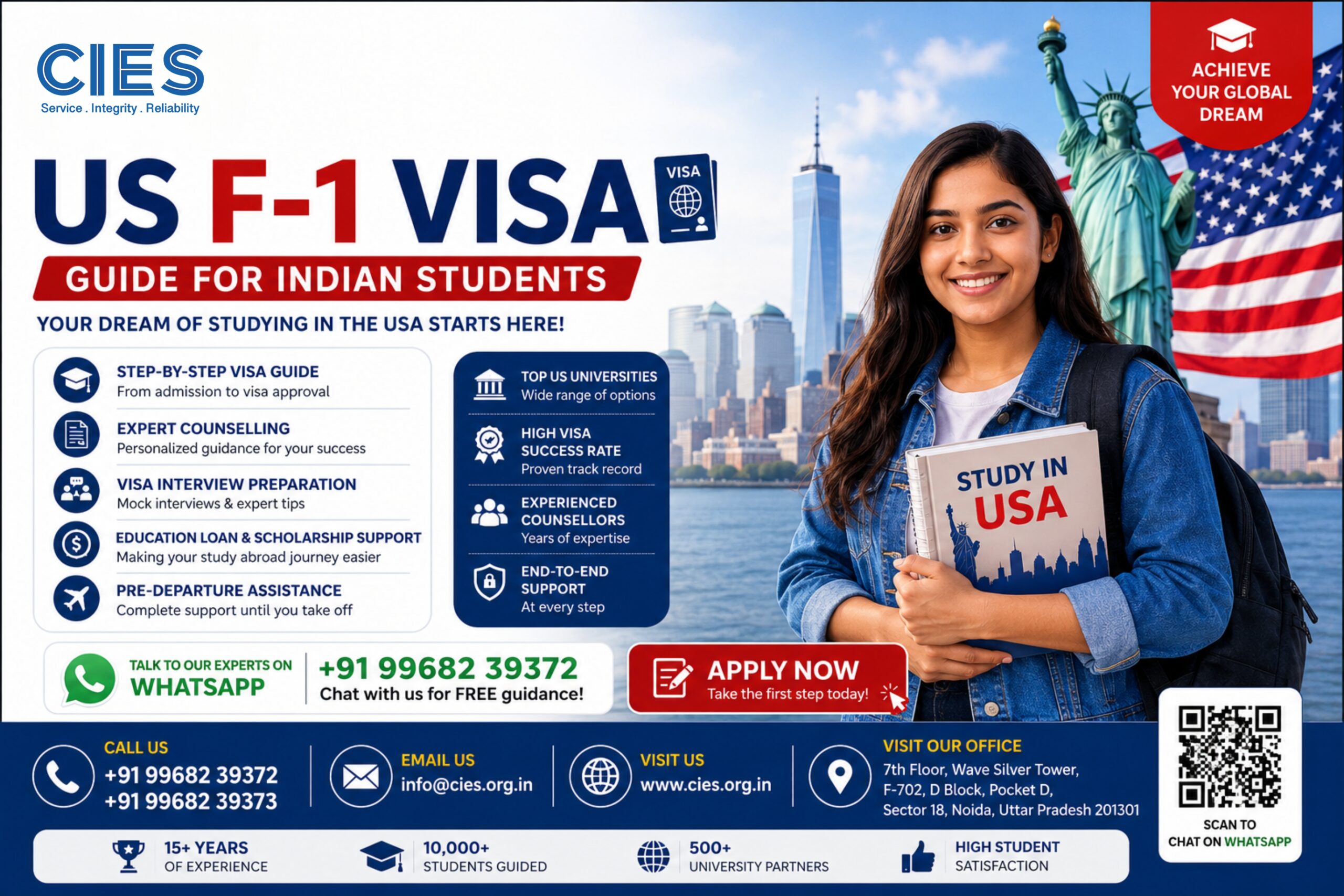
      Planning to study in the United States? Obtaining a US F-1 Visa is one of the most important steps for Indian students pursuing higher education in the USA. Whether you’re applying for a bachelor’s, master’s, MBA, or PhD program, understanding the US F-1 Visas process—including eligibility, required documents, fees, interview preparation, and processing time—can help you avoid delays and improve your chances of approval. This complete 2026 guide covers everything you need to know before starting your study abroad journey.

      What is a US F-1 Student Visa?

      A US F-1 Visa is a non-immigrant student visa issued to international students enrolled in full-time academic programs at SEVP-approved institutions in the United States.

      The F-1 visa allows students to:

      • Study full-time
      • Live legally in the USA during their program
      • Work under authorized conditions
      • Apply for Optional Practical Training (OPT)
      • Become eligible for STEM OPT Extension (if applicable)

      For Indian students, the F-1 visa is the standard visa for studying in the United States.

      Why Indian Students Choose the USA

      The United States continues to be one of the world’s leading study destinations because of:

      • Globally ranked universities
      • Flexible education system
      • Research opportunities
      • Industry exposure
      • High graduate employability
      • Strong earning potential
      • International networking
      • Diverse student community

      Popular Study Destinations

      • New York
      • California
      • Texas
      • Illinois
      • Massachusetts
      • Florida
      • Pennsylvania

      Who Can Apply for US F-1 Visas for Indian Students?

      You are eligible if you:

      • Receive admission from a SEVP-approved institution
      • Obtain Form I-20
      • Demonstrate sufficient financial resources
      • Show strong academic intent
      • Prove non-immigrant intent
      • Meet English language requirements (if required)
      • Have a valid passport

      Eligibility Requirements

      1. Admission Letter

      You must receive admission into a recognized US institution.

      Examples include:

      • Universities
      • Colleges
      • Community Colleges
      • Language Institutes
      • Graduate Schools

      2. Form I-20

      Your institution issues Form I-20, which confirms:

      • Admission
      • Program duration
      • Estimated education cost
      • Student information
      • SEVIS ID

      Without a Form I-20, you cannot apply for an F-1 visa.

      3. Financial Capability

      Applicants must demonstrate enough funds to cover:

      • Tuition fees
      • Living expenses
      • Health insurance
      • Accommodation
      • Travel costs

      Financial proof may include:

      • Bank statements
      • Education loan approval
      • Scholarship letters
      • Fixed deposits
      • Sponsor documents
      • Income Tax Returns

      4. Genuine Student Intent

      Visa officers want assurance that applicants genuinely intend to study.

      You should clearly explain:

      • Why this university?
      • Why this course?
      • Future career plans
      • Why not study in India?

      Documents Required for US F-1 Visas for Indian Students

      Mandatory Documents

      • Valid Passport
      • DS-160 Confirmation Page
      • Visa Appointment Confirmation
      • Form I-20
      • SEVIS Fee Receipt
      • Passport-Size Photograph
      • Admission Letter

      Academic Documents

      • Class 10 Mark Sheet
      • Class 12 Mark Sheet
      • Graduation Certificates
      • Academic Transcripts
      • Degree Certificate
      • IELTS/TOEFL/PTE Scores (if applicable)
      • GRE/GMAT Scores (if applicable)

      Financial Documents

      • Bank Statements
      • Fixed Deposits
      • Education Loan Sanction Letter
      • Income Tax Returns
      • Salary Slips
      • Sponsor Affidavit
      • CA Statement (Optional)

      Step-by-Step Application Process

      1. Secure University Admission
      2. Receive Form I-20
      3. Pay the SEVIS I-901 Fee
      4. Complete the DS-160 Application
      5. Pay the MRV Visa Fee
      6. Schedule VAC & Visa Interview Appointments
      7. Attend Biometrics Appointment
      8. Attend the F-1 Visa Interview

      US F-1 Visa Fees (2026)

      Fee Approximate Amount
      SEVIS I-901 Fee USD 350
      Visa Application (MRV) Fee USD 185
      Passport Photos Additional
      Travel Expenses Varies

      Note: Always verify the latest government fees before making a payment.

      US F-1 Visa Processing Time

      Stage Estimated Time
      University Admission 2–8 Weeks
      I-20 Issuance 1–3 Weeks
      Visa Appointment Depends on Availability
      Visa Decision Usually, immediately after the interview
      Passport Delivery 3–10 Working Days

      Common US F-1 Visa Interview Questions

      • Why do you want to study in the USA?
      • Why did you choose this university?
      • Why this course?
      • Who is sponsoring your education?
      • What do your parents do?
      • What are your future plans?
      • Do you intend to work in the USA?
      • Why not study in India?

      Tips to Crack the F-1 Visa Interview

      • Answer confidently.
      • Be honest.
      • Keep responses concise.
      • Maintain eye contact.
      • Know your university and course.
      • Understand your financial documents.
      • Explain your career goals clearly.
      • Carry organized documents.

      Reasons for F-1 Visa Rejection

      • Weak financial documentation
      • Inconsistent answers
      • Poor interview performance
      • Lack of genuine academic intent
      • Inadequate English communication
      • Missing documents
      • Insufficient ties to the home country

      Can Indian Students Work on an F-1 Visa?

      On-Campus Employment

      • Up to 20 hours per week during academic sessions
      • Full-time during official breaks

      Curricular Practical Training (CPT)

      Students may participate in internships that are part of their academic curriculum.

      Optional Practical Training (OPT)

      Eligible graduates can work in their field of study after completing their degree.

      STEM OPT Extension

      Students with qualifying STEM degrees may apply for an extended period of work authorization, subject to current regulations.

      Benefits of US F-1 Visas for Indian Students

      • Access to globally recognized education
      • Exposure to advanced research
      • Networking opportunities
      • Practical work experience
      • Career development
      • International exposure
      • Diverse campus environment
      • Potential pathway to long-term professional opportunities through separate immigration processes

      Expert Tips for Visa Success

      • Apply early.
      • Select the right university.
      • Prepare strong financial documents.
      • Practice interview questions.
      • Review your DS-160 carefully.
      • Keep your answers truthful.
      • Stay calm during the interview.
      • Demonstrate clear academic objectives.

      Frequently Asked Questions (FAQs)

      Is the F-1 visa mandatory for Indian students studying in the USA?

      Yes. Most full-time academic programs require an F-1 student visa.

      How much bank balance is required?

      There is no fixed amount. You should demonstrate sufficient funds to cover tuition and living expenses as listed on your Form I-20.

      Can parents sponsor my education?

      Yes. Parents, guardians, or other eligible sponsors can financially support your education.

      Can I work while studying?

      Yes. F-1 students may work on campus under authorized conditions and may become eligible for CPT or OPT.

      Can my visa be rejected?

      Yes. Incomplete documentation, insufficient financial evidence, or failure to establish eligibility may lead to refusal.

      How early can I apply?

      Students can generally apply for an F-1 visa after receiving their Form I-20 and paying the required fees. Visa issuance and entry timelines are subject to current U.S. regulations.

      Final Thoughts

      Obtaining US F-1 visas for Indian students is a crucial step toward studying in one of the world’s leading education systems. With careful planning, complete documentation, strong financial preparation, and a confident interview, Indian students can significantly improve their chances of visa approval.

      Start your application early, understand every requirement, and prepare thoroughly for your interview. With the right guidance and preparation, your journey to studying in the United States can begin smoothly.

      🎓 Ready to Study in the USA?

      Turn your Study Abroad Dream into reality with CIES Overseas Education. Our experienced counsellors provide personalized guidance to help you secure admission to top U.S. universities and prepare a successful US F-1 Student Visa application.

      🌟 Why Choose CIES Overseas Education?

      ✅ Free Career & University Counselling
      ✅ Personalized Course & University Selection
      ✅ Application & Admission Assistance
      ✅ SOP, LOR & Resume Guidance
      ✅ Scholarship & Education Loan Support
      ✅ Complete US F-1 Visa Documentation
      ✅ Mock Visa Interview Preparation
      ✅ Pre-Departure Briefing & Ongoing Support

      🎁 Book Your FREE 30-Minute Counselling Session

      Get personalized guidance from our experienced study abroad experts and receive:

      • 🎯 Personalized Study Plan
      • 🏛 University Shortlist Based on Your Profile
      • 💰 Tuition Fee & Living Cost Estimates
      • 🎓 Scholarship Opportunities
      • 📄 US F-1 Visa Eligibility Assessment
      • 🛂 Complete Admission & Visa Roadmap

      🏆 Why Students Trust CIES Overseas Education

      ✔ Personalized One-to-One Counselling
      ✔ Experienced Study Abroad Advisors
      ✔ Admission Assistance for Top Global Universities
      ✔ Transparent Admission Process
      ✔ End-to-End Visa Support
      ✔ High Student Satisfaction

      ⏳ Limited FREE Counselling Slots Available!

      Our expert counsellors offer personalized guidance to a limited number of students each week. Reserve your FREE consultation today and begin your journey to studying in the USA with confidence.


      🎓 Book Your FREE Consultation Now


      📍 Contact CIES Overseas Education

      Address:
      7th Floor, Wave Silver Tower, F-702, D Block, Pocket D,
      Sector 18, Noida, Uttar Pradesh 201301

      📞 Phone: +91-9968239372 / +91-9968239373

        FAQ

        Q1. What is the US F-1 visa for Indian students?

        The US F-1 visa is a non-immigrant student visa that allows Indian students to pursue full-time academic studies at SEVP-approved institutions in the United States.

        Q2. What documents are required for an F-1 visa?

        Key documents include a valid passport, Form I-20, DS-160 confirmation, SEVIS fee receipt, visa appointment confirmation, academic transcripts, and financial proof.

        Q3. How much does a US F-1 visa cost in 2026?

        Applicants generally pay a SEVIS I-901 fee (USD 350) and a non-refundable visa application fee (USD 185), in addition to any incidental costs.

        Q4. Can Indian students work on an F-1 visa?

        Yes. Eligible students may work on-campus and, if authorized, participate in CPT or OPT programs.

        Q5. How long does the F-1 visa process take?

        Processing times vary based on university timelines, appointment availability, and administrative processing. Applying several months before your course start date is recommended.