June 16, 2026

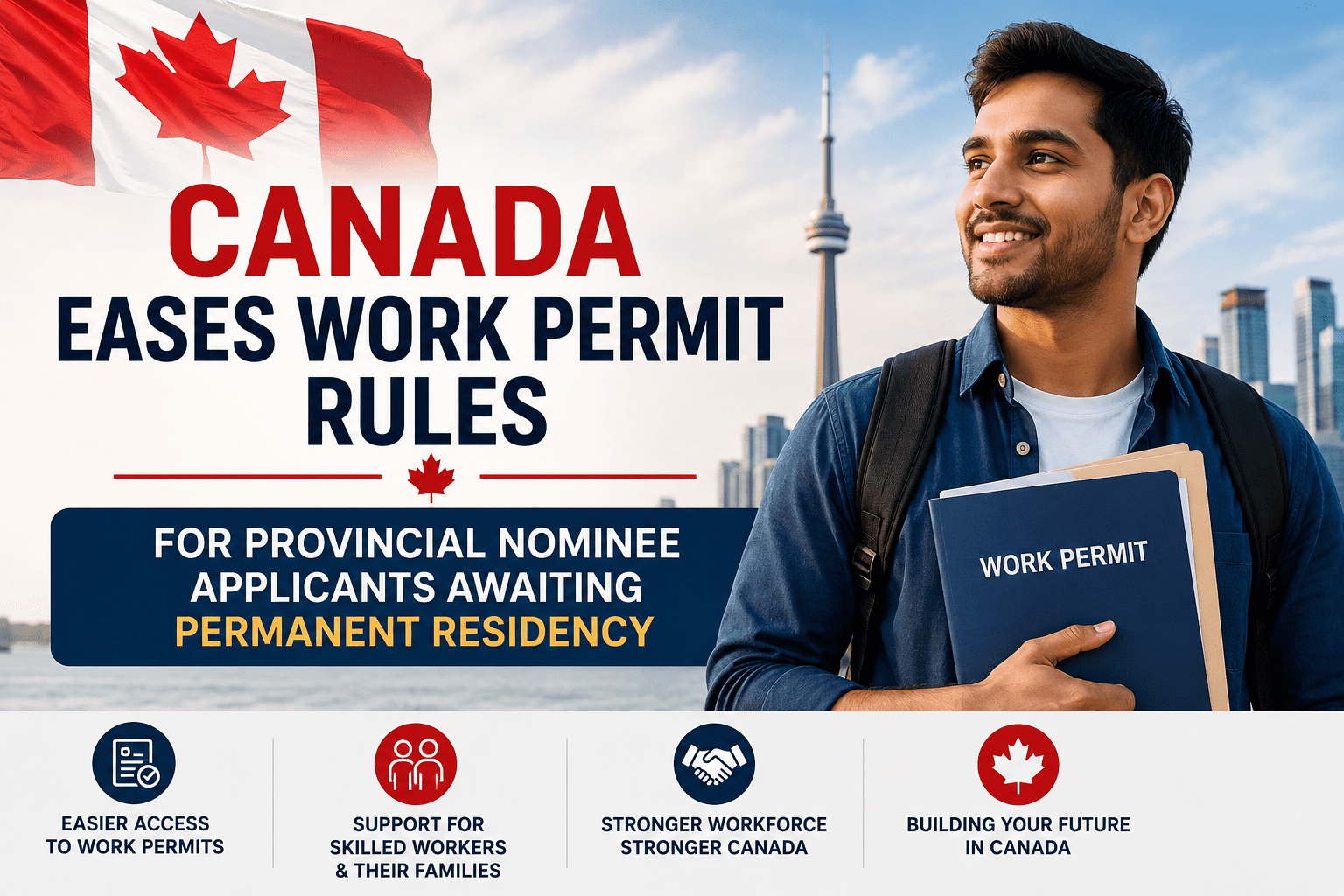
Canada has introduced temporary measures to support Provincial Nominee Program (PNP) applicants awaiting processing of their permanent residency (PR) applications. The latest update from Immigration, Refugees and Citizenship Canada (IRCC) aims to reduce uncertainty for skilled workers and their families by easing access to work permits during the PR process.

For many immigrants, maintaining legal work status while awaiting a PR decision has been a significant challenge. The new policy provides relief by allowing eligible applicants to continue contributing to Canada’s workforce without facing employment interruptions.

    What Are the New Work Permit Changes?

    IRCC has announced temporary operational measures that make it easier for eligible provincial nominee applicants and their spouses to obtain work permits while awaiting permanent residency decisions.

    Under the updated guidelines:

    • Certain in-Canada PNP applicants can apply for work permits before receiving their Acknowledgement of Receipt (AOR).
    • Alternative proof of PR application submission may be accepted.
    • Eligible spouses may also qualify for open work permits.
    • The measures aim to prevent skilled workers from losing their legal status due to processing delays.

    The temporary measures took effect on June 9, 2026, and are expected to remain in place until December 31, 2026.

    Why Has Canada Introduced These Measures?

    Canada continues to rely heavily on immigration to address labour shortages across multiple sectors, including healthcare, technology, skilled trades, and construction.

    However, extended processing timelines have created challenges for many provincial nominee applicants whose existing work permits may expire before their permanent residency applications are finalized.

    The new measures are designed to:

    • Support economic growth by retaining skilled workers.
    • Reduce disruptions to employers experiencing labour shortages.
    • Improve the immigration experience for applicants and their families.
    • Facilitate smoother transitions from temporary to permanent resident status.

    Understanding the Provincial Nominee Program (PNP)

    The Provincial Nominee Program allows Canadian provinces and territories to nominate individuals with the skills and experience needed to support local economies.

    Each province operates its own streams tailored to specific labour market demands. Receiving a provincial nomination can significantly strengthen an applicant’s pathway toward Canadian permanent residence.

    Popular PNP destinations include:

    Ontario Immigrant Nominee Program (OINP)

    Ontario targets skilled workers, international graduates, and entrepreneurs through various immigration streams.

    British Columbia Provincial Nominee Program (BC PNP)

    British Columbia frequently invites candidates working in healthcare, technology, childcare, and skilled trades.

    Alberta Advantage Immigration Program (AAIP)

    Alberta focuses on addressing labour shortages through targeted pathways for eligible foreign workers.

    Manitoba Provincial Nominee Program (MPNP)

    Manitoba offers pathways for skilled workers and international graduates seeking long-term settlement opportunities.

    Who Benefits from the New Work Permit Rules?

    The updated policy may benefit:

    Provincial Nominee Applicants

    Individuals who have already submitted their permanent residency applications under eligible PNP streams may qualify for work permit support.

    Spouses and Common-Law Partners

    Eligible spouses may receive open work permits, enabling them to work for most employers in Canada.

    Canadian Employers

    Businesses experiencing labour shortages can retain experienced employees who might otherwise lose work authorization.

    Temporary Residents Transitioning to PR

    The policy supports Canada’s broader immigration objective of helping temporary residents become permanent residents.

    What Documents May Be Accepted?

    According to recent updates, applicants who have not yet received an Acknowledgement of Receipt (AOR) may be able to submit alternative documentation, including:

    • Confirmation emails showing PR application submission.
    • Proof of fee payment.
    • Other documentation requested by IRCC officers.

    These temporary accommodations address delays associated with completeness checks and AOR issuance.

    What Does This Mean for International Students and Workers?

    Many international graduates and skilled workers use provincial nominations as a pathway to permanent residence.

    The new work permit flexibility offers greater security by helping eligible individuals remain employed while awaiting immigration decisions. This continuity benefits both applicants and the Canadian economy.

    For prospective immigrants, the changes highlight Canada’s ongoing commitment to attracting and retaining global talent.

    How Does This Support Canada’s Immigration Strategy?

    Canada has consistently emphasized the importance of transitioning temporary residents into permanent residents.

    By easing work permit requirements for provincial nominee applicants, IRCC aims to:

    • Strengthen regional labour markets.
    • Encourage long-term settlement across provinces.
    • Enhance the efficiency of Canada’s immigration system.
    • Improve outcomes for newcomers already contributing to Canadian communities.

    Frequently Asked Questions (FAQs)

    Can PNP applicants apply for work permits without an AOR?

    Under the temporary measures, certain eligible in-Canada applicants may use alternative proof of PR application submission instead of an AOR.

    Do these changes apply to applicants outside Canada?

    The temporary measures primarily apply to eligible individuals already residing in Canada.

    Can spouses receive work permits?

    Yes. Eligible spouses and common-law partners may qualify for open work permits under the updated policy.

    Are these measures permanent?

    No. The current operational measures are temporary and are expected to remain in effect until December 31, 2026.

    Why has IRCC introduced these changes?

    The measures address processing delays and help prevent employment disruptions for provincial nominee applicants awaiting permanent residency decisions.

    Final Thoughts

    Canada’s decision to ease work permit rules for Provincial Nominee Program applicants awaiting permanent residency represents an important step toward creating a more flexible and supportive immigration system.

    For thousands of skilled workers and their families, the new measures provide reassurance that they can continue living and working in Canada while their permanent residence applications move through the processing stages.

    If you are planning to immigrate to Canada through the Provincial Nominee Program, staying informed about the latest IRCC updates can help you navigate the immigration process more effectively.

    Need guidance on your Canada immigration journey? Consult experienced study abroad and immigration professionals to understand your eligibility and choose the pathway that best aligns with your goals.

      May 27, 2026

      What is the TR to PR Pathway?

      The TR to PR pathway stands for Temporary Resident to Permanent Resident pathway in Canada. It allows international students, skilled workers, and temporary foreign workers to transition from a temporary visa status to permanent residency.

      This pathway has become one of the most popular immigration routes for individuals who:

      • Studied in Canada
      • Worked in Canada on a work permit
      • Have Canadian work experience
      • Want long-term settlement opportunities

      Canada encourages skilled immigrants through various PR programs to fill labor shortages and strengthen the economy.


      Why Choose Canada’s TR to PR Pathway?

      Benefits of Moving from TR to PR in Canada

      1. Permanent Residency Status

      You can live, work, and study anywhere in Canada permanently.

      2. Access to Healthcare & Benefits

      PR holders receive access to public healthcare and social benefits.

      3. Pathway to Canadian Citizenship

      After meeting residency requirements, you may apply for Canadian citizenship.

      4. Family Sponsorship Opportunities

      Permanent residents can sponsor eligible family members.

      5. Better Career Opportunities

      PR holders often receive better employment options and salary packages.


      Popular TR to PR Pathways in Canada (2026)

      1. Express Entry

      Immigration, Refugees and Citizenship Canada manages Express Entry for skilled workers.

      Main Express Entry Programs

      • Canadian Experience Class (CEC)
      • Federal Skilled Worker Program (FSWP)
      • Federal Skilled Trades Program (FSTP)

      Best For

      • International graduates
      • Skilled workers with Canadian work experience
      • High CRS score candidates

      2. Provincial Nominee Program (PNP)

      Every province in Canada offers PNP streams for international students and workers.

      Popular Provinces

      • Ontario
      • British Columbia
      • Alberta
      • Saskatchewan
      • Manitoba

      Benefits of PNP

      • Lower CRS requirements
      • Faster PR chances
      • Province-specific job opportunities

      3. Atlantic Immigration Program (AIP)

      The AIP helps skilled workers and international graduates settle in Atlantic Canada.

      Provinces Under AIP

      • Nova Scotia
      • New Brunswick
      • Prince Edward Island
      • Newfoundland and Labrador

      4. Rural and Francophone Community Immigration Pilots

      Canada is expanding immigration opportunities in smaller communities.

      These pathways support:

      • Skilled workers
      • Healthcare professionals
      • Trades workers
      • French-speaking candidates

      Eligibility for Canada TR to PR Pathway

      Basic Requirements

      Educational Qualification

      • Canadian degree, diploma, or certificate preferred
      • Foreign education may require an ECA

      Work Experience

      Most programs require:

      • Skilled Canadian work experience
      • NOC TEER category jobs

      Language Requirements

      Accepted language tests:

      Valid Status in Canada

      Applicants should usually hold:

      • Study Permit
      • Work Permit
      • Post-Graduation Work Permit (PGWP)

      Best TR to PR Route for International Students

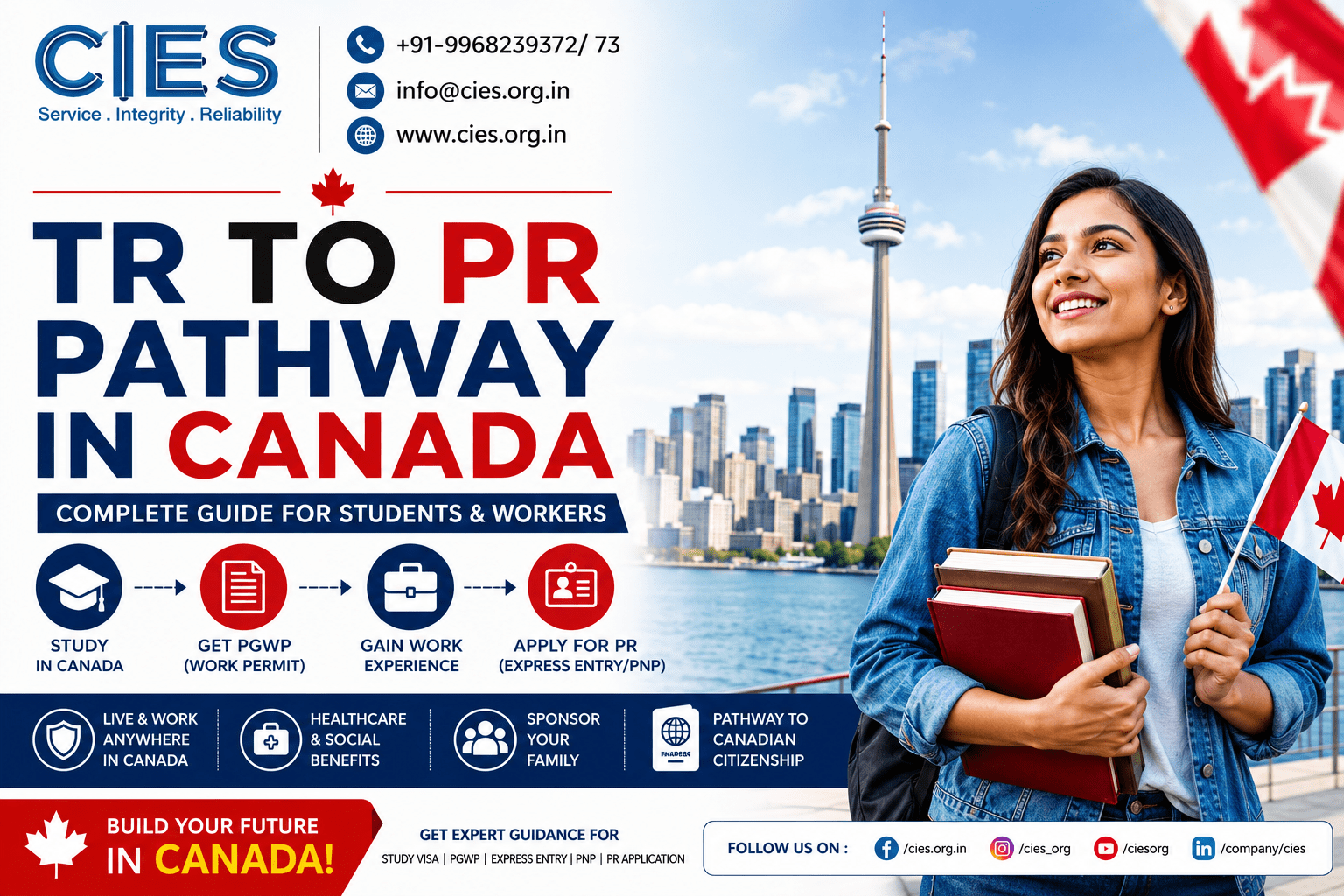
      International students in Canada commonly follow this process:

      Step 1: Study in Canada

      Choose a Designated Learning Institution (DLI).

      Step 2: Obtain PGWP

      After graduation, apply for a Post-Graduation Work Permit.

      Step 3: Gain Canadian Work Experience

      Work in a skilled occupation to increase CRS score.

      Step 4: Apply for PR

      Use:

      • Express Entry
      • PNP
      • AIP

      TR to PR Pathway for Work Permit Holders

      Temporary foreign workers can qualify through:

      • Canadian work experience
      • Employer support
      • Provincial nomination
      • Occupation-specific streams

      High-demand sectors include:

      • Healthcare
      • IT
      • Engineering
      • Construction
      • Trucking
      • Hospitality

      CRS Score Tips to Improve PR Chances

      How to Increase CRS Score

      Improve IELTS/CELPIP Score

      Higher language scores significantly improve rankings.

      Gain More Work Experience

      Canadian experience increases points.

      Apply Through PNP

      Provincial nomination adds 600 CRS points.

      Study in Canada

      Canadian education gives extra points.

      Add Spouse Credentials

      Language scores and education of spouse may help.


      Documents Required for TR to PR Pathway

      Common Documents

      • Passport
      • Study Permit or Work Permit
      • IELTS/CELPIP results
      • Educational documents
      • ECA report
      • Work experience letters
      • Proof of funds
      • Police clearance certificate
      • Medical examination

      Processing Time for Canada PR

      Processing times vary depending on the immigration program.

      Estimated Processing Times (2026)

      • Express Entry: 5–8 months
      • PNP: 8–18 months
      • AIP: 6–12 months

      Common Mistakes to Avoid

      1. Low Language Scores

      Strong IELTS or CELPIP results are crucial.

      2. Incorrect NOC Code

      Choosing the wrong TEER category may lead to refusal.

      3. Incomplete Documents

      Missing documents can delay applications.

      4. Expired Status

      Always maintain valid temporary resident status.


      Is Canada TR to PR Pathway Worth It?

      Yes. Canada remains one of the best destinations for:

      • International students
      • Skilled workers
      • Families seeking long-term settlement

      The country offers:

      • High quality of life
      • Excellent healthcare
      • Strong economy
      • Immigration-friendly policies

      Frequently Asked Questions (FAQs)

      Can international students get PR in Canada?

      Yes, many international students transition to PR through Express Entry and PNP programs.

      How much work experience is required for PR in Canada?

      Usually, at least 1 year of skilled work experience is preferred for many programs.

      Is IELTS mandatory for Canada PR?

      Yes, language proficiency proof is generally required.

      Which province is easiest for PR in Canada?

      Provinces like Saskatchewan, Alberta, and Manitoba are often considered more accessible depending on occupation demand.

      Can I apply for PR without a job offer?

      Yes, many Express Entry candidates receive PR without a job offer.


      Conclusion

      The TR to PR pathway in Canada provides excellent opportunities for international students and skilled workers who want permanent settlement. With proper planning, strong language scores, and Canadian work experience, transitioning from a temporary resident to a permanent resident becomes achievable.

      Whether you are studying, working, or planning your future in Canada, understanding the right immigration pathway can help you build a successful long-term future.


      Start Your Canada PR Journey Today

      Looking to study, work, or settle in Canada? Get expert guidance for:

      Contact CIES today for personalized Canada immigration assistance.

        🇨🇦 Apply for Canada PR – Free Consultation

        Fill out the form below and our experts will contact you shortly.

        April 30, 2026

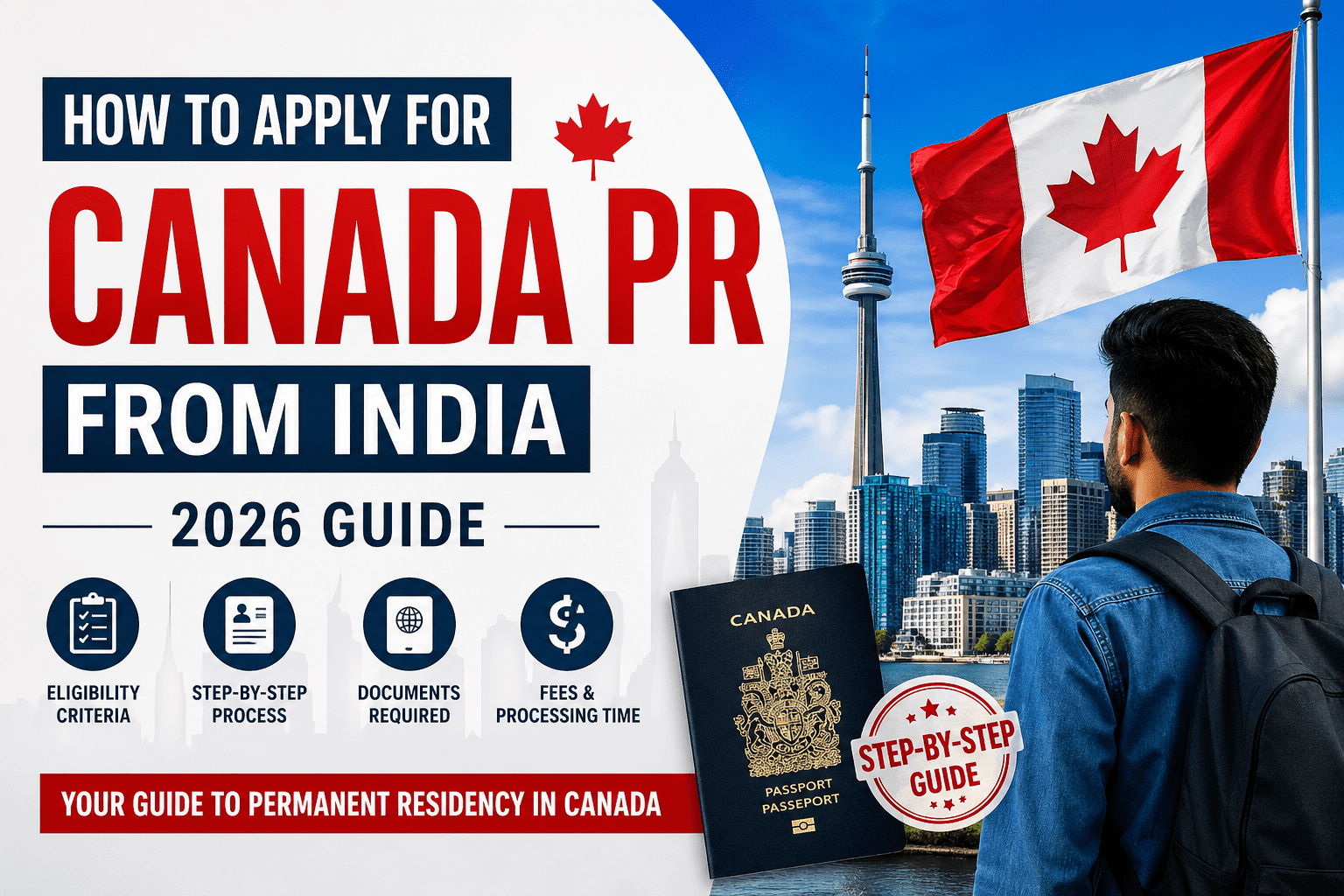
        If you’re planning to settle abroad, Canada PR (Permanent Residency) is one of the most popular options for Indian applicants. With strong job opportunities, a high quality of life, and immigrant-friendly policies, Canada continues to attract thousands of skilled professionals every year.

        📌 What is Canada PR?

        Canada PR (Permanent Residency) allows you to live, work, and study anywhere in Canada permanently. PR holders enjoy most of the benefits of Canadian citizens (except voting rights and a passport).

        🇨🇦 Benefits of Canada PR

        • Live and work anywhere in Canada
        • Access to free healthcare
        • High-paying job opportunities
        • Pathway to Canadian citizenship
        • Free education for children
        • Social security benefits

        🚀 Popular Ways to Apply for Canada PR from India

        1. Express Entry System (Most Popular)

        Express Entry is the fastest and most common way to get a PR.

        It includes 3 programs:

        • Federal Skilled Worker Program (FSWP)
        • Federal Skilled Trades Program (FSTP)
        • Canadian Experience Class (CEC)

        Managed by Immigration, Refugees and Citizenship Canada, this system ranks candidates using CRS (Comprehensive Ranking System).

        2. Provincial Nominee Program (PNP)

        Each Canadian province selects immigrants based on local job needs.

        • Ontario
        • British Columbia
        • Alberta
        • Saskatchewan

        PNP increases your CRS score by 600 points, boosting PR chances.

        3. Family Sponsorship

        If you have relatives in Canada, they can sponsor your PR application.

        4. Student Pathway → PR

        Many Indians first study in Canada and then apply for PR via work experience.

        🧾 Eligibility Criteria for Canada PR

        To apply through Express Entry, you must meet basic criteria:

        ✔ Age

        18–45 years (maximum points up to 30 years)

        ✔ Education

        Minimum bachelor’s degree (ECA required)

        ✔ Work Experience

        At least 1 year of skilled work (NOC TEER 0,1,2,3)

        ✔ Language Test

        • IELTS (General Training)
        • Minimum CLB 7 required

        ✔ Proof of Funds

        Approx:

        • Single applicant: CAD 13,000+
        • Family: Higher based on size

        📝 Step-by-Step Process to Apply for Canada PR from India

        Step 1: Check Eligibility

        Use the CRS calculator to estimate your score.

        Step 2: Take the IELTS Exam

        Choose IELTS General Training (not academic).

        Step 3: Get ECA (Educational Credential Assessment)

        Approved bodies:

        • WES
        • IQAS
        • ICES

        Step 4: Create Express Entry Profile

        Submit a profile on the IRCC portal.

        Step 5: Enter CRS Pool

        Your profile gets ranked among candidates.

        Step 6: Receive ITA (Invitation to Apply)

        A high CRS score increases chances.

        Step 7: Submit PR Application

        Upload:

        • Documents
        • Medical test
        • Police clearance

        Step 8: Biometrics & Verification

        Step 9: Get PR Visa & COPR

        After approval, you receive:

        • Confirmation of Permanent Residence (COPR)

        📂 Documents Required

        • Passport
        • IELTS scorecard
        • ECA report
        • Work experience letters
        • Bank statements
        • Medical certificate
        • Police clearance certificate

        💰 Canada PR Cost from India (Approx)

        Category Cost
        IELTS Exam ₹15,000–₹17,000
        ECA ₹15,000–₹20,000
        Application Fee CAD 1,365
        Biometrics CAD 85
        Medical ₹5,000–₹10,000

        ⏱ Processing Time

        • Express Entry: 6–8 months
        • PNP: 8–12 months

        📊 Minimum CRS Score (2026 Trend)

        • Typical cutoff: 470–520
        • With PNP: 900+

        💡 Tips to Increase Your CRS Score

        • Improve IELTS score (CLB 9+)
        • Add spouse points
        • Gain more work experience
        • Apply through PNP
        • Learn French (TEF exam)

        ⚠️ Common Mistakes to Avoid

        • Wrong IELTS type (Academic instead of General)
        • Incomplete documents
        • Low CRS without an improvement strategy
        • Incorrect work experience proof

        🎯 Why Choose Professional Guidance?

        Applying for Canada PR involves:

        • Documentation accuracy
        • Profile optimization
        • Visa strategy

        A professional consultant can significantly improve your success rate.

        📞 Final Thoughts

        Applying for Canada PR from India is a structured but competitive process. With the right planning, a high IELTS score, and proper documentation, your chances of success increase significantly.

        Whether you choose Express Entry or PNP, early preparation is key.

        Start Your Canada PR Journey Today

        Planning to move to Canada?

        👉 Get expert guidance for:

        • Profile evaluation
        • IELTS preparation
        • PR application filing
        • Visa success strategy

        📩 Contact us today for a free consultation and take the first step toward your Canadian dream!

          🇨🇦 Apply for Canada PR – Free Consultation

          Fill out the form below and our experts will contact you shortly.

          February 19, 2026

          Are you planning to secure European permanent residency through investment in 2026? The Golden Visa Malta program is one of the most secure, flexible, and prestigious residency-by-investment options available in Europe today.

          With visa-free access across the Schengen Zone, permanent residency from approval, and no mandatory stay requirement, Malta has become a top choice for high-net-worth individuals, entrepreneurs, and global families seeking European mobility and long-term security.

          This in-depth SEO authority guide covers everything you need to know:

          • What is the Golden Visa Malta

          • Malta Permanent Residence Programme (MPRP) explained

          • Investment requirements (2026 updated)

          • Complete cost breakdown

          • Eligibility criteria

          • Real estate options

          • Processing timeline

          • Tax structure

          • Benefits for families

          • Malta vs Portugal vs Greece comparison

          • FAQs

          • Risks & key considerations


          What is the Golden Visa Malta?

          The Golden Visa Malta refers to Malta’s official residency-by-investment framework known as the Malta Permanent Residence Programme (MPRP).

          This program allows non-EU nationals to obtain permanent residency in Malta by fulfilling specific investment and contribution requirements.

          Unlike many European golden visa programs that offer temporary residence permits (renewable every few years), Malta grants permanent residency status from the outset, subject to maintaining qualifying conditions.

          This makes it one of the strongest residency-by-investment programs in Europe.


          Why Malta is a Strategic European Hub

          Malta is a small island nation located in the Mediterranean Sea, strategically positioned between Europe and North Africa. Despite its size, it offers a powerful combination of:

          • Political stability

          • EU membership

          • Strong banking sector

          • English-speaking environment

          • Investor-friendly policies

          • High standard of living

          As a full member of the European Union and the Schengen Area, Malta provides residents with mobility and security within Europe.


          Key Benefits of Golden Visa Malta

          1. Permanent Residency from Day One

          Unlike Portugal and Greece, Malta grants permanent residency immediately after approval and compliance.

          There is no temporary-to-permanent transition phase.


          2. Visa-Free Travel Across Schengen

          Malta permanent residents can travel visa-free across 27+ Schengen countries for up to 90 days within a 180-day period.

          This includes travel to major EU economies such as:

          • Germany

          • France

          • Italy

          • Spain


          3. No Mandatory Physical Stay Requirement

          One of the strongest advantages of Golden Visa Malta is that there is no minimum stay requirement.

          You are not required to live in Malta full-time to maintain residency.


          4. Family Inclusion

          The program allows inclusion of:

          • Spouse

          • Dependent children

          • Dependent parents

          • Dependent grandparents

          This makes it an ideal option for families seeking European security.


          5. English as an Official Language

          Malta is one of the few European countries where English is an official language. This simplifies:

          • Property transactions

          • Legal processes

          • Education

          • Business communication


          6. Access to European Healthcare & Education

          Residents gain access to:

          • EU-standard healthcare system

          • International schools

          • European universities


          Malta Golden Visa Investment Requirements (2026 Updated)

          To qualify under the Malta Permanent Residence Programme, applicants must fulfill the following:


          1. Government Contribution

          • €58,000 (if leasing property)

          • €28,000 (if purchasing property)


          2. Real Estate Investment Requirement

          Applicants must either purchase or lease property in Malta.

          Purchase Option

          • Minimum €300,000 (South Malta or Gozo)

          • Minimum €350,000 (North or Central Malta)

          Lease Option

          • Minimum €10,000 per year (South Malta or Gozo)

          • Minimum €12,000 per year (North or Central Malta)

          Property must be maintained for at least 5 years.


          3. Donation

          • €2,000 donation to a registered Maltese non-governmental organization (NGO).


          4. Administrative & Application Fees

          • €40,000 government application fee.


          Total Cost of Golden Visa Malta

          The total cost depends on whether you choose the lease or purchase route.

          Lease Route Estimated Total:

          €150,000 – €180,000

          Purchase Route Estimated Total:

          €300,000 – €450,000+

          Additional expenses may include:

          • Legal representation

          • Due diligence fees

          • Property registration costs

          • Health insurance

          • Translation & documentation

          Compared to other European residency programs, Malta offers strong long-term value due to permanent residency status.


          Eligibility Criteria for Malta Golden Visa

          To apply, you must:

          • Be a Non-EU, Non-EEA citizen

          • Be at least 18 years old

          • Have no criminal record

          • Show a legitimate source of funds

          • Maintain €500,000 capital (including €150,000 in financial assets)

          • Hold valid international health insurance

          Malta applies strict due diligence procedures, making it one of the most reputable EU residency programs.


          Malta Real Estate Market Overview

          Malta’s property market remains stable and attractive due to:

          • Limited land supply

          • Strong rental demand

          • Growing expatriate community

          • Tourism-driven economy

          Popular property areas include:

          • Sliema

          • St. Julian’s

          • Valletta

          • Gozo

          Investors choosing the purchase route often benefit from rental income potential.


          Tax Structure in Malta

          Malta has a competitive tax framework:

          • No wealth tax

          • No inheritance tax

          • No property tax

          • Corporate tax refund system for shareholders

          Tax residency rules differ from permanent residency status. It is important to consult tax professionals before relocating.


          Processing Time for Golden Visa Malta

          The standard processing time is:

          ⏳ 4 to 6 months

          The process includes:

          1. Application submission

          2. Due diligence review

          3. Approval in principle

          4. Investment completion

          5. Biometric appointment

          6. Residency card issuance

          Processing speed depends on documentation accuracy.


          Step-by-Step Golden Visa Malta Application Process

          Step 1: Initial Assessment

          Review eligibility and investment capacity.

          Step 2: Document Preparation

          Prepare financial records, background checks, passport copies, and compliance forms.

          Step 3: Application Submission

          File application through a licensed Maltese agent.

          Step 4: Government Due Diligence

          Authorities conduct background and financial verification.

          Step 5: Approval in Principle

          Conditional approval issued.

          Step 6: Investment Completion

          Finalize property lease/purchase and make required contributions.

          Step 7: Residency Card Issuance

          Biometrics completed and residence cards granted.


          Malta Golden Visa vs Portugal vs Greece

          Feature Malta Portugal Greece
          Residency Type Permanent Temporary Temporary
          Stay Requirement None Yes None
          Processing Time 4–6 months 8–12 months 6–8 months
          Language English Portuguese Greek
          Path to Citizenship Separate Route 5 Years 7 Years

          Malta’s immediate permanent residency makes it highly competitive.


          Can a Golden Visa in Malta Lead to Citizenship?

          Permanent residency does not automatically grant Maltese citizenship.

          However, long-term residence may allow exploration of citizenship options under separate legal frameworks.

          Citizenship requirements are subject to Maltese government regulations.


          Who Should Apply for a Golden Visa in Malta?

          This program is ideal for:

          • High-net-worth individuals

          • Entrepreneurs expanding to Europe

          • Families seeking EU education

          • Investors wanting a stable European residency

          • Individuals seeking Schengen travel flexibility


          Risks & Considerations

          Before applying, consider:

          • Strict due diligence process

          • Property must be held for 5 years

          • Government policies may change

          • Professional legal assistance is strongly recommended


          Frequently Asked Questions (FAQ)

          Is Malta Golden Visa permanent?

          Yes, it grants permanent residency subject to compliance.

          Is there a minimum stay requirement?

          No.

          Can I include my parents?

          Yes, dependent parents and grandparents qualify.

          Can I work in Malta?

          Yes, permanent residents can live and work in Malta.

          How long must I maintain the investment?

          Minimum 5 years.


          Why 2026 is the Right Time to Apply

          European residency demand continues to rise. Investment thresholds across Europe are increasing.

          Malta remains competitively positioned with:

          • Permanent residency from approval

          • No relocation pressure

          • Strong EU stability

          Early applicants benefit from current regulations.


          Final Conclusion

          The Golden Visa Malta 2026 program stands as one of Europe’s most secure and flexible residency-by-investment options.

          With permanent residency status, Schengen mobility, family inclusion, and strong legal protection under EU law, Malta offers long-term stability for global investors.

          If you are seeking European residency without mandatory relocation and with strong investment security, Malta’s Golden Visa program is a powerful solution.

          🚀 Ready to Secure Your Golden Visa Malta?

          Don’t wait for investment thresholds to rise. Start your journey toward European Permanent Residency in Malta today.

          ✅ Get Visa-Free Access to 27+ Schengen Countries
          ✅ Include Your Family
          ✅ No Mandatory Stay Requirement
          ✅ Permanent Residency from Approval

          👉 Book Your Free Eligibility Assessment Now