Planning to study in Germany in 2027? Indian students should understand the latest academic eligibility criteria, APS verification requirements, the Digital Master Test (dMAT), language requirements, university application procedures and student visa rules before applying.
Germany attracts Indian students interested in engineering, computer science, artificial intelligence, business, management and other specialised fields. However, admission requirements differ by university, course and qualification.
In this guide, CIES Overseas Education explains important Germany admission considerations for 2027, including eligibility after Class 12, master’s admission, study costs, required documents and application timelines.
IMPORTANT: Admission requirements can change. Verify the latest announcements from APS India, DAAD India and your chosen university before applying.
What Are the New Germany Admission Rules for Indian Students in 2027?
Two developments deserve particular attention: the updated undergraduate eligibility criteria for specified Indian qualification pathways and the introduction of the Digital Master Test (dMAT) for affected master’s applicants.
1. Updated Class 12 Eligibility Criteria for Bachelor’s Applicants
According to the updated APS India criteria, applicants following the relevant Indian Class 12 pathways must meet a minimum overall score of 70% of the maximum achievable marks for admissions covered by the revised rules beginning with Winter Semester 2026/27.
The appropriate admission route depends on your school qualification, subjects, academic performance and any university studies you have completed.
- Class 12 pathway: Eligible students may qualify for a preparatory route, such as Studienkolleg, followed by the required qualification assessment.
- Class 12 plus one successful academic year of bachelor’s studies: Students meeting the applicable criteria may qualify for direct, subject-restricted admission in their previous field or a closely related subject.
These pathways have additional conditions. Students must verify that their qualifications, subjects, institution and academic records meet the current requirements.
Does 70% in Class 12 guarantee admission?
No. Meeting the minimum eligibility threshold does not guarantee admission. Universities may have higher grade requirements, specific subject prerequisites, language requirements, selection procedures and limited seats.
Check the latest information at APS India and DAAD India.
2. Digital Master Test (dMAT) for Certain Master’s Applicants
The Digital Master Test, known as dMAT, is another development that Indian graduates should investigate when planning master’s studies in Germany.
Under the announced framework, dMAT has been introduced as an additional element in the APS documentation and verification process for affected Indian master’s applicants. The applicable requirements depend on the current APS rules, the applicant’s category and the relevant academic field.
Applicants planning to begin a master’s programme in Summer Semester 2027 or later should check the latest official announcements to determine whether they must complete the dMAT General Academic Module.
What should master’s applicants do?
- Check whether their academic field and applicant category fall within the dMAT requirement.
- Read the latest APS India announcement before submitting documents.
- Check test registration deadlines and available sessions.
- Prepare degree certificates and academic transcripts in advance.
- Confirm whether their chosen university requires additional tests or assessments.
Important clarification: Do not assume that dMAT is compulsory for every Indian student applying to every master’s programme in Germany. Verify its applicability using the latest official guidance.
Official resources: APS India | Official dMAT website
Why Should Indian Students Start Planning Early for Germany in 2027?
Applying to a German university may involve academic verification, language examinations, document preparation, application deadlines and visa formalities. Some steps may need to be completed in a particular order.
Starting early gives you time to:
- Evaluate your academic eligibility.
- Shortlist suitable public and private universities.
- Complete APS verification where applicable.
- Prepare for English or German language examinations.
- Arrange academic records and certified translations where required.
- Meet university application deadlines.
- Plan your finances and student visa documentation.
Students targeting the Winter Semester 2027/28 should begin researching their options well in advance rather than waiting until the middle of 2027.
Germany Study Eligibility for Indian Students in 2027
Eligibility After Class 12
Indian students planning a bachelor’s degree in Germany should check the following requirements:
- Class 12 marks and subject combination.
- Recognition of their school-leaving qualification.
- Whether they need Studienkolleg and the Feststellungsprüfung.
- Whether a successful academic year of bachelor’s studies in India offers an eligible alternative pathway.
- APS documentation requirements.
- English or German language proficiency.
- Course-specific admission requirements.
The updated 70% threshold should be considered when evaluating the relevant undergraduate pathways. The correct route depends on the official eligibility criteria applicable to your qualifications.
Eligibility After a Bachelor’s Degree
Students planning a master’s degree should review:
- Recognition of their bachelor’s degree.
- Relevance of their previous degree to the intended master’s programme.
- Required subjects, credits and minimum grades.
- English or German language requirements.
- APS verification and any applicable dMAT requirement.
- Additional aptitude tests, portfolios or work experience, if required.
Meeting general eligibility criteria does not guarantee selection. Each university makes admission decisions according to its published rules.
Is the APS Certificate Mandatory for Indian Students?
APS stands for Academic Evaluation Centre. APS India verifies academic documents and qualifications issued by Indian educational institutions for students planning to study in Germany.
APS verification is generally required for Indian applicants covered by the procedure and is normally part of student visa documentation. Certain exemptions or different requirements may apply.
Documents Commonly Required for APS Verification
Depending on your qualification and application category, the documents may include:
- Class 10 certificates and marksheets.
- Class 12 certificates and marksheets.
- Bachelor’s degree certificate and semester-wise transcripts, if applicable.
- Proof of enrolment or academic progress, where relevant.
- Passport and identification details.
- Additional academic documents specified by APS.
- dMAT score report, where applicable.
The exact checklist depends on your educational background and the current verification procedure. Follow the instructions on the official APS India website.
Do You Need IELTS to Study in Germany in 2027?
IELTS is not universally mandatory for every German university. Language requirements depend on the programme’s language of instruction and the university’s admission policy.
English-Taught Programmes
English-taught programmes may accept IELTS, TOEFL or other specified proof of English proficiency. Some universities may offer exemptions or accept alternative evidence under their own rules.
German-Taught Programmes
German-taught programmes generally require recognised proof of German-language proficiency at the level specified by the university. Accepted qualifications may include TestDaF, DSH or other recognised certificates, depending on the institution.
Remember: Do not assume that every university accepts the same IELTS score or grants an exemption based on previous English-medium education. Confirm the requirements for your selected course.
How Much Does It Cost to Study in Germany in 2027?
Germany is known for its public universities, many of which do not charge general tuition fees for eligible standard degree programmes. However, students must still budget for living expenses and other education-related costs.
- Tuition fees, where applicable.
- Semester contribution.
- Accommodation and utilities.
- Food and everyday living expenses.
- Health insurance.
- Local transport and personal expenses.
- APS, language examinations and application-related charges, where applicable.
- Visa-related expenses and travel costs.
Some public universities, states and specialised programmes charge tuition fees for particular categories of students. Private universities generally have their own fee structures.
Always check the current fee schedule on your chosen university’s official website.
What Is the Blocked Account Requirement?
Students applying for a German student visa may need to demonstrate that they can support themselves financially. An accepted blocked account is one possible way to provide this evidence, although other recognised forms of financial proof may be available in eligible circumstances.
German mission guidance has previously specified €992 per month, or €11,904 for 12 months, under the applicable rules at the time of that guidance. This is not a confirmed 2027 requirement.
Before arranging your finances, verify the latest amount and accepted forms of financial proof through the German Missions in India.
How to Apply to German Universities for the 2027 Intake
Step 1: Choose Your Course and Study Level
Decide whether you want to pursue a bachelor’s degree, master’s degree or preparatory programme. Shortlist courses that match your academic background and career interests.
Step 2: Check Your Academic Eligibility
Review the university’s entry requirements and the applicable German higher education eligibility criteria. Bachelor’s applicants should check the Class 12 rules and preparatory pathways. Master’s applicants should check degree recognition, subject prerequisites and dMAT applicability.
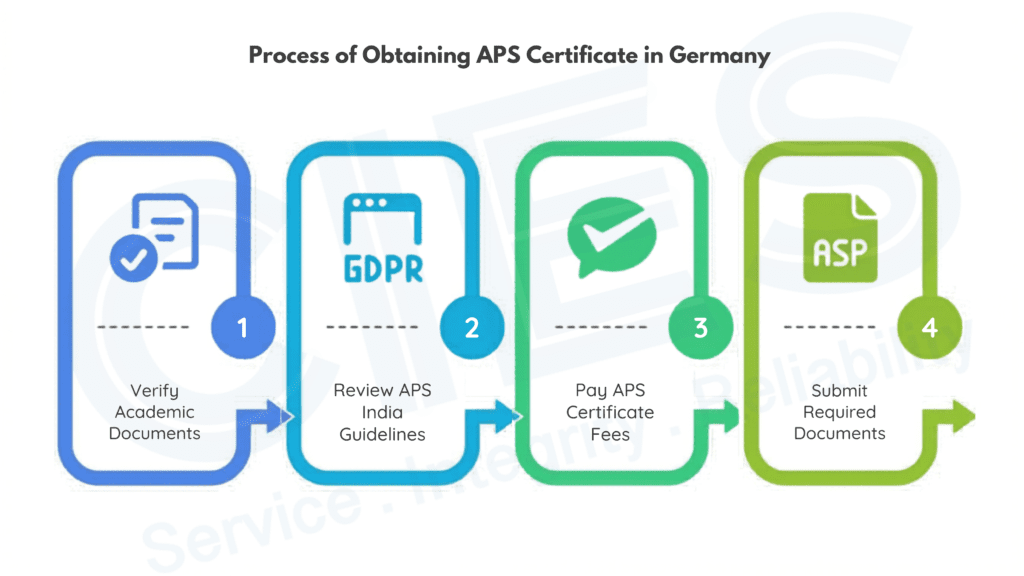
Step 3: Prepare APS Documentation
Determine whether APS verification is required and submit your documents early enough to accommodate the relevant processing requirements.
Step 4: Meet Language Requirements
Complete the English or German language test specified by your university. Allow enough time for results and, if necessary, a retake.
Step 5: Submit Your University Applications
Depending on the university, you may apply through its own admissions portal or through uni-assist. Check each programme’s official deadlines and document checklist.
Step 6: Arrange Your Finances
Calculate tuition fees, semester contributions and living expenses. Review the current student visa financial requirements and prepare the accepted proof of funding.
Step 7: Apply for Your Student Visa
Once you meet the applicable admission and documentation requirements, follow the current German mission instructions for the appropriate student visa category. An admission offer does not guarantee visa approval.
Germany Intake 2027: When Should You Apply?
Germany’s two commonly discussed entry periods are the Winter Semester and Summer Semester. Not every university or course accepts applications for both intakes.
| Preparation Period | Recommended Action |
|---|---|
| October–December 2026 | Research courses, evaluate eligibility and begin preparing documents. |
| December 2026–February 2027 | Check deadlines, APS requirements, language tests and any applicable dMAT sessions. |
| Early 2027 | Submit applications according to the official deadlines for each programme. |
| Before the semester begins | Complete remaining admission formalities, prepare financial evidence and follow visa instructions. |
This is a general planning guide, not a universal application calendar. Some programmes have earlier deadlines. Confirm the exact dates with the university and complete any required APS or dMAT steps in time.
Common Mistakes Indian Students Should Avoid
- Assuming 70% guarantees admission: The threshold relates to specified eligibility pathways and does not guarantee university acceptance.
- Ignoring APS requirements: Delayed academic verification may affect your application or visa preparation.
- Overlooking dMAT: Certain master’s applicants may need to complete this additional step under the applicable APS framework.
- Ignoring subject eligibility: Universities may require specific subjects, credits or a related bachelor’s degree.
- Assuming every public university is tuition-free: Fees depend on the institution, programme, state and student category.
- Waiting until the last minute: Language examinations, verification and visa preparation take planning.
- Relying on outdated financial figures: Check current student visa requirements before arranging your funds.
How CIES Overseas Education Can Help You Plan Your Germany Admission
Planning to study in Germany involves more than selecting a university. You need to understand your academic eligibility, identify suitable courses, prepare documents and organise your application timeline.
CIES Overseas Education provides study abroad guidance for students exploring international education opportunities.
Our team can help you understand your options, shortlist programmes that match your academic profile, organise your application checklist and prepare for the next stages of your study abroad journey.
Frequently Asked Questions (FAQs)
1. What is the new 70% rule for Indian students studying in Germany?
The updated APS criteria specify a minimum overall score of 70% of the maximum achievable Class 12 marks for relevant Indian undergraduate eligibility pathways covered by the revised rules. Other conditions also apply.
2. Does the 70% Class 12 requirement apply to Germany admissions in 2027?
The revised criteria apply from Winter Semester 2026/27 for the specified pathways. Students applying in 2027 should verify the current rules applicable to their qualifications.
3. Is dMAT compulsory for every Indian student applying for a master’s in Germany?
No. Its applicability depends on the current APS framework and the relevant applicant category and academic field. Check the latest official APS announcement.
4. Is APS mandatory for studying in Germany?
APS verification is generally required for Indian academic qualifications covered by the procedure and is normally part of student visa documentation. Certain exemptions may apply.
5. Can I study in Germany after Class 12 without completing a bachelor’s degree in India?
Potentially, yes. Eligible students may enter through a preparatory route such as Studienkolleg or another recognised pathway. The correct route depends on their qualifications and the applicable criteria.
6. Can I study in Germany without IELTS?
Some programmes accept alternative language evidence or provide exemptions, while others require IELTS or another specified test. Requirements depend on the university and course.
7. Are German public universities free for Indian students?
Many public universities do not charge general tuition fees for standard degree programmes, but semester contributions and living expenses apply. Some institutions and programmes charge tuition fees.
8. When should I start preparing for Germany’s Winter Semester 2027/28?
Starting in late 2026 is advisable. Application deadlines vary, so check the official programme requirements and allow time for APS verification, language tests and visa documentation.
9. Does university admission guarantee a German student visa?
No. Applicants must independently satisfy the applicable visa requirements. The competent German mission makes the visa decision.
10. Where can I check the official Germany admission rules for 2027?
Consult APS India, DAAD India, the university’s official admissions page and German Missions in India.
Official Resources for Students
- APS India – Academic Verification and Eligibility
- DAAD India – Study in Germany Information
- dMAT – Official Test Information
- uni-assist – University Application Information
- German Missions in India – Visa Information
Disclaimer: This article is intended for general educational guidance and does not guarantee admission or visa approval. Admission criteria, APS and dMAT procedures, tuition fees and visa requirements may change. Confirm the latest requirements with the relevant official authorities and university before applying.