
September 7, 2026

Canada Express Entry 2027 is expected to remain one of the most important immigration pathways for skilled professionals planning Canadian permanent residence. 🇨🇦 With IRCC continuing to use category-based selection and reviewing the Express Entry system, applicants need to understand how future draw categories, CRS scores, language ability, education and work experience could affect their Canada PR chances in 2027.

⚠️ Important 2027 update: As of September 7, 2026, IRCC has not yet published the final Express Entry categories for 2027. Canada has been consulting on economic priorities for category-based selection, so applicants should not treat online predictions about “confirmed 2027 categories” as official policy.

📢 Canada Express Entry 2027: The final category list and any future CRS reforms should be confirmed through official IRCC announcements. The best time to prepare your profile is before the 2027 invitation rounds begin.

👉 If you are planning to study in Canada first and then explore PR options, you can also read our Canada Study Abroad Guide and learn more about IELTS preparation.

🇨🇦 What Is Canada Express Entry?

Express Entry is Canada’s online immigration management system for skilled workers. It manages three federal economic immigration programs:

  • 👨‍💼 Canadian Experience Class (CEC)
  • 🎓 Federal Skilled Worker Program (FSWP)
  • 🔧 Federal Skilled Trades Program (FSTP)

Eligible candidates create an Express Entry profile and enter the candidate pool. Their profiles are ranked using the Comprehensive Ranking System (CRS).

IRCC then conducts invitation rounds and invites eligible candidates with competitive rankings to apply for Canadian permanent residence.

🔗 Official resource: IRCC Express Entry

🎯 What Are Express Entry Category-Based Draws?

Category-based selection allows IRCC to invite candidates who have specific skills, work experience or language abilities that support Canada’s economic priorities.

Instead of relying only on general CRS ranking, IRCC can conduct a draw focused on candidates who meet the requirements of a particular category.

However, candidates must still meet the requirements of an eligible Express Entry program and the specific requirements of the category.

According to IRCC, category-based rounds are designed to supplement other invitation rounds and are based on Canada’s identified economic goals.

🔗 Check the latest categories: IRCC Category-Based Selection

📅 Are Canada Express Entry 2027 Categories Confirmed?

No. The final Express Entry categories for 2027 have not been officially confirmed as of September 7, 2026.

IRCC’s category selection is influenced by labour-market information, projections and input from provinces, territories and stakeholders.

This means applicants should distinguish between:

  • ✅ Confirmed IRCC immigration rules
  • 📋 Current Express Entry categories
  • 🔎 2027 consultation priorities
  • ⚠️ Possible future changes
  • ❌ Unofficial predictions and social-media rumours
⚠️ Important: A profession being discussed as a possible 2027 category does not mean IRCC has officially selected it. Always verify the final category list through the official IRCC website.

🔎 Which Express Entry Categories Should You Watch for 2027?

Although the final 2027 list is not confirmed, Canada’s recent Express Entry strategy provides useful areas for applicants to monitor.

1️⃣ French-Language Proficiency 🇫🇷

French-language proficiency has become an important part of Canada’s Express Entry strategy.

Eligible French-speaking candidates may benefit from both additional CRS points and category-based selection opportunities.

IRCC currently states that candidates must achieve at least NCLC 7 in all four French-language abilities for the French-language proficiency category.

🔗 Check French-language category requirements on IRCC

2️⃣ Healthcare & Social Services 🏥

Healthcare and social services have remained important areas of Canadian immigration selection.

Eligible healthcare professionals should monitor future Express Entry category announcements and verify whether their occupation and work experience meet the requirements.

👉 If you are a healthcare professional planning Canada immigration, consider getting your profile assessed before selecting an immigration pathway.

3️⃣ STEM Occupations 💻🔬

Science, Technology, Engineering and Mathematics occupations have been included in Canada’s recent category-based selection strategy.

Technology professionals, engineers, scientists and other eligible STEM workers should monitor future NOC and category requirements.

4️⃣ Skilled Trades 🔧👷

Skilled trades remain important to Canada’s labour-market strategy.

Eligible trades professionals may benefit from category-based draws when IRCC conducts relevant invitation rounds.

5️⃣ Education Occupations 👩‍🏫📚

Education occupations have also been part of Canada’s recent Express Entry priorities.

Teachers, early childhood educators and other eligible education professionals should monitor future announcements carefully.

6️⃣ Transport Occupations 🚛✈️

Transport occupations were included in Canada’s recent category-based selection priorities.

Applicants working in eligible transport-related occupations should monitor future IRCC announcements to see whether their occupation remains prioritized.

7️⃣ Physicians, Researchers & Senior Managers 👨‍⚕️🧑‍🔬💼

Canada introduced additional category-based priorities in 2026 for certain physicians, researchers and senior managers with Canadian work experience.

These categories demonstrate that Canadian work experience and specialized talent can play an important role in future Express Entry selection.

📊 What CRS Score Will You Need for Canada Express Entry 2027?

There is no fixed CRS cut-off for Canada Express Entry 2027.

The CRS cut-off can change from one invitation round to another depending on:

  • 📌 Type of Express Entry draw
  • 👥 Number of candidates invited
  • 📈 Number and ranking of candidates in the pool
  • 🎯 Category selected by IRCC
  • 🇨🇦 Canada’s immigration priorities

The CRS system currently has a maximum of 1,200 points. It considers factors such as age, education, official language proficiency, Canadian work experience, skills transferability and additional factors.

🔗 Check your official CRS information: IRCC CRS Score & Calculator

🚀 How Can You Improve Your CRS Score for 2027?

🗣️ Improve Your English Language Score

A strong English language result can significantly strengthen your Express Entry profile.

Applicants should aim for the highest practical language level and ensure their test results meet IRCC requirements.

👉 Planning your IELTS preparation? Explore IELTS Coaching at CIES.

For candidates targeting Canada, you can also explore CELPIP preparation.

🇫🇷 Consider Learning French

French can strengthen an Express Entry profile and may provide additional opportunities through French-language category selection if you meet the required criteria.

For candidates planning Canada PR in 2027, adding French to an existing English-language profile could be a strategic option.

🎓 Strengthen Your Education Profile

Education is an important CRS factor. Applicants with foreign qualifications may need an Educational Credential Assessment (ECA), depending on their Express Entry program and circumstances.

🔗 Official IRCC ECA information

💼 Gain Skilled Work Experience

Skilled work experience can affect both Express Entry eligibility and CRS ranking.

Applicants should maintain clear employment records, reference letters and supporting documents and ensure that their actual work duties correspond with the appropriate NOC occupation.

🏆 Explore Provincial Nominee Programs

A Provincial Nominee Program can provide another route toward Canadian permanent residence.

An Express Entry-linked provincial nomination can provide 600 additional CRS points, subject to the applicable requirements.

👉 Explore CIES Immigration Services to understand which Canadian immigration pathway may suit your profile.

🚨 Important CRS Change: Job Offers No Longer Give CRS Points

One of the biggest Express Entry changes applicants should understand is the removal of CRS points for job offers.

As of March 25, 2025, IRCC stopped awarding the previous 50 or 200 CRS points for qualifying job offers.

⚠️ Remember: A Canadian job offer no longer automatically adds 50 or 200 CRS points. However, a valid job offer can still matter for eligibility under certain programs or streams.

🔗 Read the latest IRCC CRS rules

🇮🇳 Canada Express Entry 2027 for Indian Applicants

For Indian professionals planning Canada PR, preparation should begin well before the 2027 invitation rounds.

A strong Express Entry strategy can include:

  • ✅ Checking eligibility for CEC, FSWP or FSTP
  • ✅ Calculating your current CRS score
  • ✅ Improving IELTS or CELPIP results
  • ✅ Considering French language preparation
  • ✅ Obtaining an ECA where required
  • ✅ Reviewing your correct NOC occupation
  • ✅ Documenting skilled work experience
  • ✅ Monitoring category-based selection announcements
  • ✅ Exploring suitable PNP pathways
  • ✅ Preparing supporting documents early

👉 Not sure which pathway fits your profile? Contact CIES for a Canada immigration consultation.

👀 Who Could Have Better Canada PR Opportunities in 2027?

No applicant can be guaranteed an invitation. However, candidates who combine a competitive CRS profile with skills aligned with Canada’s economic priorities may be better positioned.

  • 🏥 Healthcare and social-services professionals
  • 💻 Eligible STEM professionals
  • 🔧 Skilled trades workers
  • 👩‍🏫 Education professionals
  • 🚛 Eligible transport professionals
  • 🇫🇷 French-speaking skilled workers
  • 👨‍⚕️ Eligible physicians with Canadian work experience
  • 🧑‍🔬 Eligible researchers with Canadian work experience
  • 💼 Eligible senior managers with Canadian work experience
  • ⭐ Other skilled workers with competitive CRS scores

📋 Express Entry 2027: Key Things to Watch

Factor What Applicants Should Know
📅 2027 Categories Final categories have not been officially announced.
📊 CRS Score There is no guaranteed 2027 CRS cut-off.
💼 Job Offer Points Removed effective March 25, 2025.
🇫🇷 French An important current Express Entry category and CRS factor.
🏆 PNP An Express Entry-linked nomination can add 600 CRS points.
🔄 CRS Reform IRCC has been reviewing possible reforms; proposals are not automatically final rules.

📝 How to Prepare for Canada Express Entry 2027

If your goal is Canada PR in 2027, don’t wait until the final category list is announced.

  1. 🔍 Check your Express Entry eligibility.
  2. 📊 Calculate your CRS score.
  3. 🗣️ Improve your English language score.
  4. 🇫🇷 Consider French language training.
  5. 🎓 Complete your ECA if required.
  6. 💼 Identify your correct NOC occupation.
  7. 📑 Organize your employment documentation.
  8. 🏆 Research suitable PNP pathways.
  9. 📢 Monitor official IRCC announcements.
  10. 🔄 Review your profile whenever immigration rules change.

❓ Frequently Asked Questions

What are the new Canada Express Entry categories for 2027?

IRCC has not officially finalized the 2027 category list as of September 7, 2026. Applicants should wait for official instructions before treating any proposed category as confirmed.

What CRS score will I need for Canada PR in 2027?

There is no fixed CRS score for 2027. The cut-off can vary by draw type, category, number of invitations and the candidates in the Express Entry pool.

Does IELTS increase my Express Entry CRS score?

Yes. Strong English-language results can contribute significantly to your CRS score. Higher language proficiency can also improve other areas of your profile where applicable.

Does a job offer give 50 CRS points in 2027?

No. IRCC removed CRS points for qualifying job offers effective March 25, 2025. However, job offers can still be relevant to eligibility under certain programs or streams.

Can French improve my Express Entry chances?

Yes. French-language ability can provide CRS advantages and may also make eligible candidates qualify for the French-language proficiency category.

Can a Provincial Nomination improve my CRS score?

Yes. An Express Entry-linked provincial nomination can provide 600 additional CRS points, subject to the applicable program requirements.

Should I wait until 2027 to start my Express Entry preparation?

No. Starting early gives you time to improve your language score, obtain an ECA, document your work experience and explore suitable provincial pathways.

🚀 Final Thoughts: Prepare Now for Canada Express Entry 2027

Canada Express Entry 2027 could bring further changes as IRCC continues to align economic immigration with Canada’s labour-market priorities.

However, the final 2027 Express Entry categories and any proposed CRS reforms should not be treated as confirmed until IRCC officially announces and implements them.

For applicants from India, the smartest strategy is to focus on the factors you can control: language scores, education, skilled work experience, CRS optimization, French proficiency where appropriate and provincial nomination opportunities.

🇨🇦 Ready to Explore Canada PR in 2027?

Get professional guidance on your Express Entry eligibility, CRS score, NOC profile, language strategy and Canada PR pathway.

📩 Apply for Canada PR with CIES

    🇨🇦 Apply for Canada PR – Free Consultation

    Fill out the form below and our experts will contact you shortly.

    📞 Call / WhatsApp: 09968239372

    ⚠️ Disclaimer: Canadian immigration policies, Express Entry categories, CRS criteria and invitation thresholds can change. This article is for general informational and educational purposes only. Applicants should verify the latest requirements and announcements directly with IRCC before making an immigration or application decision.
    September 5, 2026

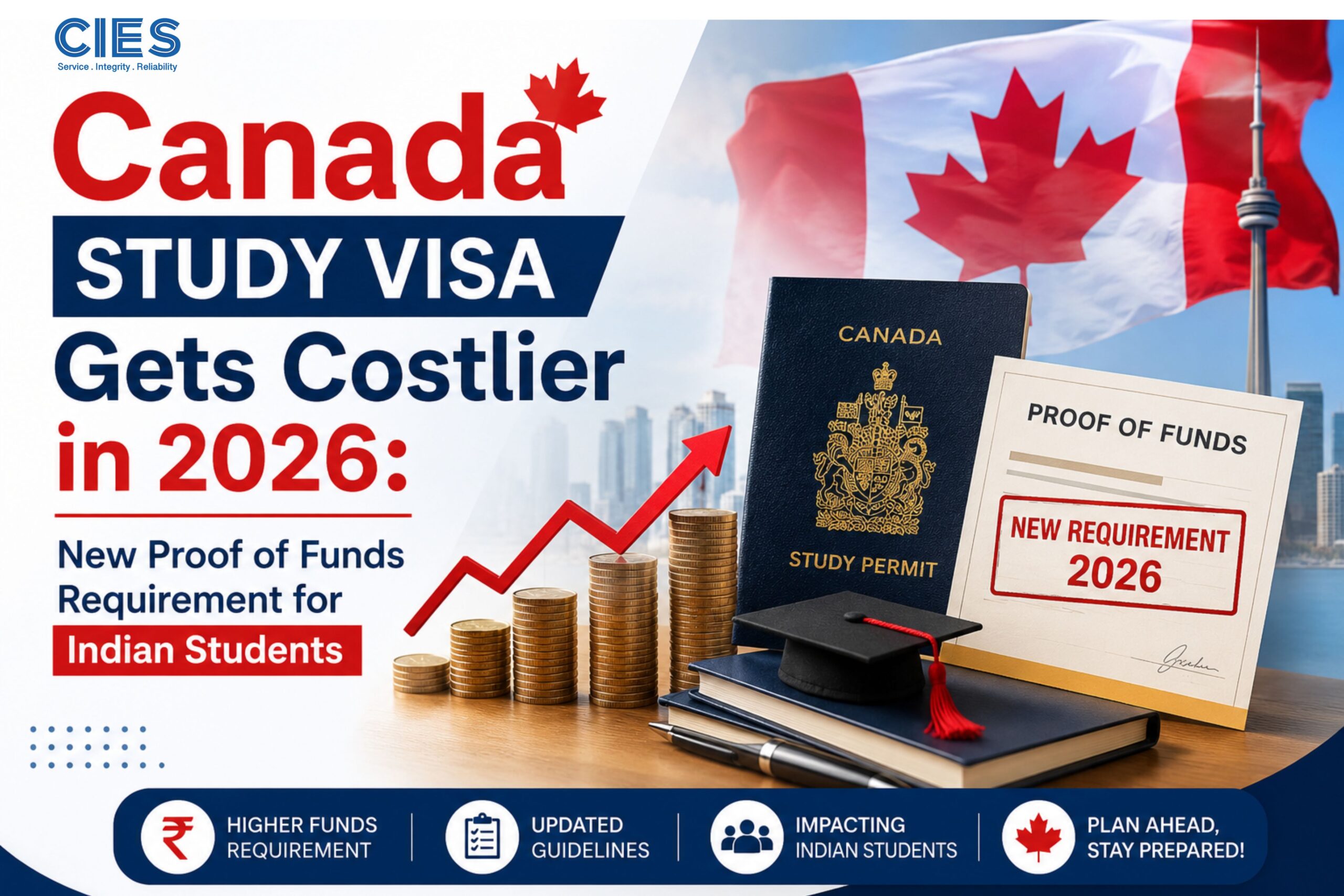
    Canada proof of funds 2026 is an important financial requirement for Indian students planning to apply for a Canadian study permit. For study permit applications submitted on or after September 1, 2026, students outside Quebec must demonstrate sufficient funds for living expenses, in addition to tuition fees and transportation costs. The required living-expense amount for one person is now CAD $23,448 per year.

    For Indian students planning to study in Canada, this means financial planning has become even more important. Students need to demonstrate enough money for their first year and provide a credible explanation of how they will finance the remaining period if their program lasts more than one year.

    In this guide, we explain the Canada proof of funds requirement 2026, the new amount for Indian students, acceptable financial documents, bank statements, education loans, scholarships, family-member requirements, Quebec rules, PAL/TAL considerations and practical tips for preparing a strong financial file.

    Quick Answer: How Much Proof of Funds Is Required for Canada in 2026?

    For one student applying on or after September 1, 2026 to study outside Quebec, the minimum living-expense requirement is CAD $23,448 per year. This does not include tuition or transportation costs.

    Canada Proof of Funds Requirement 2026: What’s New?

    Immigration, Refugees and Citizenship Canada (IRCC) updates the financial requirement for international students annually.

    For study permit applications submitted on or after September 1, 2026, the living-expense requirement for one student outside Quebec is:

    Minimum Living Expenses

    CAD $23,448

    For one student, per year, excluding tuition and transportation

    The previous amount was CAD $22,895 for applications submitted between January 1, 2025 and August 31, 2026.

    That means the requirement for one student has increased by CAD $553.

    Canada Proof of Funds 2026: Family-Wise Amount

    The amount increases when accompanying family members are included. The following amounts apply outside Quebec for applications submitted on or after September 1, 2026.

    Family Members Including Applicant Minimum Living Expenses Per Year
    1 CAD $23,448
    2 CAD $29,192
    3 CAD $35,888
    4 CAD $43,572
    5 CAD $49,419
    6 CAD $55,736
    7 CAD $62,054
    Each additional family member CAD $6,318

    Is CAD $23,448 the Total Cost of Studying in Canada?

    No. This is one of the most important things Indian students should understand.

    The CAD $23,448 figure is the minimum amount for living expenses for one student for one year outside Quebec.

    It does not include:

    • Tuition fees
    • Transportation costs to and from Canada
    • Additional financial requirements for accompanying family members

    Remember: Your financial planning should consider
    tuition + living expenses + transportation + applicable family expenses.

    How Much Has Canada’s Proof of Funds Increased?

    Application Period Amount for One Student
    January 1, 2025 – August 31, 2026 CAD $22,895
    September 1, 2026 onward CAD $23,448
    Increase CAD $553

    Is the New Canada Proof of Funds Requirement Only for Indian Students?

    No.

    The CAD $23,448 requirement is not an India-specific amount. It applies to international students subject to the applicable federal financial requirements for studying outside Quebec.

    Indian students are particularly interested in the change because Canada remains a popular destination for international education. However, students should avoid relying on older social-media posts, videos or websites that quote previous financial figures.

    Why Has Canada Increased the Proof of Funds Requirement?

    Canada updates its international student financial requirements to reflect changes in the cost of living.

    The government has also explained that stronger financial requirements help ensure international students have sufficient resources to support themselves and can reduce vulnerability and exploitation.

    The increase should also be viewed within Canada’s wider international student program reforms, which include measures related to application volumes, program integrity and student intake.

    What Does Proof of Funds Mean for a Canada Study Permit?

    Proof of funds means demonstrating that you have sufficient financial resources to support yourself and any accompanying family members during your stay in Canada.

    Your financial documents should help establish:

    1. How much money is available?
    2. Where did the money come from?
    3. How will your tuition and living expenses be paid?
    4. How will you finance the remaining duration of your program?

    What Documents Can Be Used as Proof of Funds for Canada?

    Depending on your circumstances, financial evidence can include:

    • Bank statements
    • Proof of a Canadian bank account
    • Guaranteed Investment Certificate (GIC)
    • Student or education loan documentation
    • Scholarship documentation
    • Proof of tuition payment
    • Proof of housing payment where applicable
    • Employment and income documents
    • Financial support documentation from a parent or sponsor
    • Pension documentation
    • Rental-property income evidence

    How Many Months of Bank Statements Are Required for Canada?

    IRCC’s current financial-support guidance lists bank statements as evidence of available funds and specifies statements for the past 6 months, including the month of application or the preceding month, along with documentation showing the source of income reflected in the statements.

    Students should therefore focus not only on the account balance but also on whether the financial history is understandable and properly documented.

    Large recent deposits should have a legitimate and documentable source.

    Can Parents’ Bank Statements Be Used for Canada Proof of Funds?

    Yes. Parents can provide financial support for an Indian student studying in Canada.

    Where parents or another sponsor are funding the student’s education, the financial file should clearly establish the relationship, available funds, income and source of those funds.

    Documents Parents May Provide

    • Bank statements
    • Employment letters
    • Salary or income evidence
    • Business documents where applicable
    • Tax and income documents where applicable
    • Proof of relationship
    • Explanation and supporting evidence for significant deposits

    Can an Education Loan Be Used as Proof of Funds for Canada?

    Yes. IRCC lists proof of a student or education loan from a bank as an example of financial support.

    Students using an education loan should keep the loan documentation clear and complete, including information about the sanctioned amount and lender.

    Can a Scholarship Be Used as Proof of Funds?

    Yes. Scholarship documentation can help demonstrate financial support.

    However, students should check exactly what the scholarship covers. A scholarship covering tuition does not necessarily mean that the student’s living expenses and transportation costs are fully covered.

    Does Paid Tuition Count Toward Proof of Funds?

    Paid tuition can demonstrate that tuition costs have already been covered, but students still need to demonstrate sufficient funds for applicable living expenses and transportation.

    Example:

    If first-year tuition is CAD $20,000 and the student has already paid the tuition, the student still needs to account for the applicable CAD $23,448 living-expense requirement and transportation costs.

    What If My Canada Program Is Two Years or Longer?

    For a program longer than one year, students must demonstrate sufficient financial resources for the first year and explain how they plan to pay for the full duration of their studies.

    Your longer-term financial plan may include:

    • Family income
    • Education loans
    • Scholarships
    • Savings
    • Other legitimate sources of financial support

    Canada Proof of Funds for Spouse and Children

    If your spouse or children accompany you to Canada, the applicable living-expense amount increases because the calculation is based on the number of family members, including the applicant.

    For example, from September 1, 2026, two people require CAD $29,192 per year for living expenses outside Quebec, excluding tuition and transportation.

    Does the CAD $23,448 Requirement Apply to Quebec?

    No. Quebec has separate financial-capacity requirements.

    Students planning to study in Quebec should check the current requirements associated with the Quebec Acceptance Certificate (CAQ) and the Quebec immigration process.

    Do Indian Students Need a PAL or TAL in 2026?

    Many study permit applicants need a Provincial Attestation Letter (PAL) or Territorial Attestation Letter (TAL), although exemptions apply to certain applicants.

    Students should determine whether they need a PAL/TAL based on their specific program, institution and circumstances before submitting a study permit application.

    Why Financial Planning Matters More for Canada in 2026

    Canada’s international student system has undergone significant changes in recent years.

    Students now need to pay greater attention to financial capacity, institution selection, program relevance, documentation and the overall credibility of their study plan.

    This means that choosing a program only because it has comparatively low tuition may not be the best approach.

    What Costs Should Indian Students Budget for Studying in Canada?

    Students should prepare a complete financial plan that considers:

    • Tuition fees
    • Accommodation
    • Food and daily living costs
    • Transportation
    • Health-related and insurance costs where applicable
    • Study materials
    • Airfare
    • Emergency or contingency funds

    Can Students Depend on Part-Time Work to Meet the Proof of Funds Requirement?

    Students should not rely on future part-time employment as the foundation of their initial proof-of-funds plan.

    Proof of financial support is intended to demonstrate that students have sufficient resources to support themselves while studying.

    Eligible international students may work under Canada’s applicable rules, but future employment should not replace proper financial preparation.

    Common Proof of Funds Mistakes Indian Students Should Avoid

    1. Showing Only CAD $23,448

    CAD $23,448 covers the living-expense component for one student. Tuition and transportation are additional.

    2. Using Old Financial Figures

    Always check the latest IRCC amount applicable on the date you submit your application.

    3. Ignoring the Source of Funds

    Students should be able to explain where their funds came from and provide supporting documentation where required.

    4. Making Large Undocumented Deposits

    Large deposits shortly before an application can create questions if their source is not properly documented.

    5. Forgetting Accompanying Family Members

    Spouse and children can change the applicable financial requirement.

    6. Ignoring the Remaining Program Duration

    For programs longer than one year, students should explain how they intend to finance the full duration.

    Canada Study Permit Proof of Funds Checklist 2026

    • Calculate first-year tuition
    • Calculate the applicable IRCC living-expense requirement
    • Add transportation costs
    • Include accompanying family members
    • Collect bank statements
    • Document the source of funds
    • Prepare education-loan documents if applicable
    • Prepare scholarship documents if applicable
    • Prepare sponsor/parent financial documents if applicable
    • Explain funding for the remaining study period
    • Check PAL/TAL requirements
    • Confirm the institution is a Designated Learning Institution

    Frequently Asked Questions: Canada Proof of Funds 2026

    How much proof of funds is required for Canada in 2026?

    For one student applying on or after September 1, 2026 to study outside Quebec, the minimum living-expense requirement is CAD $23,448 per year, excluding tuition and transportation.

    How much bank balance is required for a Canada student visa from India?

    There is no single bank-balance figure that represents the entire financial requirement. Students need to account for living expenses, tuition, transportation and applicable family expenses.

    Is CAD $23,448 enough for a Canada student visa?

    No. CAD $23,448 is the living-expense amount for one student outside Quebec. Tuition and transportation costs are additional.

    What is the new Canada proof of funds requirement for Indian students?

    From September 1, 2026, a single student applying to study outside Quebec must show CAD $23,448 for annual living expenses, excluding tuition and transportation.

    How much has Canada’s proof of funds increased?

    The requirement increased from CAD $22,895 to CAD $23,448 for one student, an increase of CAD $553.

    Can parents provide proof of funds for a Canada student visa?

    Yes. Parents can financially support a student, provided the financial documentation appropriately demonstrates the relationship, availability and source of funds.

    Can I use an education loan as proof of funds for Canada?

    Yes. IRCC lists proof of a student or education loan from a bank as an example of financial support.

    Can a scholarship count as proof of funds for Canada?

    Yes. Scholarship documentation can demonstrate financial support, depending on the expenses covered by the scholarship.

    Does paid tuition reduce the proof of funds requirement?

    Paid tuition can demonstrate that tuition has already been covered, but students still need to demonstrate sufficient funds for living expenses and transportation.

    How much proof of funds is required for a student with a spouse?

    For two family members, including the applicant, the living-expense requirement outside Quebec is CAD $29,192 per year from September 1, 2026, excluding tuition and transportation.

    Does the CAD $23,448 requirement apply to Quebec?

    No. Quebec has separate financial-capacity requirements.

    Do Indian students need PAL or TAL in 2026?

    Many study permit applicants need a Provincial Attestation Letter or Territorial Attestation Letter, although exemptions apply to certain applicants.

    Does proof of funds guarantee a Canada study permit?

    No. Proof of funds is only one part of a study permit application. Applicants must satisfy all applicable eligibility, documentation and admissibility requirements.

    Planning to Study in Canada in 2026 or 2027?

    CIES Overseas Education can help you plan your study-abroad journey with guidance on course selection, institution selection, applications, financial documentation and study permit preparation.

    Get personalised guidance before you submit your Canada study permit application.

    Contact CIES

    Final Takeaway

    Canada’s updated proof of funds requirement is an important change for international students planning to apply in 2026.

    For a single student applying outside Quebec from September 1, 2026, the living-expense requirement is CAD $23,448 per year. However, this is not the total cost of studying in Canada. Tuition and transportation costs must be considered separately.

    For Indian students, the best approach is to prepare a complete and transparent financial plan, document the source of funds, avoid unexplained transactions and make sure the application meets all applicable study permit requirements.

    Source: Government of Canada – Immigration, Refugees and Citizenship Canada (IRCC).

    Disclaimer: Canadian immigration rules and financial requirements may change. This article is provided for general informational purposes and should not be considered legal or immigration advice. Always verify the latest requirements with the Government of Canada before submitting an application.

    September 3, 2026

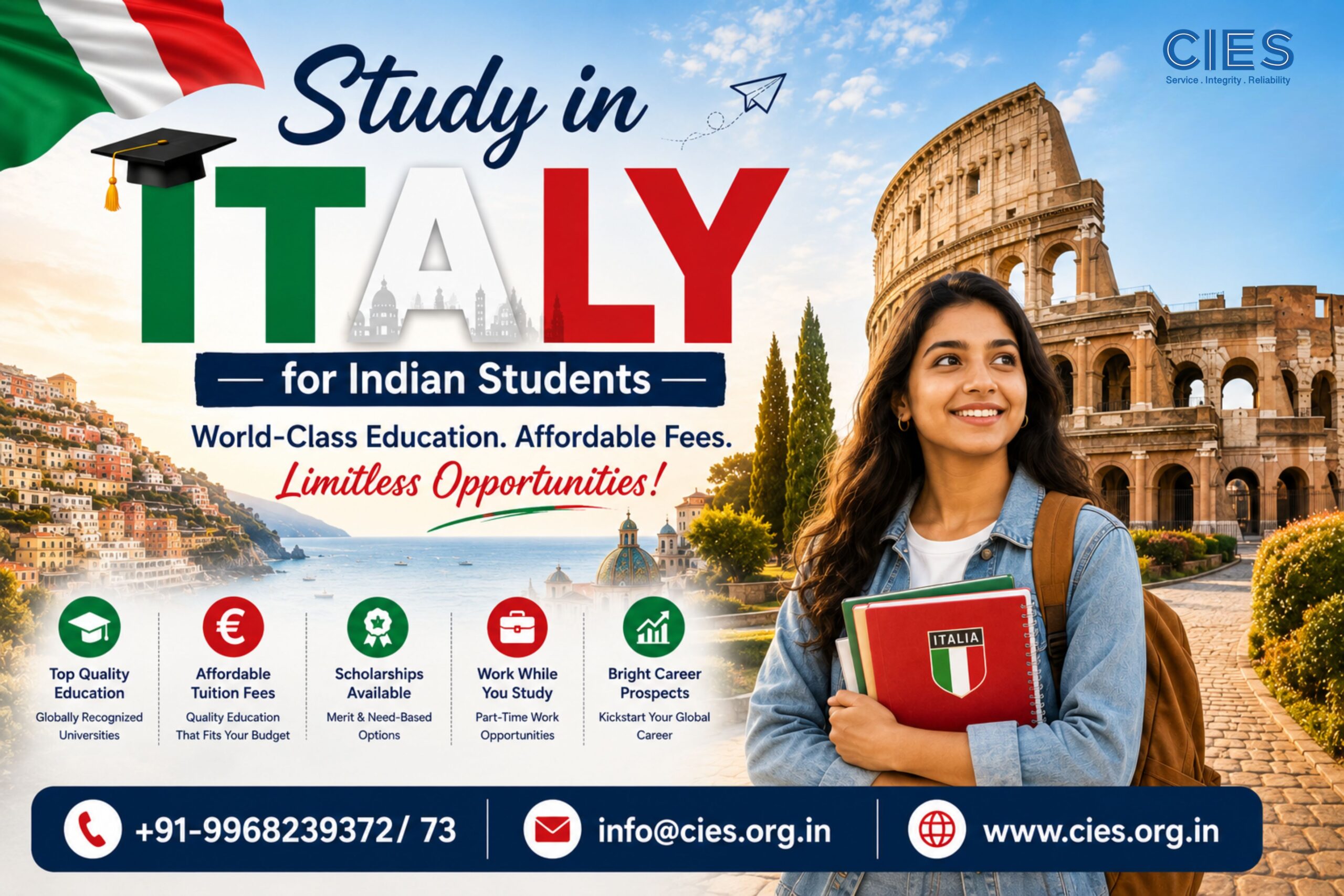
    Study in Italy for Indian students is becoming an attractive option for students looking for internationally recognized education, relatively affordable tuition fees, scholarships, diverse courses and an opportunity to experience Europe. Italy offers bachelor’s, master’s and other higher education programmes across fields such as business, engineering, computer science, architecture, design, fashion, healthcare and more.

    If you are planning to study in Italy from India, this complete guide explains the admission process, eligibility requirements, tuition fees, scholarships, living costs, student visa, part-time work opportunities and important steps for Indian students.

    🇮🇹 Planning to Study in Italy?
    Get personalised guidance on universities, courses, scholarships and the application process.

    WhatsApp CIES Now

    Quick Answer: Is Italy Good for Indian Students?

    Yes. Italy can be a strong study-abroad destination for Indian students because it offers a wide range of academic programmes, public universities with comparatively accessible tuition structures, scholarship and financial-aid opportunities, and the possibility of part-time work under the student residence rules.

    • Popular study destinations: Milan, Rome, Bologna, Turin, Padua, Pisa and Florence
    • Popular courses: Engineering, Business, Computer Science, Data Science, Architecture, Design, Fashion, Finance and Healthcare
    • Tuition: Varies by university, programme and financial circumstances
    • Scholarships: Government, university and regional opportunities may be available
    • Part-time work: Study permits generally allow up to 20 hours per week, subject to applicable rules
    • Application route: University application and, where required, pre-enrolment through the Universitaly system

    Why Study in Italy for Indian Students?

    Italy is one of Europe’s most historically important education destinations. Its universities offer programmes connected to research, technology, business, engineering, arts, architecture and design.

    For Indian students, one of the major attractions is the combination of internationally oriented education and access to different scholarship and fee-reduction opportunities. Italy’s official Study in Italy portal states that tuition fees vary according to factors including the university, degree course and declared family income.

    Top Reasons to Choose Italy

    • 🎓 Internationally recognised higher education
    • 💰 Potentially affordable tuition compared with several other Western destinations
    • 🏆 Scholarship and financial-aid opportunities
    • 🌍 Opportunity to experience European culture and international exposure
    • 💼 Part-time work opportunities subject to student permit regulations
    • 📚 Wide choice of bachelor’s and master’s programmes
    • 🏙️ Student cities with strong academic and cultural environments
    • 🚀 Opportunities to build international academic and professional experience

    Popular Courses to Study in Italy for Indian Students

    Italian universities offer programmes across many academic disciplines. The right course depends on your previous education, career goals, academic profile and eligibility for the selected university.

    Popular Field Example Courses
    Engineering Mechanical Engineering, Civil Engineering, Electrical Engineering
    Technology Computer Science, Artificial Intelligence, Data Science
    Business Business Management, International Business, Finance, Marketing
    Architecture & Design Architecture, Interior Design, Product Design
    Fashion Fashion Design, Fashion Management, Luxury Management
    Healthcare Health Sciences, Biotechnology and related programmes

    Top Universities in Italy for International Students

    Italy has several prestigious universities and higher education institutions. Students should select universities based on the course curriculum, admission requirements, tuition, scholarship availability, location and career objectives rather than rankings alone.

    University Known For
    University of Bologna Wide range of academic disciplines and international programmes
    University of Padua Research, science, engineering and multiple international programmes
    Sapienza University of Rome Large multidisciplinary university in Rome
    Politecnico di Milano Engineering, architecture, design and technology
    Politecnico di Torino Engineering, architecture and technology

    Always verify the current programme, intake, admission criteria and tuition directly with the university before applying.

    Study in Italy: Eligibility Requirements for Indian Students

    Eligibility requirements depend on the university and course. Indian students should carefully check the academic and language requirements of each programme before submitting an application.

    For a Bachelor’s Degree

    • Completed recognised secondary education
    • Academic qualification meeting the university’s admission requirements
    • Required subjects or prerequisite subjects for the selected programme
    • English or Italian language proficiency, depending on the course
    • Additional entrance test or selection requirements where applicable

    For Master’s Degree

    • Recognised bachelor’s degree
    • Relevant academic background for the selected programme
    • Required academic credits or prerequisite subjects where applicable
    • English or Italian language proficiency according to programme requirements
    • Academic transcripts and supporting documents
    • Additional entrance, interview or portfolio requirements where applicable

    Italy’s official Study in Italy information explains that foreign qualifications are assessed by the individual higher education institution, so requirements can differ between universities and programmes.

    English-Taught Courses in Italy

    Indian students can find a number of programmes taught in English, particularly at the master’s level and in fields such as engineering, business, computer science, data science, economics and related disciplines.

    Language requirements depend on the selected university and programme. Students should check the exact English-language requirement before applying. Some programmes may require IELTS or another accepted proof of English proficiency.

    💡 Important: Do not assume that every Italian university or course has the same IELTS requirement. Always verify the language requirement of your chosen programme.

    Study in Italy Tuition Fees for Indian Students

    There is no single tuition fee applicable to every student in Italy. Fees can vary according to the university, programme, academic level and other factors, including family income at institutions where income-based fee structures apply.

    Factor Why It Matters
    University Public and private institutions can have different fee structures.
    Course Fees may differ between academic programmes.
    Family Income Some universities use income-related criteria for fee assessment.
    Scholarship Eligible students may receive scholarships, exemptions or other financial support.

    The official Study in Italy portal states that Italian university tuition can be lower than in several other Western European and North American destinations, while the actual amount depends on the institution, programme and other factors.

    Scholarships to Study in Italy for Indian Students

    Scholarships are one of the major reasons international students consider Italy. Depending on the student’s profile and selected institution, opportunities may include government scholarships, university scholarships and regional financial support.

    1. Italian Government Scholarships – MAECI

    The Italian Ministry of Foreign Affairs and International Cooperation offers scholarships for eligible foreign students and Italian citizens living abroad. Availability, eligible countries, programmes, benefits and deadlines are determined by the relevant annual call.

    For the 2026–2027 academic year, the official MAECI call had a published deadline of March 26, 2026. Students planning for future intakes should check the official Study in Italy portal for the next call and updated eligibility criteria.

    2. Regional Scholarships

    Italian regions provide student support through regional bodies. Depending on the region and student’s eligibility, support may include scholarships, accommodation, meals or other benefits.

    Universitaly provides information about regional student-support bodies, scholarships and accommodation opportunities.

    3. University Scholarships

    Individual universities may also offer scholarships, tuition reductions or other financial benefits. Requirements can include academic performance, financial circumstances, admission status or other criteria.

    🎓 Need Help Finding an Italy Scholarship?

    Our team can help you understand university options, course selection, scholarship opportunities and application requirements.

    Contact CIES

    Cost of Living in Italy for Indian Students

    The cost of living depends heavily on the city, accommodation type, lifestyle and personal expenses. Milan and other major cities can be more expensive than smaller student cities.

    Expense What Students Should Budget For
    Accommodation Student residence, shared accommodation or private rental
    Food Groceries, university meals and eating out
    Transport Public transport and local travel
    Health Insurance Insurance requirements and related costs
    Personal Expenses Mobile, clothing, entertainment and other daily expenses

    Before choosing a university, compare the total expected cost of tuition, accommodation, transportation and living expenses in that specific city.

    Italy Student Visa for Indian Students

    Indian students who require a visa to study in Italy need to follow the applicable student visa procedure. The process generally begins after receiving the required admission/pre-enrolment documentation from the university or institution.

    Typical Documents for an Italy Student Visa

    • Valid passport
    • University admission or required pre-enrolment documentation
    • Proof of financial means as required
    • Proof of accommodation
    • Health insurance where required
    • Academic documents
    • Language proficiency documents where applicable
    • Visa application documents and photographs
    • Additional documents requested by the Italian authorities

    The exact visa documentation and procedure can vary according to the applicant’s circumstances and current rules. Students should always check the current requirements with the relevant Italian authorities before submitting a visa application.

    Universitaly Pre-Enrolment for International Students

    For international students residing outside Italy who require a study visa, the university pre-enrolment process is an important part of the admission journey. The Italian government identifies Universitaly as the online portal used to support international students with course information and pre-enrolment procedures.

    Through Universitaly, students can explore degree programmes, university information, tuition details, scholarship opportunities and relevant procedures for entry and stay in Italy.

    Official portal:

    Universitaly

    Can Indian Students Work While Studying in Italy?

    Yes. According to Italy’s Ministry of Foreign Affairs, a study residence permit allows foreign students to work part-time for up to 20 hours per week, with an annual limit of 1,040 hours.

    Part-time work can help students gain experience and contribute toward their expenses, but students should not rely entirely on employment income to finance their education. Financial planning should be completed before travelling to Italy.

    Can Students Stay and Work in Italy After Graduation?

    Post-study options depend on the student’s circumstances, employment status and the immigration rules in force at the time. Italy allows certain study permits to be converted to work permits when the applicable requirements are satisfied.

    Official Italian immigration information confirms that a valid study residence permit can be converted into a work residence permit when the applicable conditions are met.

    Because immigration rules can change, students should verify current post-study and work-permit rules before making long-term plans.

    Intakes to Study in Italy

    Italian universities can have different application calendars depending on the university and programme. Some courses may have multiple application rounds, while others may have specific deadlines.

    Planning Stage What Students Should Do
    8–12 Months Before Intake Research courses, universities, tuition and scholarships.
    6–9 Months Before Intake Prepare academic, language and application documents.
    4–7 Months Before Intake Submit university applications according to programme deadlines.
    After Admission Complete required pre-enrolment and visa procedures.
    Before Departure Arrange accommodation, insurance, travel and essential documents.

    Documents Required to Study in Italy

    • Passport
    • Academic certificates
    • Academic transcripts/mark sheets
    • English or Italian language certificate where required
    • Statement of Purpose / Motivation Letter where required
    • CV/Resume for applicable programmes
    • Letters of Recommendation where required
    • Portfolio for selected creative/design programmes
    • Proof of financial resources for visa purposes
    • Accommodation documentation where required
    • Health insurance documentation where required
    • University admission and pre-enrolment documents

    How to Apply to Study in Italy from India?

    Step 1: Choose Your Course

    Select a course based on your previous education, interests, career goals, academic eligibility and budget.

    Step 2: Shortlist Italian Universities

    Compare universities based on programme curriculum, entry requirements, tuition, scholarship options, location and career opportunities.

    Step 3: Check Eligibility

    Check academic, subject, language and programme-specific requirements before preparing the application.

    Step 4: Prepare Your Documents

    Prepare your academic documents, language proof, CV, SOP, recommendations and any other documents required by the university.

    Step 5: Apply to the University

    Submit your application according to the university’s instructions and deadlines.

    Step 6: Complete Pre-Enrolment

    Where applicable, complete the required international student pre-enrolment process through Universitaly.

    Step 7: Apply for Your Student Visa

    After completing the necessary university and pre-enrolment steps, prepare and submit your student visa application according to the current requirements.

    Step 8: Prepare for Departure

    Arrange accommodation, travel, insurance and other essential requirements before travelling to Italy.

    Best Student Cities in Italy for Indian Students

    City Why Students Consider It
    Milan Business, finance, engineering, design and fashion ecosystem
    Rome Large universities, culture and international environment
    Bologna Strong university environment and student culture
    Turin Engineering, technology and business-related opportunities
    Padua Research-oriented academic environment
    Florence Arts, design, culture and international student experience

    Advantages of Studying in Italy for Indian Students

    • ✅ Wide selection of academic programmes
    • ✅ International education environment
    • ✅ Scholarship and financial-aid opportunities
    • ✅ Comparatively accessible tuition at many public institutions
    • ✅ English-taught programmes are available
    • ✅ Opportunity for permitted part-time employment
    • ✅ Rich European cultural experience
    • ✅ Potential pathways to continue professional development after graduation

    Challenges Indian Students Should Consider Before Studying in Italy

    • ⚠️ Some programmes may have competitive admission requirements.
    • ⚠️ Not every programme is taught in English.
    • ⚠️ Italian language skills can be useful for everyday life and employment.
    • ⚠️ Living costs vary considerably between cities.
    • ⚠️ University and visa documentation can require careful preparation.
    • ⚠️ Scholarship eligibility is not automatic and depends on the specific scheme.
    • ⚠️ Students should carefully verify deadlines because they vary by university and programme.

    Study in Italy vs Other European Countries

    Italy can be particularly attractive for students who prioritise scholarship opportunities, public university options, culture, design, engineering, business and access to a European academic environment.

    Factor Italy
    Tuition Varies by university, course and applicable fee structure
    Scholarships Government, regional and university opportunities may be available
    English-Taught Courses Available across selected programmes
    Part-Time Work Generally up to 20 hours/week under study permit rules
    Student Experience Strong combination of education, culture and European exposure

    Why Choose CIES for Study in Italy?

    Choosing the right university and course is one of the most important decisions when planning to study abroad. CIES – Centre for Immigration & Education Services can assist students throughout the study-abroad planning process.

    • 🎓 Psychometric-based counselling
    • 🎯 University and course selection assistance
    • 📚 Course and eligibility guidance
    • 📝 Application and documentation assistance
    • 💰 Scholarship guidance
    • 📄 SOP and documentation guidance
    • 🎤 University interview preparation where applicable
    • 🛂 Student visa guidance
    • ✈️ Pre-departure guidance

    Frequently Asked Questions About Studying in Italy

    1. Is Italy a good country for Indian students?

    Yes. Italy can be a good option for Indian students looking for European higher education, a wide choice of programmes, scholarship opportunities and international exposure. The best destination depends on the student’s course, budget, academic profile and career goals.

    2. How much does it cost to study in Italy?

    There is no single fixed tuition fee for all Italian universities. Fees vary according to the university, programme and applicable fee structure. Living expenses also depend on the city and lifestyle.

    3. Can Indian students get scholarships in Italy?

    Yes. Indian students may be eligible for certain government, regional or university scholarships, depending on the specific eligibility criteria. Scholarship availability and deadlines vary.

    4. Can I study in Italy without knowing Italian?

    Yes, for programmes taught in English. However, Italian language skills can be useful for daily communication, internships, part-time employment and broader integration into Italian life.

    5. Can Indian students work part-time in Italy?

    Yes. Italy’s Ministry of Foreign Affairs states that a study permit allows foreign students to work part-time up to 20 hours per week and up to 1,040 hours annually, subject to the applicable rules.

    6. What is Universitaly?

    Universitaly is the Italian Ministry of Universities and Research’s online portal that provides information about Italian higher education institutions, courses, tuition, scholarships and international student procedures.

    7. What IELTS score is required for Italy?

    There is no universal IELTS score for every Italian university. Requirements depend on the selected programme and institution. Students should check the official language requirements for their chosen course.

    8. Can I convert my Italian study permit into a work permit?

    Italian immigration information confirms that a study residence permit may be converted into a work permit when the applicable legal requirements are satisfied. Students should verify the rules applicable to their individual circumstances.

    9. Which are the best cities in Italy for international students?

    Popular student destinations include Milan, Rome, Bologna, Turin, Padua and Florence. The best city depends on your university, course, budget and career goals.

    10. How can Indian students apply to Italian universities?

    Students should select a suitable programme, check eligibility, prepare documents, apply to the university, complete any required pre-enrolment process and then follow the applicable student visa procedure.

    Final Verdict: Should Indian Students Study in Italy?

    Italy can be an excellent study-abroad option for Indian students who want European education, diverse courses, scholarship opportunities and international exposure. However, choosing the right university and course is critical.

    Instead of selecting a university only because of its name or ranking, compare the programme curriculum, eligibility, tuition, scholarship possibilities, city, living expenses and future career opportunities.

    If you are planning to study in Italy from India, professional guidance can help you build a more organised application strategy and avoid common documentation and deadline mistakes.

    🇮🇹 Ready to Study in Italy?

    Get personalised guidance for university selection, course selection, scholarships, applications and student visa processing.

    Talk to CIES – Centre for Immigration & Education Services

    Get Italy Study Guidance

    Get a Free Study Abroad Consultation

    Fill in the form below and our counsellors will contact you to discuss your profile, course options, university selection and study-abroad plans.

      Official Sources for Studying in Italy

      September 3, 2026

      For Indian students planning to study abroad, the UK and Europe are two of the most popular choices. But which destination offers better value for money, affordable tuition fees, scholarships, post-study work opportunities and long-term career prospects?

      The answer depends on your budget, chosen course, career goals, preferred country and post-study plans.

      Quick Answer: UK vs Europe

      Choose the UK if you want shorter master’s degrees, a large selection of English-taught programmes and a well-established international education system.

      Choose Europe if your priority is lower tuition fees, public universities, scholarships and exploring affordable study destinations such as Germany, France, Italy and Finland.

      For many Indian students, Germany, France, Italy and Finland can offer a lower overall study cost than the UK, but the exact cost depends on the university, programme and city.

      💬 Not Sure Whether UK or Europe Is Better for You?

      Get a quick profile-based comparison of tuition fees, scholarships, courses and post-study opportunities from a CIES counsellor.

      💬 Chat With a CIES Counsellor on WhatsApp →

      UK vs Europe: At a Glance

      Factor UK Europe
      Tuition Fees Generally higher Can be significantly lower, especially at public universities
      Master’s Duration Many programmes are 1 year Often 1–2 years depending on country and programme
      Scholarships University and external scholarships available Many university, government and country-specific opportunities
      English-Taught Courses Very widely available Widely available, especially at master’s level
      Part-Time Work Permitted under student visa conditions Rules vary by country
      Post-Study Options Graduate visa route available, subject to current rules Rules vary by country
      Overall Affordability Moderate to expensive Many affordable options

      1. Tuition Fees: UK vs Europe

      Tuition fees are one of the biggest factors Indian students consider when selecting an international destination.

      UK Tuition Fees

      International tuition fees in the UK vary significantly by university, course and level of study. Business, management, engineering, data science, healthcare and other popular programmes can have different fee structures.

      One major advantage of the UK is that many master’s degrees can be completed in just one year, potentially reducing accommodation and living expenses compared with a longer programme.

      European Tuition Fees

      Europe includes many different education systems. Some countries have relatively affordable public universities, while private universities and specialised institutions may charge considerably higher fees.

      Germany is particularly attractive because many public universities do not charge traditional tuition fees for many bachelor’s and master’s programmes, although exceptions and semester contributions apply.

      France also offers comparatively affordable public education for many international students, although tuition depends on the programme, institution and applicable fee category.

      Other popular destinations include Italy, Finland, Ireland, Spain, Poland and Norway, each with different tuition and scholarship structures.

      2. Scholarships: UK vs Europe

      Scholarships can significantly reduce the financial burden of studying abroad.

      UK Scholarships

      Indian students may find university scholarships, merit-based awards and external funding opportunities. However, competition can be high, especially for prestigious scholarships.

      European Scholarships

      Several European countries provide scholarships and tuition-related support through universities, governments and European programmes.

      Countries such as Germany, France, Italy and Finland can be worth researching if your main goal is to reduce tuition costs.

      Important: Scholarship eligibility depends on academic performance, programme, university, intake, nationality and other conditions. Never assume that every student will receive a full scholarship.

      3. Cost of Living: UK vs Europe

      Your total study-abroad budget is not just tuition fees. Accommodation, food, transportation, health insurance, utilities and personal expenses can make a major difference.

      Expense UK Europe
      Accommodation Can be expensive, especially in London Varies significantly by country and city
      Food Moderate to expensive Often more affordable outside major cities
      Transport Good public transport network Generally strong public transport in major cities
      Overall Cost Can be high Ranges from affordable to expensive

      4. Post-Study Work Opportunities

      Post-study work opportunities are one of the most important considerations for Indian students looking at international education as a career investment.

      UK Graduate Route

      The UK’s Graduate visa rules are changing. For applications made on or before 31 December 2026, the Graduate visa generally lasts two years. For applications made on or after 1 January 2027, the standard period becomes 18 months. PhD and doctoral graduates continue to have a three-year period.

      The Graduate route can allow eligible graduates to work, look for work or be self-employed. It cannot normally be extended, but eligible applicants may be able to switch to another immigration route such as the Skilled Worker route.

      Europe Post-Study Work

      Europe does not have one single post-study work policy. Every country has its own immigration rules.

      Germany, France, Finland, Ireland, Italy and other European destinations have their own graduate and employment pathways. Therefore, students should check the latest rules for their specific country before applying.

      5. Germany: A Strong Affordable Alternative

      Germany is one of the most popular European destinations for Indian students looking for affordable higher education.

      • Many public universities offer low-cost or no traditional tuition for many programmes.
      • Strong reputation in engineering, technology, business and research.
      • Many English-taught programmes are available.
      • International students can work under specific student-work rules.
      • Germany offers opportunities to transition from education into employment subject to immigration requirements.

      However, students should carefully check programme requirements, language requirements, blocked-funds/financial requirements and university-specific admission criteria.

      6. France: Affordable Education + Global Exposure

      France is another attractive destination for Indian students interested in business, management, luxury, hospitality, engineering, technology and other fields.

      • Public universities can be more affordable than many UK institutions.
      • Strong global reputation in business and management.
      • Excellent cultural and international exposure.
      • Scholarship opportunities are available.
      • Several English-taught master’s programmes are available.

      7. Italy: Scholarships & Affordable Study Options

      Italy has become increasingly popular among Indian students because of its universities, comparatively affordable education options and regional scholarship opportunities.

      Students should evaluate the exact university, tuition fee, scholarship eligibility, accommodation and living expenses before making a decision.

      8. Finland: Quality Education & Student-Friendly Environment

      Finland is known for its education system, innovation ecosystem and high quality of life.

      While tuition fees apply to many non-EU/EEA students, universities may offer scholarships or tuition-fee waivers to eligible international students.

      Finland can be particularly interesting for students targeting technology, business, sustainability, engineering and other future-focused fields.

      🎯 UK or Europe? Compare Before You Apply!

      Don’t choose a destination only because it is trending. Compare your academic profile, budget, course options, scholarship opportunities and career goals first.

      Our CIES counsellors can help you shortlist suitable countries and universities based on your profile.

      📞 Contact CIES for Study Abroad Guidance →

      9. UK vs Europe: Which Is Better for a Master’s?

      If your priority is completing your master’s quickly, the UK can have a major advantage because many master’s programmes are designed for one year.

      On the other hand, European countries may provide more affordable tuition options and longer programmes that can offer additional time for academic development and international experience.

      Your Priority Potentially Better Option
      One-year master’s UK
      Lower tuition possibilities Europe
      Large choice of English-taught courses Both
      Public university affordability Europe
      Established international student ecosystem UK
      Multiple country choices Europe

      10. UK vs Europe: Which Is Better for Indian Students?

      There is no universal answer.

      The UK may be better for you if:

      • You prefer a one-year master’s programme.
      • You want to study completely in an English-speaking environment.
      • You prefer a large selection of internationally recognised universities.
      • Your budget can accommodate UK tuition and living costs.

      Europe may be better for you if:

      • Your main priority is affordability.
      • You want to explore public universities with lower tuition options.
      • You are open to countries such as Germany, France, Italy or Finland.
      • You want to explore different European career markets.
      • You are comfortable researching country-specific visa and work rules.

      11. How to Choose Between UK and Europe

      Before making your final decision, compare these seven factors:

      1. Total tuition fees
      2. Cost of living
      3. Scholarship availability
      4. Course duration
      5. University ranking and reputation
      6. Post-study work opportunities
      7. Long-term career and immigration options

      Don’t select a country simply because someone on social media says it is “cheap” or “easy”. Your eligibility and future opportunities depend on your individual profile.

      12. Common Mistakes Indian Students Should Avoid

      • Choosing a university only because of its ranking.
      • Ignoring total living costs.
      • Applying without checking admission requirements.
      • Assuming every European country has the same visa rules.
      • Depending entirely on part-time work to fund studies.
      • Applying for scholarships after missing deadlines.
      • Ignoring post-study immigration requirements.
      • Choosing a course without considering future career opportunities.

      Final Verdict: UK or Europe?

      If your priority is a fast, one-year master’s degree and an established English-speaking education environment, the UK can be an excellent choice.

      If your priority is affordability, public university options, scholarships and multiple country choices, Europe deserves serious consideration.

      The best destination is not necessarily the cheapest country or the highest-ranked university. It is the destination that provides the right balance between education quality, affordability, career opportunities and your personal goals.

      🚀 Get Your Personalised UK vs Europe Study Plan

      Not sure which country, university or course is right for your profile?

      Share your details with CIES and get guidance based on your qualification, budget, preferred course and study-abroad goals.

        Frequently Asked Questions (FAQs)

        Is Europe cheaper than the UK for Indian students?

        In many cases, yes. Several European countries offer comparatively affordable tuition options, particularly at public universities. However, costs vary by country, university, programme and city.

        Which is better for a master’s, UK or Europe?

        The UK can be attractive for students who want a one-year master’s, while Europe can be attractive for students prioritising affordability and country choice.

        Which European country is affordable for Indian students?

        Germany, France, Italy and some other European destinations can offer affordable options, but the actual cost depends on the university, course and city.

        Can Indian students work while studying in Europe?

        Many European countries allow international students to work under specific conditions. The permitted hours and rules vary by country, so students should check the latest immigration regulations for their destination.

        Does the UK offer post-study work opportunities?

        Yes. The UK Graduate visa route provides eligible graduates with a period to work or look for work after graduation, subject to the rules applicable when they apply.

        Can CIES help me choose between UK and Europe?

        Yes. CIES can assist students with country selection, university and course selection, applications, documentation, scholarship guidance and study-abroad counselling.

        Which is better for ROI: UK or Europe?

        ROI depends on your tuition fees, living expenses, course duration, employment opportunities, salary potential and long-term career plans. A profile-based comparison is better than choosing a destination based only on tuition fees.

        September 1, 2026

        Studying abroad is an exciting opportunity to experience a new culture, access international education, and build a global career. However, one of the biggest challenges international students may face is a language barrier.

        Even students who have achieved a good IELTS, PTE, TOEFL, or other English-language test score can initially struggle with everyday conversations, different accents, academic vocabulary, slang, or local expressions.

        The good news is that language barriers can be overcome with consistent practice and the right strategy. This guide explains why international students face communication challenges abroad and how you can improve your language skills quickly and confidently.

        Quick Answer:
        Language barriers are common for international students because classroom English, everyday conversations, accents, slang, and academic communication can be very different. The fastest way to improve is to practice speaking daily, actively listen to native speakers, learn local expressions, participate in university activities, use English in real-life situations, and avoid being afraid of making mistakes.

        What Is a Language Barrier?

        A language barrier occurs when differences in language, vocabulary, pronunciation, accent, or communication style make it difficult for people to understand each other.

        For international students, the challenge is not always knowing the language itself. A student may understand English grammar and have a strong test score but still find it difficult to understand:

        • Fast conversations
        • Different accents
        • Local slang and expressions
        • Academic terminology
        • Group discussions
        • Telephone conversations
        • Workplace communication
        • Humour and cultural references

        This is why language proficiency and real-world communication skills are not exactly the same thing.

        Why Do International Students Experience Language Barriers?

        1. Different Accents

        English can sound very different depending on the country, region, and individual speaker. Students may initially find certain accents difficult to understand even when they have studied English for years.

        For example, students studying in the UK, Australia, Canada, the USA, or New Zealand may encounter pronunciation patterns that are different from the English they learned in school or coaching classes.

        2. Fast Everyday Conversations

        In an English classroom, teachers may speak clearly and at a controlled pace. Everyday conversations can be much faster.

        Students may hear shortened words, connected speech, informal expressions, or sentences that sound completely different from textbook English.

        3. Slang and Local Expressions

        Local expressions can be confusing for newcomers. Sometimes, knowing the dictionary meaning of every word is not enough to understand what someone actually means.

        Learning commonly used local phrases can therefore make everyday communication much easier.

        4. Academic Language

        University education often requires students to understand specialised vocabulary related to their course.

        A student studying Business, Engineering, Healthcare, Data Science, Law, Finance, or another specialised subject may need to learn hundreds of course-specific terms.

        5. Fear of Making Mistakes

        One of the biggest barriers is sometimes psychological rather than linguistic.

        Students may understand a conversation but avoid speaking because they are worried about pronunciation, grammar, or what others will think.

        Remember: making mistakes is a normal part of language learning.

        How Can International Students Overcome Language Barriers?

        1. Speak English Every Day

        The fastest way to become comfortable speaking is to actually use the language.

        Try to create opportunities to speak English every day. You can speak with classmates, roommates, university staff, shopkeepers, colleagues, or friends.

        Even 15–30 minutes of daily speaking practice can help you become more comfortable over time.

        2. Stop Trying to Speak Perfect English

        Do not wait until your English is perfect before speaking.

        Your first goal should be clear communication, not perfect grammar.

        Instead of thinking:

        “What if I make a grammatical mistake?”

        Think:

        “Can the other person understand what I am trying to say?”

        3. Listen to Different Accents

        Before travelling abroad, expose yourself to different varieties of English.

        You can watch interviews, podcasts, documentaries, university videos, news programmes, and educational content featuring speakers from different countries.

        Do not focus only on understanding individual words. Train yourself to understand the overall meaning of a conversation.

        4. Learn Useful Phrases Instead of Individual Words

        Memorising individual vocabulary words is useful, but learning complete phrases can be even more practical.

        For example, learn phrases such as:

        • “Could you explain that again?”
        • “Sorry, I didn’t quite catch that.”
        • “Could you speak a little slower?”
        • “What does that expression mean?”
        • “Could you give me an example?”

        These phrases can help you manage conversations confidently when you do not understand something.

        5. Participate in University Activities

        University clubs and societies are excellent places to practise communication skills.

        Consider joining:

        • Student clubs
        • Sports teams
        • Debate groups
        • Academic societies
        • Volunteer organisations
        • Cultural events
        • Student networking events

        These activities allow you to communicate naturally rather than only practising English inside a classroom.

        6. Make Friends from Different Backgrounds

        Try not to stay within a social circle where everyone speaks the same first language as you.

        Having friends from different countries can encourage you to communicate in English regularly and expose you to different accents, expressions, and communication styles.

        7. Use English in Daily Tasks

        Turn ordinary activities into language-learning opportunities.

        For example, practise English when:

        • Ordering food
        • Shopping
        • Speaking with customer service
        • Visiting a bank
        • Asking for directions
        • Speaking to university staff
        • Attending appointments
        • Talking to colleagues

        Real-life practice helps you develop communication skills much faster than memorising vocabulary alone.

        8. Keep a Personal Vocabulary Notebook

        Whenever you hear a new useful word, phrase, or expression, write it down.

        Do not simply record its meaning. Write a sentence showing how it is used in a real conversation.

        Review your vocabulary regularly and try to use new expressions when speaking.

        9. Practise Academic English

        Everyday English and academic English can be very different.

        International students should practise:

        • Giving presentations
        • Writing academic assignments
        • Participating in seminars
        • Asking questions in class
        • Taking notes during lectures
        • Explaining ideas clearly
        • Participating in group projects

        This preparation can make the transition to an international university much easier.

        10. Use Language Learning Technology

        Technology can support your language-learning journey.

        You can use pronunciation tools, vocabulary apps, subtitles, podcasts, online speaking platforms, and AI-powered language-learning tools to practise outside the classroom.

        However, technology should complement—not replace—real human interaction.

        How to Improve Your English Before Studying Abroad

        The best time to work on your communication skills is before you leave your home country.

        International students can prepare by following a simple routine:

        Daily Activity Suggested Practice
        Speaking 15–30 minutes of conversation
        Listening Podcasts, interviews or videos
        Vocabulary Learn and use 5–10 useful words or phrases
        Reading News, articles or academic material
        Pronunciation Listen, repeat and record yourself

        IELTS, PTE or TOEFL: Does a Good Score Mean You Won’t Face a Language Barrier?

        Not necessarily.

        English proficiency tests evaluate important language skills, but studying and living abroad also requires adapting to real-world communication.

        You may have a strong test score and still need time to become comfortable with:

        • Different accents
        • Informal conversations
        • Fast speech
        • Academic discussions
        • Workplace communication
        • Local expressions

        Therefore, students should focus not only on achieving the required test score but also on developing practical communication confidence.

        What If You Don’t Understand Someone Abroad?

        Don’t panic and don’t pretend that you understood.

        Politely ask the person to repeat or explain the information.

        Useful expressions include:

        • “Sorry, could you repeat that?”
        • “Could you please speak a little slower?”
        • “I’m still getting used to the accent.”
        • “Could you explain what you mean?”
        • “Did you mean…?”

        Most people will understand that you are adapting to a new environment.

        Language Barrier vs Cultural Barrier

        Sometimes what appears to be a language problem is actually a cultural communication difference.

        Communication styles vary between countries. Differences may exist in:

        • Eye contact
        • Personal space
        • Gestures
        • Humour
        • Formality
        • Directness
        • Turn-taking during conversations

        Learning about the local culture can therefore be just as important as improving vocabulary and grammar.

        Common Mistakes International Students Should Avoid

        Avoiding Conversations

        If you avoid speaking because you are afraid of mistakes, your confidence may take longer to develop.

        Depending Only on Translation Apps

        Translation tools can be useful in difficult situations, but relying on them for every interaction can reduce opportunities to practise.

        Staying Only with Students from Your Home Country

        Having friends from your home country can provide comfort, but make sure you also create opportunities to communicate with people from different backgrounds.

        Being Afraid of Your Accent

        You do not need to completely eliminate your accent to communicate effectively. Focus on clear pronunciation, confidence, listening ability, and effective communication.

        How Long Does It Take to Overcome a Language Barrier?

        There is no fixed timeline because improvement depends on your existing proficiency, the amount of daily practice, your environment, and how frequently you communicate with other people.

        Students who actively use the language every day will generally have more opportunities to improve than students who communicate only occasionally.

        The key is consistency. Instead of studying English for several hours once a week, develop a habit of using English every day.

        Benefits of Improving Your Language Skills Abroad

        Better communication can positively affect many parts of your international student experience.

        • Academic confidence: Participate more actively in lectures and discussions.
        • Social life: Build friendships with people from different backgrounds.
        • Career opportunities: Communicate more confidently during interviews and networking.
        • Part-time work: Understand instructions and communicate with colleagues and customers.
        • Independence: Handle everyday tasks more comfortably.
        • Cultural integration: Understand the local environment more effectively.

        A 30-Day Plan to Improve Communication Before Studying Abroad

        Week Focus
        Week 1 Build vocabulary and practise basic speaking every day.
        Week 2 Focus on listening and different English accents.
        Week 3 Practise conversations, presentations and real-life situations.
        Week 4 Combine speaking, listening, vocabulary and academic communication.

        How CIES Can Help You Prepare for Studying Abroad

        Preparing for international education involves much more than selecting a university and submitting an application. Students should also prepare for the academic, cultural, communication, and practical aspects of life abroad.

        CIES Overseas Education can support students with study-abroad planning and English-language preparation, helping them take a more confident approach to their international education journey.

        Depending on your goals, preparation may include:

        If you are planning to study abroad, start improving your communication skills before you travel. The more you practise now, the easier it can be to communicate confidently in your new academic and social environment.

        Planning to Study Abroad?

        Get guidance on English-language preparation, university selection, applications and your study-abroad journey.

          Frequently Asked Questions (FAQs)

          Is a language barrier common for international students?

          Yes. Many international students initially experience difficulties with accents, fast conversations, slang, academic terminology, or local expressions. These challenges generally become easier with regular exposure and practice.

          How can I improve my English quickly before studying abroad?

          Practise speaking and listening every day, watch content from different English-speaking countries, learn useful phrases, participate in conversations, and practise real-life situations such as presentations and interviews.

          Can I study abroad if my English is not perfect?

          English requirements depend on the university, course, and destination. You should check the specific admission requirements of your chosen institution. Even after meeting the requirement, continuing to develop practical communication skills is highly beneficial.

          Does IELTS preparation help with communication?

          IELTS preparation can help develop listening, reading, writing, and speaking skills. However, students should also practise natural conversations and real-world communication to become more comfortable using English abroad.

          How can I understand different English accents?

          Listen regularly to speakers from different countries and regions. Podcasts, interviews, documentaries, university videos, and conversations can help your ears become familiar with different pronunciation patterns.

          What should I do if I don’t understand a professor or classmate?

          Politely ask them to repeat or explain the point. You can also speak with your professor after class, use university academic-support services, or discuss the topic with classmates.

          Is speaking with native English speakers the only way to improve?

          No. Speaking with people from different linguistic backgrounds can also improve your communication skills. The most important factors are regular practice, active listening, feedback, and confidence.

          Final Thoughts

          A language barrier should not stop you from pursuing your dream of studying abroad.

          Feeling nervous or confused during the first few weeks is normal. Instead of trying to speak perfect English immediately, focus on communicating, listening carefully, learning from mistakes, and practising every day.

          Start before you leave, keep practising after you arrive, and don’t be afraid to speak.

          With consistent effort, the language that once felt unfamiliar can become a natural part of your academic, professional, and everyday life.

          August 29, 2026
          August 29, 2026

          Are you searching for the safest countries in the world to study, work, live, travel or build your future? Safety and peacefulness are increasingly important factors when students, professionals and families choose an international destination.

          For Indian students and professionals planning to move abroad, safety is only one part of the decision. You should also consider education quality, tuition fees, cost of living, employment opportunities, visa requirements and long-term immigration options.

          According to the 2026 Global Peace Index (GPI) by the Institute for Economics & Peace (IEP), the five most peaceful countries in the world are:

          • 🇮🇸 Iceland
          • 🇳🇿 New Zealand
          • 🇨🇭 Switzerland
          • 🇸🇮 Slovenia
          • 🇮🇪 Ireland

          ⚡ Quick Answer: What Are the 5 Safest Countries in the World in 2026?

          According to the Global Peace Index 2026, the five most peaceful countries in the world are Iceland, New Zealand, Switzerland, Slovenia and Ireland. Iceland ranks #1, followed by New Zealand, Switzerland, Slovenia and Ireland.

          The Global Peace Index evaluates 163 countries and territories using 23 indicators covering Societal Safety and Security, Ongoing Conflict, and Militarisation.

          🏆 Top 5 Safest Countries in the World 2026

          Rank Country GPI Score Key Highlight
          🥇 1 Iceland 🇮🇸 1.161 World’s most peaceful country
          🥈 2 New Zealand 🇳🇿 1.343 Strong safety and peacefulness
          🥉 3 Switzerland 🇨🇭 1.363 Stability and strong institutions
          4 Slovenia 🇸🇮 1.369 Strong safety and security performance
          5 Ireland 🇮🇪 1.371 Very low ongoing conflict

          Source: Global Peace Index 2026, Institute for Economics & Peace. Lower GPI scores indicate greater peacefulness.

          1. Iceland 🇮🇸 – The Safest Country in the World

          Global Peace Index 2026 Rank: #1 | Score: 1.161

          Iceland remains the world’s most peaceful country in the 2026 Global Peace Index and has held the top position for the 19th consecutive year.

          The country’s strong position reflects its performance across the GPI’s peace and security indicators. For people researching the safest country in the world, Iceland is therefore a natural starting point.

          Why Is Iceland One of the Safest Countries?

          • 🛡️ Strong societal safety
          • 🤝 High social stability
          • ☮️ Very low levels of ongoing conflict
          • 🏛️ Stable institutions
          • 🌍 Low militarisation

          💡 CIES Tip: If you are considering Iceland for education, don’t look at safety alone. Compare tuition fees, available programmes, living expenses, student visa rules and career opportunities before applying.

          2. New Zealand 🇳🇿 – A Safe Destination for International Students

          Global Peace Index 2026 Rank: #2 | Score: 1.343

          New Zealand ranks second in the 2026 Global Peace Index and is the highest-ranked country in the Asia-Pacific region.

          Its peaceful environment, English-speaking society and international education sector make New Zealand an important option for students searching for safe countries to study abroad.

          Why Consider New Zealand?

          • 🎓 Internationally recognised education
          • 🛡️ Strong safety and security indicators
          • 🌿 High-quality natural environment
          • 💼 International career opportunities
          • 🌏 Multicultural environment

          Students can also explore CIES’s broader guide to the best countries to study abroad in 2026 when comparing destinations.

          3. Switzerland 🇨🇭 – Safety, Stability and Quality of Life

          Global Peace Index 2026 Rank: #3 | Score: 1.363

          Switzerland ranks third among the world’s most peaceful countries in 2026. Its reputation for political stability, strong institutions and high living standards makes it an attractive destination for international students and professionals.

          Why Is Switzerland Considered Safe?

          • 🏛️ Stable political institutions
          • 🛡️ Strong safety and security
          • 💼 Strong economy
          • 🏥 High-quality public infrastructure
          • 🌍 International business environment

          💡 CIES Tip: Switzerland can be an expensive destination. Before choosing it for study abroad, prepare a realistic budget covering tuition, accommodation, insurance, food and transportation.

          4. Slovenia 🇸🇮 – One of Europe’s Safest Countries

          Global Peace Index 2026 Rank: #4 | Score: 1.369

          Slovenia ranks fourth globally in the 2026 Global Peace Index. Its strong performance in safety and security helped it move into the top five.

          For students looking beyond the most traditional European destinations, Slovenia can be an option worth researching.

          Why Consider Slovenia?

          • 🛡️ Strong safety environment
          • 🌍 European location
          • 🎓 Higher education opportunities
          • 🏞️ Attractive natural environment
          • 🤝 Peaceful social environment

          5. Ireland 🇮🇪 – A Safe English-Speaking Country in Europe

          Global Peace Index 2026 Rank: #5 | Score: 1.371

          Ireland completes the top five safest and most peaceful countries in the 2026 Global Peace Index. It performs particularly strongly in the Ongoing Conflict dimension.

          For Indian students, Ireland can be particularly interesting because it combines an English-speaking environment with internationally recognised higher education and a strong international business presence.

          Why Is Ireland Popular with International Students?

          • 🎓 Strong higher education ecosystem
          • 🌍 English-speaking environment
          • 💻 Technology and business opportunities
          • 💊 Strong pharmaceutical sector
          • 📈 International career exposure

          If you are considering Ireland, start with CIES’s study abroad counselling and university guidance before selecting a course or institution.

          📊 Safest Countries in the World: Quick Comparison

          Country Rank Best For Key Consideration
          🇮🇸 Iceland #1 Peaceful living Cost and programme availability
          🇳🇿 New Zealand #2 Study & lifestyle Distance from India and living costs
          🇨🇭 Switzerland #3 Education & professional careers High living costs
          🇸🇮 Slovenia #4 European study experience Course and university availability
          🇮🇪 Ireland #5 Study & international careers Housing and living costs

          🛡️ What Makes a Country One of the Safest in the World?

          Safety is not determined by one factor. The Global Peace Index uses 23 indicators grouped into three broad domains: Societal Safety and Security, Ongoing Conflict, and Militarisation.

          1. Strong Safety and Security

          Public safety, social stability and security conditions contribute to a country’s overall peacefulness.

          2. Low Levels of Conflict

          Countries experiencing lower levels of internal and external conflict generally perform better on peace-related rankings.

          3. Stable Institutions

          Strong institutions and political stability can contribute to a predictable environment for residents, students and businesses.

          4. Lower Militarisation

          Militarisation is one of the three major domains measured by the Global Peace Index.

          🎓 What Are the Safest Countries for Indian Students?

          There is no single safest country for every Indian student. The best destination depends on your academic profile, budget, preferred course, career plans and visa eligibility.

          Priority What to Compare
          🎓 Education University rankings, accreditation and course quality
          💰 Budget Tuition fees, rent, food, insurance and transport
          💼 Career Industry demand, internships and graduate opportunities
          🛂 Visa Current eligibility and documentation requirements
          🌍 Long-term plans Post-study options and applicable immigration pathways

          💡 CIES Tip: Don’t Choose a Country Only Because It Is Safe

          A high peace ranking does not automatically mean a country is the best fit for you. Compare course availability, university quality, tuition, living costs, visa rules, employment opportunities and your long-term career goals before making a decision.

          🔗 Explore More Study Abroad Resources

          If you are researching safe countries for your international education journey, these CIES resources can help:

          📚 Official Sources & Further Reading

          ❓ Frequently Asked Questions About the Safest Countries in the World

          What is the safest country in the world in 2026?

          Iceland is ranked the most peaceful country in the 2026 Global Peace Index, with a score of 1.161.

          What are the top 5 safest countries in the world?

          The top five countries in the 2026 Global Peace Index are Iceland, New Zealand, Switzerland, Slovenia and Ireland.

          Which country is safest for Indian students?

          There is no universal answer. New Zealand, Ireland, Switzerland, Slovenia and Iceland all rank highly for peacefulness, but Indian students should also compare tuition fees, courses, living costs, visa requirements and career opportunities.

          Is New Zealand a safe country for international students?

          Yes. New Zealand ranks second in the 2026 Global Peace Index and is the highest-ranked country in the Asia-Pacific region.

          Is Ireland a safe country for Indian students?

          Ireland ranks fifth in the 2026 Global Peace Index. It is also an English-speaking European destination with a strong international education and business ecosystem.

          What is the Global Peace Index?

          The Global Peace Index is an annual peace ranking produced by the Institute for Economics & Peace. The 2026 index covers 163 countries and territories and uses 23 indicators across three broad domains: Societal Safety and Security, Ongoing Conflict and Militarisation.

          Does the safest country automatically mean the best country to immigrate to?

          No. Peacefulness is only one factor. Immigration decisions should also consider eligibility, occupation, finances, language requirements, visa rules, labour-market conditions and applicable permanent residence pathways.

          🌍 Ready to Explore Your Global Opportunities?

          Whether you want to study abroad, work overseas or explore immigration pathways, choosing the right country starts with the right profile assessment.

          🎯 Get personalised guidance for your study abroad and immigration journey.


            Disclaimer: Country rankings can change between editions and should not be interpreted as a guarantee of individual safety, visa approval, employment or immigration outcomes. Immigration and visa rules may change. Always verify current requirements with the relevant government or official authority before making a decision.

            August 24, 2026

            Thinking about studying in Norway as an Indian student? Norway is becoming an increasingly attractive destination for international students looking for high-quality education, innovative teaching, a safe environment, international exposure, and strong career opportunities.

            However, there are several important things you should understand before applying. In particular, tuition fees, living costs, admission requirements, English-language requirements, student residence permits, part-time work rules, scholarships, and post-study opportunities should all be considered before making your decision.

            If you are planning to study in Norway from India, this guide explains the 10 most important things you need to know before applying in 2026.

            🎓 Quick Answer: Norway can be a strong study-abroad destination for Indian students, especially for Master’s programmes in technology, engineering, business, sustainability and other specialised fields. However, students from outside the EU/EEA and Switzerland generally need to pay tuition fees at Norwegian institutions, and they must also demonstrate sufficient funds for living expenses when applying for a study permit.

            Why Study in Norway as an Indian Student?

            Norway is known for its high standard of living, strong education system, research environment, innovation and focus on sustainability. International students can also find a range of English-taught programmes, particularly at Master’s level.

            Before selecting Norway, Indian students should compare the complete cost of education, programme availability, admission requirements, career opportunities and immigration rules.

            If you are comparing Norway with other destinations, explore our
            Study Abroad Consultancy
            to understand your options for studying overseas.

            Norway for Indian Students: Quick Facts

            Factor What Indian Students Should Know
            Study destination Norway
            Popular study level Master’s, with selected Bachelor’s programmes
            Language Many programmes are available in English
            Tuition fees Generally applicable to non-EU/EEA/Swiss degree students
            Living-cost requirement NOK 170,368 for the 2026–27 academic year
            Part-time work Generally up to 20 hours per week during studies
            Holiday work Generally full-time during holidays
            Study permit Required for eligible students staying longer than three months

            For the latest financial and immigration requirements, always verify information through the official
            Study in Norway
            and
            UDI study permit
            pages.

            1. Norway Is Not Generally Tuition-Free for Indian Students

            One of the biggest misconceptions about studying in Norway for Indian students is that every public university provides free education to international students.

            That is no longer generally true.

            Degree-seeking students from outside the EU/EEA and Switzerland will normally need to pay tuition fees at Norwegian higher education institutions. The amount depends on the university and programme.

            There are exemptions for certain categories of students, so Indian applicants should check the tuition-fee policy of their chosen institution before applying.

            For the latest information, visit the official
            Study in Norway tuition-fee information.

            💡 CIES Tip

            Do not select Norway solely because you have heard that Norwegian public universities are free. Always calculate tuition + accommodation + living expenses + travel + insurance + other study costs before making your decision.

            2. Norway Offers Many English-Taught Programmes

            Language is one of the major reasons international students consider Norway.

            Norwegian universities and higher education institutions offer a significant number of programmes taught in English, particularly at Master’s level.

            Popular study areas include:

            • 💻 Computer Science and Information Technology
            • 🤖 Artificial Intelligence and Data-related fields
            • ⚙️ Engineering
            • 🌱 Sustainability and Environmental Studies
            • 🔋 Renewable Energy
            • 📊 Business and Management
            • 🔬 Natural Sciences
            • 🌊 Marine and Energy-related studies
            • 🏥 Health and Welfare-related subjects

            You can search English-taught opportunities through the official
            Study in Norway programme database.

            For Indian students looking for Bachelor’s degrees, it is particularly important to check the language of instruction because the number of English-taught Bachelor’s programmes is more limited than Master’s programmes.

            3. Check Your Academic Eligibility Before Applying

            There is no single percentage or CGPA that guarantees admission to every Norwegian university.

            Your eligibility depends on:

            • 🎓 Previous academic qualification
            • 📚 Relevant subjects studied
            • 📊 Academic performance
            • 🏫 Chosen university
            • 📖 Selected programme
            • 📝 Programme-specific prerequisites
            • 🗣️ Language requirements
            • 💼 Work experience, where required

            Norwegian institutions use country-specific requirements under the Higher Education Entrance Qualification (GSU) framework.

            Before applying, review the official
            Bachelor’s and Master’s entry requirements.

            📌 Important: Do not evaluate your eligibility only by looking at your overall percentage or CGPA. Some programmes require specific subjects, credits or academic backgrounds.

            4. IELTS or Other English-Language Proof May Be Required

            Indian students applying to English-taught programmes may need to demonstrate English-language proficiency.

            Depending on the university and programme, accepted qualifications may include:

            • 📝 IELTS Academic
            • 📝 TOEFL
            • 📝 PTE Academic
            • 📝 Other accepted English-language qualifications

            The required score can vary between institutions and programmes.

            Therefore, check the exact English-language requirements of your chosen course before booking your test.

            English Requirement = University Requirement + Programme Requirement

            If you need help preparing for an English-language test, explore
            IELTS Coaching at CIES
            for structured preparation and mock-test support.

            5. Norway Has a High Cost of Living

            Norway offers a high standard of living, but students also need to prepare for relatively high living expenses.

            For the 2026–27 academic year, the official estimated living-cost requirement is NOK 170,368 per year, equivalent to approximately NOK 15,488 per month.

            Your actual expenses can vary depending on your city, accommodation, lifestyle and personal spending habits.

            Your budget may include:

            • 🏠 Accommodation
            • 🍽️ Food and groceries
            • 🚇 Public transportation
            • 📱 Mobile and internet
            • 📚 Books and study materials
            • 👕 Clothing
            • 🩺 Health-related expenses
            • ✈️ Travel
            • 💳 Personal expenses
            • 🎓 Tuition fees, where applicable

            Check the latest official figures on the
            Study in Norway cost and requirements page
            before finalising your financial plan.

            💡 CIES Tip

            Do not calculate your Norway budget only on the basis of tuition fees. Accommodation and everyday living costs can make up a significant portion of your total expenditure.

            6. You Need a Norwegian Study Permit

            Indian citizens planning to study in Norway for more than three months generally need a study residence permit.

            According to the Norwegian Directorate of Immigration, students need to meet conditions such as admission to an eligible full-time programme and sufficient funds for their stay.

            Important requirements can include:

            • 🎓 Admission to an approved educational institution
            • 📚 Full-time study
            • 💰 Proof of sufficient funds
            • 🏠 Suitable accommodation
            • 📝 Required documentation
            • 💳 Application fee
            • 🛂 Compliance with UDI requirements

            Always verify the latest rules directly through the official
            Norwegian Directorate of Immigration (UDI)
            before submitting your application.

            You can also explore
            CIES Visa Services
            for general guidance on the overseas visa application process.

            7. Indian Students Can Generally Work Part-Time

            One important advantage for eligible international students is the ability to work alongside their studies.

            According to UDI, students with a study permit are generally permitted to work up to 20 hours per week during studies and full-time during holidays.

            Part-time employment can help students develop:

            • 💼 International work experience
            • 🤝 Professional networking
            • 🗣️ Communication skills
            • 🌍 Workplace exposure
            • 💰 Additional income

            However, students should not depend entirely on part-time work to meet their initial financial requirements.

            ⚠️ Important: Your primary purpose in Norway is education. Part-time employment should be treated as supplementary income and professional experience, not as a substitute for having sufficient funds before travelling.

            8. Scholarships Are Available, but They Are Not Guaranteed

            Scholarships can make international education more affordable, but students should have realistic expectations.

            Norway does not offer one universal government scholarship that is automatically available to every international student.

            Funding opportunities can come from:

            • 🎓 Universities
            • 🌍 International organisations
            • 🇪🇺 European funding programmes
            • 🔬 Research projects
            • 🤝 Exchange programmes
            • 🏢 Private organisations
            • 📚 Foundations

            Indian students should research scholarship opportunities alongside their university applications rather than waiting until admission is received.

            For official information about studying and funding opportunities, start with the
            official Study in Norway portal.

            9. Learning Norwegian Can Improve Your Career Opportunities

            You can study many programmes in Norway in English, but learning Norwegian can provide an additional advantage when looking for employment and integrating into everyday life.

            Norwegian language skills can be useful for:

            • 💼 Part-time jobs
            • 🏢 Internships
            • 🤝 Professional networking
            • 🗣️ Customer-facing roles
            • 🏠 Everyday communication
            • 🚀 Long-term career development

            You do not necessarily need to be fluent in Norwegian before starting an English-taught programme. However, learning basic Norwegian can make your experience easier and may expand your employment opportunities.

            💡 CIES Tip

            If Norway is part of your long-term career plan, consider learning Norwegian alongside your degree. Language skills can become an additional advantage when competing for local employment.

            10. A Student Permit Is Not Automatically a PR Route

            This is one of the most important points for Indian students who want to settle abroad.

            A Norwegian student residence permit is primarily issued for education. Holding a study permit does not automatically mean that you qualify for permanent residence.

            UDI states that the period you hold a study permit does not count toward the residence period required for permanent residence.

            A simplified long-term journey may look like:

            Study → Graduate → Qualifying Work/Residence Status → Meet Applicable Requirements → Explore Long-Term Residence Options

            The exact immigration route depends on your circumstances and the rules in force when you apply.

            Always check the latest information directly with
            UDI Norway
            rather than relying on social-media claims or unofficial consultants.

            If you are comparing study, work and long-term immigration options, you can also explore
            CIES Immigration Services.

            Popular Courses to Study in Norway

            Norway offers programmes across many academic disciplines. International students commonly explore fields such as:

            • 💻 Computer Science
            • 🤖 Artificial Intelligence
            • 📊 Data Science
            • ⚙️ Engineering
            • 🔋 Renewable Energy
            • 🌱 Sustainability
            • 🌍 Environmental Sciences
            • 📈 Business and Management
            • 💰 Economics
            • 🔬 Natural Sciences
            • 🌊 Marine Technology
            • 🏥 Health and Welfare

            The best programme depends on your previous education, interests, career objectives, budget and eligibility.

            Use the official
            Study in Norway programme search
            to research available courses.

            Top Norwegian Universities Indian Students Can Research

            Depending on your subject and programme, you may come across institutions such as:

            • 🎓 University of Oslo
            • 🎓 Norwegian University of Science and Technology (NTNU)
            • 🎓 University of Bergen
            • 🎓 UiT The Arctic University of Norway
            • 🎓 University of Stavanger
            • 🎓 University of Agder
            • 🎓 Nord University
            • 🎓 OsloMet
            • 🎓 Norwegian University of Life Sciences (NMBU)
            • 🎓 BI Norwegian Business School

            However, do not select a university only because of its overall ranking. Your programme curriculum, entry requirements, tuition fees, research opportunities, location and career prospects should also be considered.

            Norway Study Visa Process for Indian Students

            The Norway study-abroad process can be divided into several stages:

            1. Choose a programme: Find an eligible programme that matches your academic and career goals.
            2. Check eligibility: Review academic, subject and English-language requirements.
            3. Prepare documents: Collect transcripts, certificates, passport, test scores and other required documents.
            4. Submit university application: Apply before the programme deadline.
            5. Receive admission: Carefully review your admission and tuition-fee information.
            6. Arrange finances: Prepare funds required for your stay and study permit.
            7. Arrange accommodation: Secure acceptable accommodation according to applicable requirements.
            8. Apply for the study permit: Submit the required application and supporting documents through the appropriate UDI process.
            9. Prepare for departure: Organise travel, accommodation, finances and student registration.

            For the latest immigration process, always refer to the
            official UDI study information.

            Documents Required to Study in Norway

            The exact documents depend on the university, programme and immigration application, but students may need:

            • 📄 Valid passport
            • 🎓 Academic certificates
            • 📊 Academic transcripts
            • 📝 English-language test result
            • 📑 CV/resume
            • ✍️ Statement of purpose or motivation letter, where required
            • 🤝 Recommendation letters, where required
            • 💼 Work-experience documents, where applicable
            • 💰 Proof of financial resources
            • 🏠 Accommodation documentation
            • 📋 University admission letter
            • 🛂 Documents required for the study permit

            Always follow the exact document checklist provided by your university and UDI.

            Common Mistakes Indian Students Should Avoid

            ❌ Mistake 1: Assuming Norway Is Completely Free

            Tuition fees generally apply to degree-seeking students from outside the EU/EEA and Switzerland, subject to applicable exemptions.

            ❌ Mistake 2: Choosing a University Before Choosing a Course

            Start with your career goals and academic requirements, then shortlist universities offering suitable programmes.

            ❌ Mistake 3: Depending Completely on Part-Time Work

            Part-time employment can provide additional income and experience, but you should have sufficient funds before travelling.

            ❌ Mistake 4: Ignoring the Norwegian Language

            English may be sufficient for your academic programme, but Norwegian can be valuable for employment and integration.

            ❌ Mistake 5: Believing Study Visa Automatically Means PR

            A student residence permit is not automatically a permanent-residence pathway. Your future immigration options depend on the residence status you qualify for after studying.

            ❌ Mistake 6: Not Checking Official Sources

            Immigration rules, tuition fees and university requirements can change. Always verify important information through official sources such as
            UDI
            and
            Study in Norway.

            Is Norway Worth It for Indian Students in 2026?

            Yes, Norway can be worth considering for Indian students who have the right academic profile, financial plan and career goals.

            Potential advantages include:

            • ✅ High-quality higher education
            • ✅ English-taught programmes
            • ✅ Strong research environment
            • ✅ Innovative learning approach
            • ✅ High standard of living
            • ✅ International exposure
            • ✅ Part-time work rights for eligible students
            • ✅ Strong focus on sustainability and technology
            • ✅ Opportunities for international professional experience

            At the same time, students should consider:

            • ⚠️ Tuition fees may apply
            • ⚠️ High living costs
            • ⚠️ Limited English-taught Bachelor’s options compared with Master’s programmes
            • ⚠️ Competitive admission requirements
            • ⚠️ Weather and seasonal adjustment
            • ⚠️ Norwegian language may be useful for employment
            • ⚠️ A study permit is not automatically a PR route

            Frequently Asked Questions About Norway for Indian Students

            Is Norway free for Indian students?

            No, not generally. Degree-seeking students from outside the EU/EEA and Switzerland normally pay tuition fees, although certain exemptions may apply.

            How much money is required to study in Norway?

            For the 2026–27 academic year, the official estimated living-cost requirement is NOK 170,368 per year. Tuition fees, where applicable, are additional.

            Can Indian students work while studying in Norway?

            Yes. Students with an eligible study permit can generally work up to 20 hours per week during studies and full-time during holidays.

            Do Indian students need IELTS for Norway?

            It depends on the university and programme. English-language requirements vary, so students should check the exact requirements of their chosen course.

            Can I study in Norway in English?

            Yes. Norway offers many English-taught programmes, particularly at Master’s level.

            Is Norway good for Master’s students?

            Yes. Norway can be particularly attractive for Master’s students interested in areas such as technology, engineering, sustainability, business, energy and natural sciences.

            Can international students get scholarships in Norway?

            Some scholarships and funding opportunities are available, but there is no universal government scholarship automatically available to all international students.

            Can I get PR in Norway after studying?

            A study permit itself does not count toward permanent residence. Graduates must qualify under a subsequent residence route and meet the applicable requirements.

            Is Norwegian language required to study in Norway?

            Not necessarily for English-taught programmes. However, Norwegian language skills can be useful for employment and everyday life.

            What is the best course to study in Norway?

            There is no single best course. The right programme depends on your academic background, career goals, budget, eligibility and future employment opportunities.

            Norway Study Abroad Checklist for Indian Students

            • ☑️ Choose your preferred course
            • ☑️ Check university eligibility
            • ☑️ Check English-language requirements
            • ☑️ Verify tuition fees
            • ☑️ Calculate living expenses
            • ☑️ Prepare your academic documents
            • ☑️ Prepare your English-language test score
            • ☑️ Check application deadlines
            • ☑️ Research scholarships
            • ☑️ Arrange finances
            • ☑️ Research accommodation
            • ☑️ Review UDI study-permit requirements
            • ☑️ Plan your post-study career strategy
            • ☑️ Consider learning Norwegian
            • ☑️ Verify all current information through official sources

            Final Takeaway: Should Indian Students Choose Norway?

            Norway can be an excellent study-abroad destination for Indian students—but it should be chosen based on facts, not outdated claims about free education.

            Before applying, understand the complete picture: tuition fees, living costs, academic eligibility, English-language requirements, study permits, financial requirements, part-time work rules, scholarships and long-term career opportunities.

            If your academic profile, finances and career goals align with Norway, studying there can provide valuable international exposure and access to a highly developed education and professional environment.

            Official Sources for Norway Study Information

            Students should verify current requirements using authoritative sources before applying:

            Information note: Immigration rules, tuition fees, programme availability and university admission requirements can change. Always verify the latest information with the relevant university and Norwegian authorities before submitting an application.

            Explore More Study Abroad Resources

            Suggested SEO Keywords: Norway for Indian students, study in Norway for Indian students, study in Norway, study in Norway from India, Norway student visa, Norway study permit, Norway tuition fees, Norway cost of living, Norway universities, Norway scholarships for Indian students, IELTS for Norway, Master’s in Norway, Bachelor’s in Norway, Norway study abroad, study in Europe, Norway for international students.

            Suggested WordPress Tags: Norway for Indian Students, Study in Norway, Norway Student Visa, Norway Study Permit, Norway Universities, Norway Tuition Fees, Norway Scholarships, Study Abroad, Study in Europe, Indian Students Abroad, Norway Cost of Living, Master’s in Norway

            🎓 Planning to Study in Norway?

            Get personalised guidance for university selection, course selection, eligibility, admission, IELTS requirements and Norway study visa guidance.

            Fill in the form below and our study-abroad counsellor will get in touch with you.

            🇳🇴 Norway Study Abroad Enquiry

              August 24, 2026

              Studying abroad can open the door to world-class universities, international career opportunities, global exposure, and valuable professional networks. However, tuition fees, accommodation, travel, insurance, and living expenses can make overseas education expensive.

              The good news is that scholarships for studying abroad can significantly reduce the cost of international education. Depending on the scholarship, funding may cover tuition fees, accommodation, living expenses, travel costs, insurance, or other study-related expenses.

              For Indian students planning to study abroad in 2026 and beyond, the key is to start researching scholarships early, understand eligibility requirements, prepare strong documents, and apply strategically.

              This guide explains how to get a scholarship for studying abroad, where to find scholarships, what documents you need, and how to improve your chances of receiving funding.

              🎓 Quick Answer: To improve your chances of getting a study abroad scholarship, start early, choose programmes that match your profile, meet all eligibility requirements, prepare a strong SOP and scholarship essays, collect strong recommendations, and apply through official scholarship portals before the deadline.

              What Is a Study Abroad Scholarship?

              A study abroad scholarship is financial assistance awarded to students to help fund their education outside their home country.

              Scholarships may be provided by:

              • 🎓 Universities
              • 🏛️ Governments
              • 🌍 International organisations
              • 🏢 Private foundations
              • 💼 Companies
              • 🤝 Non-profit organisations
              • 🔬 Research institutions
              • 📚 Educational trusts

              Some scholarships are fully funded, while others cover only part of your education costs.

              Types of Scholarships for Studying Abroad

              The most common types of study abroad scholarships include:

              1. Fully funded scholarships – May cover tuition, living expenses and other eligible costs.
              2. Partial scholarships – Cover a portion of tuition or education expenses.
              3. Merit-based scholarships – Awarded based on academic or overall achievement.
              4. Need-based scholarships – Based partly on demonstrated financial need.
              5. Government scholarships – Offered by national governments to eligible international students.
              6. University scholarships – Offered directly by universities.
              7. Research scholarships – Designed for students involved in research or advanced study.
              8. Subject-specific scholarships – Available for particular academic fields.
              9. Country-specific scholarships – Target students from particular countries or regions.
              10. Sports and extracurricular scholarships – Offered based on achievements outside academics.

              Can Indian Students Get Scholarships to Study Abroad?

              Yes. Indian students can apply for numerous scholarships to study abroad, depending on their academic profile, chosen country, programme, university, financial circumstances, work experience, and other eligibility criteria.

              However, scholarship eligibility varies significantly between programmes.

              For example, the UK’s Chevening Scholarship is designed for eligible international students pursuing one-year taught master’s degrees in the UK. Other major opportunities, such as Erasmus Mundus Joint Masters, allow international students to apply for selected master’s programmes delivered by university consortia.

              Students should always verify current eligibility criteria, deadlines, funding and application requirements directly through the official scholarship provider before applying.

              How to Get a Scholarship for Studying Abroad: Step-by-Step

              1. Start Your Scholarship Research Early

              One of the biggest mistakes students make is searching for scholarships only after receiving university admission.

              Instead, begin your research before applying to universities.

              Create a scholarship tracker containing:

              • Scholarship name
              • Country
              • University
              • Degree level
              • Course
              • Eligibility criteria
              • Scholarship amount
              • Application deadline
              • Required documents
              • Application portal
              • Selection criteria

              Many international scholarships have deadlines months before the academic programme begins. Starting early gives you enough time to prepare a stronger application and avoid last-minute mistakes.

              2. Choose the Right Country and Course

              Your choice of country and programme can affect the scholarships available to you.

              Before selecting a destination, compare:

              • 💰 Tuition fees
              • 🏠 Living costs
              • 🎓 Scholarship availability
              • 💼 Post-study opportunities
              • 🏫 University rankings
              • 📖 Course curriculum
              • 📝 Admission requirements
              • 🗣️ Language requirements
              • 🛂 Visa requirements
              • 🌍 Employment opportunities

              Don’t choose a country solely because it offers a scholarship. Your course should also support your academic and career goals.

              💡 CIES Tip

              A scholarship should support your overall study abroad plan—not be the only reason you select a country or university. Compare the total cost, course quality, career opportunities, scholarship conditions and long-term goals before making your decision.

              3. Check Scholarship Eligibility Carefully

              Every scholarship has its own requirements.

              Eligibility may depend on:

              • Academic percentage or GPA
              • Degree qualification
              • English-language proficiency
              • Work experience
              • Leadership experience
              • Research experience
              • Age requirements, where applicable
              • Nationality
              • Course or subject
              • University admission
              • Financial need
              • Extracurricular achievements

              Important: Never assume that a scholarship is suitable simply because you meet one or two requirements. Read the complete official eligibility criteria before applying.

              4. Build a Strong Academic Profile

              Academic performance remains an important factor for many scholarships.

              Try to maintain strong:

              • 📊 Class 10 results
              • 📊 Class 12 results
              • 🎓 Bachelor’s CGPA
              • 🎓 Master’s results, where applicable
              • 📚 Relevant subject grades
              • 🏆 Academic achievements

              However, good grades alone do not guarantee a scholarship.

              Many competitive scholarships also consider leadership, professional achievements, community involvement, research, entrepreneurship, extracurricular activities, or a clear career vision.

              5. Improve Your English-Language Profile

              Depending on your university and scholarship, you may need an English-language test such as:

              The required score depends on the institution, course and scholarship.

              Therefore, always check both:

              Scholarship Requirements + University Requirements

              6. Build Leadership and Extracurricular Experience

              For highly competitive scholarships, your profile should demonstrate more than academic performance.

              Consider developing experience through:

              • 👥 Student leadership
              • 🤝 Volunteering
              • 💼 Internships
              • 🌱 Community projects
              • 🚀 Entrepreneurship
              • 🔬 Research
              • 💼 Professional work
              • ❤️ Social initiatives
              • 🏆 Competitions
              • 🎯 Clubs and societies
              • 💻 Industry projects

              The goal is not to collect certificates simply for your CV. Instead, focus on activities where you can demonstrate:

              Action → Responsibility → Impact → Learning

              For example, explaining how you led a project, solved a problem and created measurable results is generally more valuable than simply listing participation certificates.

              7. Prepare a Strong Statement of Purpose (SOP)

              Your Statement of Purpose (SOP) can be one of the most important parts of your scholarship and university application.

              A strong SOP should clearly explain:

              • 🎓 Your Academic Background: What have you studied and what have you achieved?
              • 🎯 Your Motivation: Why do you want to study this particular subject?
              • 🏫 Why This University? What makes the programme relevant to your goals?
              • 🌍 Why Study Abroad? What academic and international opportunities are you looking for?
              • 💼 Your Career Goals: What do you plan to do after graduation?
              • 🚀 Your Future Impact: How will your education help you contribute to your industry, community or country?

              Avoid using the same generic SOP for every university or scholarship. Your application should clearly demonstrate why you are a suitable candidate for that particular programme and scholarship.

              💡 CIES Tip

              Don’t simply describe your achievements. Connect your past experiences with your present academic goals and future career plans. A clear and logical story can make your SOP more convincing.

              8. Write Scholarship Essays Around Your Real Experiences

              Some major international scholarships require applicants to answer essay questions about their experiences, ambitions and future plans.

              Common scholarship essay topics include:

              • 👑 Leadership
              • 🎯 Career goals
              • 🤝 Networking
              • 🎓 Academic motivation
              • 🌍 Social impact
              • 💪 Challenges you have overcome
              • 🚀 Future plans

              Use specific examples rather than making generic statements about yourself.

              A useful structure for scholarship essays is:

              Situation → Action → Result → Learning → Future Application

              For example, instead of simply writing “I am a great leader”, explain when you demonstrated leadership, what challenge you faced, what action you took, what result you achieved and what you learned from the experience.

              9. Get Strong Letters of Recommendation

              Some scholarship and university applications require academic or professional recommendation letters.

              Choose referees who know your work, academic performance or professional abilities well.

              Potential referees may include:

              • 👨‍🏫 Professors
              • 🎓 Department heads
              • 🔬 Research supervisors
              • 💼 Employers
              • 👔 Managers
              • 📚 Project supervisors

              A strong recommendation letter can provide evidence of your:

              • Academic ability
              • Leadership skills
              • Work ethic
              • Communication skills
              • Problem-solving abilities
              • Professional potential
              • Academic or professional achievements

              Give your referee sufficient time and provide them with relevant information about the scholarship, university, course and your career goals.

              10. Prepare Your Documents in Advance

              Preparing your documents early can help you avoid last-minute problems during the scholarship application process.

              Create a digital folder containing:

              • 🛂 Passport
              • 📄 Academic transcripts
              • 🎓 Degree certificates
              • 📚 Class 10 certificate
              • 📚 Class 12 certificate
              • 📑 CV / Resume
              • 📝 IELTS / PTE / TOEFL score
              • ✍️ Statement of Purpose (SOP)
              • 📋 Scholarship essays
              • 🤝 Recommendation letters
              • 💼 Work experience letters
              • 🏆 Internship and achievement certificates
              • 🔬 Research documents, where applicable
              • 🎨 Portfolio, where applicable
              • 💰 Financial documents, if required
              • 🎓 University offer letter, if required

              📌 Pro Tip: Keep both digital and physical copies of important documents. Use clear file names such as Passport.pdf, Academic_Transcript.pdf and SOP.pdf to make your application process easier.

              What Are the Best Scholarships to Study Abroad?

              There is no single “best” scholarship for every student. The right opportunity depends on your country, degree level, academic profile, course, university and career goals.

              Some well-known international scholarship programmes include:

              🇬🇧 Chevening Scholarship – UK

              Chevening is a UK Government scholarship programme for eligible international applicants pursuing qualifying master’s-level study in the United Kingdom.

              The programme focuses on developing future leaders and applicants are assessed against specific eligibility and application criteria.

              Students should check the official Chevening website for the latest eligibility requirements, application dates and funding information before applying.

              🇪🇺 Erasmus Mundus Joint Masters – Europe

              Erasmus Mundus Joint Masters are international master’s programmes delivered by consortia of higher education institutions.

              Selected programmes offer competitive scholarships to eligible international students. Depending on the programme, students may study in more than one European country as part of their master’s degree.

              Programme availability, eligibility and application deadlines vary, so applicants should check the official programme information carefully.

              🇩🇪 DAAD Scholarships – Germany

              The German Academic Exchange Service (DAAD) provides a wide range of scholarships and funding opportunities for international students, graduates and researchers.

              Eligibility, funding amounts, eligible programmes and deadlines depend on the individual DAAD scholarship.

              🏫 University-Specific Scholarships

              Many universities offer scholarships directly to international students. These scholarships may be based on academic achievement, financial need, nationality, course, research, leadership or other criteria.

              University scholarships may include:

              • 🎓 Merit scholarships
              • 💰 Tuition fee scholarships
              • 🌍 International student scholarships
              • 🔬 Research scholarships
              • 🏆 Academic excellence awards
              • 💼 Subject-specific scholarships

              Always check the official university scholarship page because scholarship availability, eligibility and deadlines can change between intakes.

              Fully Funded vs Partial Scholarships

              Understanding the difference between fully funded and partial scholarships is important when calculating your overall study abroad budget.

              Scholarship Type What It May Cover
              🎓 Fully Funded Scholarship Tuition fees, living expenses, travel and/or other eligible costs depending on the programme.
              💰 Tuition Scholarship Full or partial tuition fees.
              📚 Partial Scholarship A fixed amount or percentage of tuition or education costs.
              🏠 Living Stipend Monthly financial support for eligible living expenses.
              🔬 Research Funding Research-related expenses depending on the programme.
              ✈️ Travel Grant Travel or airfare support where included in the scholarship.

              ⚠️ Important: “Fully funded” does not necessarily mean every possible expense is covered. Always check the official scholarship terms to understand exactly what is included and what expenses you may still need to pay.

              How Much Can a Scholarship Cover?

              Scholarship funding varies significantly between programmes.

              A scholarship may cover:

              • 💰 100% tuition
              • 🎓 Partial tuition
              • 💵 Monthly living allowance
              • 🏠 Accommodation
              • 🏥 Health insurance
              • ✈️ Travel expenses
              • 🛂 Visa-related expenses, where included
              • 🔬 Research expenses
              • 📚 Books or study materials

              The exact benefits depend on the scholarship provider, programme and funding conditions.

              How to Increase Your Chances of Getting a Scholarship

              Getting a competitive scholarship is not simply about applying to as many programmes as possible.
              A targeted scholarship application strategy can help you focus your time and effort on suitable opportunities.

              🎯 Tip 1: Apply Early

              Don’t wait until the final week. Start preparing your documents and essays well before the scholarship deadline.

              🎓 Tip 2: Apply for Multiple Suitable Scholarships

              Create a balanced scholarship portfolio that may include:

              • Highly competitive scholarships
              • University scholarships
              • Course-specific scholarships
              • Country-specific scholarships
              • Partial scholarships

              The goal should be quality and eligibility, not simply the number of applications.

              ✍️ Tip 3: Personalise Every Application

              Avoid submitting exactly the same SOP, motivation letter or scholarship essay everywhere.
              Connect your application to the specific scholarship and programme.

              📊 Tip 4: Quantify Your Achievements

              Instead of writing:

              “I organised student events.”

              Use specific information where appropriate:

              “I coordinated a student event involving 250 participants.”

              Specific achievements make it easier for the selection committee to understand your experience and impact.

              🚀 Tip 5: Demonstrate Impact

              Don’t just explain what you did. Explain what changed because of your actions.

              🔎 Tip 6: Research the Scholarship Provider

              Understand the scholarship’s objectives, selection criteria, values and eligibility requirements before preparing your application.

              📝 Tip 7: Proofread Everything

              Spelling mistakes, grammar errors and inconsistent information can weaken an otherwise strong application.

              📋 Tip 8: Follow the Instructions Exactly

              If the scholarship specifies a word limit, file format, reference structure or document requirement, follow the instructions carefully.

              ⭐ What Makes a Strong Scholarship Application?

              • Strong academic foundation
              • Clear career goals
              • Relevant extracurricular or professional experience
              • Evidence of leadership or impact
              • Well-written SOP or motivation letter
              • Strong recommendation letters
              • Accurate and complete documentation
              • Application submitted before the deadline

              Common Mistakes Students Make When Applying for Scholarships

              ❌ 1. Applying Without Checking Eligibility

              Don’t spend time applying for scholarships for which you do not meet the basic eligibility requirements.

              ⏰ 2. Starting Too Late

              Scholarship deadlines can arrive months before university intake deadlines. Starting late can leave you without enough time to prepare a competitive application.

              📝 3. Using a Generic SOP

              Your SOP should connect your academic background, programme choice and future career goals.

              ⚠️ 4. Exaggerating Achievements

              Scholarship applications should be truthful and verifiable. Never invent academic, professional or extracurricular achievements.

              💰 5. Ignoring Partial Scholarships

              A partial scholarship can still significantly reduce your overall study abroad expenses.

              🎯 6. Applying Only for One Scholarship

              Competitive scholarships can be difficult to secure. Build multiple suitable options instead of depending on a single scholarship.

              🚨 7. Paying for “Guaranteed Scholarships”

              Be cautious of anyone promising a guaranteed scholarship in exchange for money. No consultant can guarantee the outcome of a competitive scholarship selection process.

              Always verify scholarship information through the official scholarship provider or university website.

              Scholarship Application Timeline for Indian Students

              The exact timeline varies by country, university and scholarship. However, the following framework can help Indian students plan ahead.

              📅 12–18 Months Before Intake

              • Select target countries
              • Research universities
              • Research scholarship opportunities
              • Check eligibility
              • Take English-language tests if required
              • Start improving your academic and extracurricular profile

              📅 9–12 Months Before Intake

              • Finalise universities
              • Prepare your CV
              • Draft your SOP
              • Collect academic documents
              • Contact referees
              • Shortlist scholarships

              📅 6–9 Months Before Intake

              • Submit university applications
              • Submit scholarship applications
              • Complete scholarship essays
              • Apply for multiple suitable funding opportunities

              📅 3–6 Months Before Intake

              • Track application status
              • Respond to scholarship or university requests
              • Prepare for interviews, where applicable
              • Compare scholarship offers

              🎉 After Receiving the Scholarship

              • Accept the award within the required timeframe
              • Complete university requirements
              • Arrange finances for uncovered expenses
              • Apply for the appropriate student visa
              • Arrange accommodation and travel

              Frequently Asked Questions

              Can I study abroad for free with a scholarship?

              Yes, it is possible in some cases. Some fully funded scholarships can cover major expenses such as tuition and living costs, while certain programmes may also provide support for travel or other eligible expenses. However, the exact coverage varies by scholarship.

              What percentage is required for a scholarship abroad?

              There is no universal percentage requirement for all study abroad scholarships. Each scholarship has its own eligibility criteria. Some may have minimum academic requirements, while others may evaluate applicants more holistically.

              Can I get a scholarship with an average academic score?

              Yes, depending on the scholarship. Academic performance is important for many programmes, but some scholarships may also consider leadership, work experience, extracurricular activities, research, community involvement, achievements and career goals.

              Can I get a full scholarship to study abroad?

              Yes. Fully funded scholarships are available for eligible students in certain countries, universities and programmes. However, they can be highly competitive and eligibility requirements vary.

              Which countries offer scholarships to international students?

              Scholarship opportunities are available in destinations including the UK, Germany, France, Italy, Australia, Canada, the USA, Finland, Sweden, Norway and other countries. The exact opportunities depend on the university, programme, scholarship provider and student profile.

              Can I apply for scholarships before getting university admission?

              It depends on the scholarship. Some scholarships require university admission or an offer, while others allow students to apply before receiving final admission. Always check the specific scholarship requirements.

              How many scholarships should I apply for?

              There is no fixed number. A better strategy is to apply for scholarships for which you genuinely meet the eligibility requirements and then submit high-quality, personalised applications.

              🎯 Quick Answer: Indian students can improve their chances of receiving a scholarship by researching suitable opportunities early, meeting all eligibility requirements, maintaining a strong academic and overall profile, preparing a personalised SOP and scholarship essays, obtaining strong recommendations and submitting complete applications before the official deadline.

              Final Scholarship Application Checklist

              • ☑️ I have selected my preferred country and course.
              • ☑️ I have checked the scholarship eligibility criteria.
              • ☑️ I have researched the scholarship provider.
              • ☑️ I have checked the application deadline.
              • ☑️ My academic documents are ready.
              • ☑️ My passport is valid.
              • ☑️ My CV is updated.
              • ☑️ My SOP is personalised.
              • ☑️ My scholarship essays are complete.
              • ☑️ My recommendation letters are arranged.
              • ☑️ My English-language test score is ready, if required.
              • ☑️ I have checked the university admission requirements.
              • ☑️ I have applied through the official scholarship portal.
              • ☑️ I have kept copies of my submitted application.

              Conclusion: Start Your Scholarship Search Early

              Getting a scholarship for studying abroad is possible, but it requires planning, preparation and a strong application strategy.

              The most successful applicants don’t simply search for “fully funded scholarships.” They identify programmes that match their academic profile, career goals, course and destination, and then build a compelling application around their achievements and future plans.

              Start researching early, apply to multiple suitable opportunities, personalise your application and always verify scholarship information through official sources.

              🎓 Plan Your Study Abroad Journey with CIES Overseas Education

              From course and university selection to application guidance, IELTS/PTE preparation and visa assistance, CIES Overseas Education can help students plan their international education journey.

              Ready to explore your study abroad and scholarship options?

              Get personalised guidance from the CIES Overseas Education team.

              📩 Get Scholarship & Study Abroad Guidance

              Not sure which scholarship, university or country is right for your profile?
              Fill in the form below and our team can help you explore suitable study abroad scholarships and education options.


                Disclaimer: Scholarship eligibility, deadlines, funding amounts and application requirements can change. Students should verify current requirements directly with the official scholarship provider and university before applying.

                August 21, 2026

                Study in Poland for Indian students is becoming an increasingly popular option for students looking for quality European education, comparatively affordable tuition fees and international exposure.Poland offers undergraduate, postgraduate and selected doctoral programs across fields such as business, engineering, computer science, medicine, management, finance and social sciences.With established universities, a growing range of English-taught programs and a comparatively affordable cost of living compared with several Western European destinations, study in Poland can be worth considering for Indian students planning to study abroad in Europe.But is Poland a good choice for Indian students? Yes, Poland can be a good study-abroad destination for students who select an appropriate university and program, meet admission requirements, plan their finances carefully and understand student visa and residence requirements.

                Quick Answer: Is Poland Good for Indian Students?

                Poland can be a good option for Indian students seeking affordable European education and international exposure.
                The country has universities offering English-taught programs and a growing international student community.

                Indian students should particularly consider Poland if they are looking for English-taught European programs, STEM and technology courses, business and management programs, engineering, or a European cultural experience.

                Why Study in Poland?

                Poland offers a combination of European education, diverse academic programs and comparatively manageable study and living costs.

                Here are some reasons Indian students may consider Poland:

                • 🇵🇱 European study experience
                • 🎓 Wide range of bachelor’s and master’s programs
                • 🌍 Increasing availability of English-taught courses
                • 💰 Generally lower costs than some Western European destinations
                • 💻 Strong opportunities in technology, engineering and business-related fields
                • 🌐 International student environment
                • 🚆 Opportunity to experience Europe while studying
                • 🏙️ Student-friendly cities such as Warsaw, Kraków, Wrocław, Poznań and Gdańsk
                • 💼 Potential part-time work opportunities subject to applicable regulations
                • 📚 Programs available across multiple academic disciplines

                However, students should not select Poland solely because it appears inexpensive. University recognition, program quality, total cost, visa compliance and future career prospects should all be evaluated before applying.

                Popular Courses to Study in Poland

                International students can find programs across a wide range of disciplines. Some of the popular areas for study in Poland for Indian students include:

                1. Computer Science & IT

                Poland’s expanding technology sector makes computer science, software development, data science and related programs popular among international students.

                • Computer Science
                • Artificial Intelligence
                • Data Science
                • Cybersecurity
                • Software Engineering
                • Information Technology

                2. Engineering

                Popular engineering options include:

                • Mechanical Engineering
                • Civil Engineering
                • Electrical Engineering
                • Electronics
                • Automotive Engineering
                • Industrial Engineering

                3. Business & Management

                • Business Administration
                • International Business
                • Finance
                • Marketing
                • Management
                • Entrepreneurship
                • Economics

                4. Medicine & Health Sciences

                Poland also has medical universities that attract international students. Medicine is a highly regulated field, so Indian students must carefully verify university recognition, eligibility requirements and professional licensing rules applicable in India before enrolling.

                5. Social Sciences & Humanities

                • International Relations
                • Psychology
                • Sociology
                • Political Science
                • Communication
                • European Studies

                Top Universities in Poland for International Students

                Poland has several established universities offering programs for international students. Students should always check the latest program availability, tuition fees and admission requirements directly with the university.

                University of Warsaw

                The University of Warsaw is one of Poland’s major public universities and offers programs across numerous academic disciplines.

                Jagiellonian University

                Located in Kraków, Jagiellonian University is one of Europe’s historic universities and offers a broad range of academic programs.

                Warsaw University of Technology

                A strong option for research for students interested in engineering, technology and technical disciplines.

                AGH University of Krakow

                Known for engineering, technology and applied sciences, AGH can be considered by students interested in STEM fields.

                Wrocław University of Science and Technology

                Another university worth researching for students interested in engineering and technology.

                SGH Warsaw School of Economics

                Students interested in economics, finance, business and management can explore SGH.

                Study in Poland: Tuition Fees

                One of the main reasons students research Poland is the possibility of comparatively affordable European education. Tuition fees vary significantly depending on the university, degree level, course, language of instruction, institution and program duration.

                For international students, tuition can range broadly from approximately €2,000 to €6,000+ per year, while some specialised programs can cost considerably more.

                Medical and specialised professional programs may have substantially different fee structures.

                How Much Does It Cost to Study in Poland?

                Expense What to Consider
                Tuition Fees Varies by university and program
                Accommodation Depends on city and housing type
                Food Depends on lifestyle
                Transport Depends on city and student discounts
                Health Insurance Depends on applicable requirements
                Visa & Residence Costs Applicable government fees
                Travel & Setup Depends on individual requirements

                Cost of Living in Poland for Indian Students

                Living expenses in Poland depend on the city and lifestyle. Warsaw is generally more expensive than many smaller Polish cities, while Kraków, Wrocław, Poznań and Gdańsk can offer different accommodation and lifestyle costs.

                A student’s monthly budget may include:

                • Rent or student accommodation
                • Food and groceries
                • Local transportation
                • Mobile and internet expenses
                • Study materials
                • Personal expenses
                • Health insurance
                • Travel expenses

                A practical student budget can often fall around €400–€800 per month, depending on accommodation, city and lifestyle.

                Money-Saving Tips for Students

                • Choose student accommodation where available.
                • Consider shared accommodation.
                • Cook meals at home.
                • Use eligible student transport discounts.
                • Compare accommodation options before arrival.
                • Create a monthly budget.

                Admission Requirements to Study in Poland

                Admission requirements differ between universities and programs. Indian students should carefully check the official requirements of their selected institution.

                For Bachelor’s Programs

                • Class 10 and Class 12 academic certificates
                • Academic transcripts
                • Valid passport
                • Proof of English proficiency where required
                • Statement of purpose or motivation letter, where applicable
                • Other university-specific documents

                For Master’s Programs

                • Bachelor’s degree
                • Academic transcripts
                • Valid passport
                • English-language proficiency proof where required
                • CV/resume
                • Statement of purpose or motivation letter
                • Recommendation letters where applicable
                • Course-specific documents

                English Language Requirements for Poland

                English-taught programs may require proof of English proficiency. Depending on the university, students may be asked for IELTS, TOEFL or another accepted English-language qualification.

                Some universities may accept proof that previous education was completed in English, subject to their individual policies.

                There is no single IELTS score applicable to every Polish university. Indian students should check the exact English-language requirements of their chosen university and course.

                Poland Student Visa for Indian Students

                Indian students generally need the appropriate visa or residence permission to study in Poland, depending on the duration and circumstances of their studies.

                For long-term studies, students commonly look into the Polish national long-stay visa (Type D) and applicable residence requirements.

                Poland Student Visa Process

                1. Receive an admission or acceptance letter.
                2. Prepare financial documentation.
                3. Arrange accommodation documentation.
                4. Arrange required health insurance.
                5. Complete the visa application.
                6. Attend the required appointment.
                7. Provide biometric information where required.
                8. Submit supporting documents.
                9. Wait for the visa decision.

                Important Visa Documents

                • Valid passport
                • University admission letter
                • Proof of funds
                • Accommodation proof
                • Health insurance
                • Academic documents
                • Visa application forms
                • Photographs
                • Supporting financial documents
                • Other documents requested by Polish authorities

                Visa requirements can change. Always verify the latest requirements with the official Polish authorities or relevant Polish consular mission before submitting your application.

                Can Indian Students Work While Studying in Poland?

                International students may have opportunities to work while studying, but the exact rules depend on their immigration status and circumstances.

                Students should understand:

                • Whether their visa or residence status permits employment
                • Whether additional documentation is required
                • Applicable tax obligations
                • Employment conditions
                • University workload and academic responsibilities

                Do not choose Poland based on the assumption that part-time work will pay for your entire education. Students should demonstrate sufficient financial capacity for their education and living expenses before travelling.

                Jobs in Poland for International Students

                Students with suitable skills may explore opportunities in several sectors, depending on their qualifications, language skills and work eligibility.

                • IT and software development
                • Customer service
                • Business services
                • Finance
                • Hospitality
                • Logistics
                • Engineering
                • Digital marketing
                • Data analytics

                Knowledge of Polish can be an advantage, particularly for jobs involving local customers or Polish-speaking workplaces.

                Scholarships in Poland for Indian Students

                Scholarship availability depends on nationality, academic level, university, program and funding scheme.

                Students can research:

                • University-specific scholarships
                • Government-funded scholarships
                • Erasmus+ opportunities
                • Academic merit scholarships
                • Research funding
                • External scholarships

                How to Improve Your Scholarship Chances

                • Maintain strong academic results.
                • Prepare a strong statement of purpose.
                • Apply before deadlines.
                • Research university-specific funding.
                • Highlight academic achievements.
                • Include relevant extracurricular or professional experience.
                • Follow every scholarship application requirement carefully.

                Intakes in Poland

                September/October Intake

                This is generally the major academic intake and usually offers the widest range of programs.

                February Intake

                Some universities and programs may offer a winter intake.

                Not every course is available in every intake. Students should check the application calendar of their selected university.

                Best Cities in Poland for Indian Students

                Warsaw

                Poland’s capital offers a large international environment and opportunities across business, technology, finance and other industries.

                Kraków

                Known for its historic environment, universities and large student population.

                Wrocław

                A popular student city with strong academic and technology-related opportunities.

                Poznań

                An important academic and business centre with several universities.

                Gdańsk

                Located near the Baltic Sea and known for its universities, international environment and quality of life.

                Poland vs Other European Study Destinations

                Indian students often compare Poland with Germany, France, Italy, Hungary and other European destinations.

                Factor Poland
                Tuition Can be comparatively affordable
                English-Taught Programs Available; varies by university
                Living Costs Can be lower than several Western European destinations
                Popular Fields IT, engineering, business, medicine and more
                Student Cities Warsaw, Kraków, Wrocław, Poznań and Gdańsk
                European Exposure Yes
                Part-Time Work Subject to applicable rules

                There is no universally best European country. The right destination depends on course + university + budget + career goals + immigration pathway.

                Benefits of Studying in Poland

                Affordable European Education

                Poland can offer lower overall costs than some traditional Western European study destinations.

                Diverse Programs

                Students can find courses across technology, engineering, business, medicine and social sciences.

                International Exposure

                Studying in Poland provides an opportunity to interact with students from different countries and experience European culture.

                Growing Career Opportunities

                Technology, business services, engineering and other sectors can offer career opportunities for qualified graduates.

                European Location

                Poland’s location gives students opportunities to experience different parts of Europe during their academic journey, subject to applicable travel and immigration requirements.

                Challenges Indian Students Should Know

                Before choosing Poland, Indian students should consider:

                • Weather can be significantly colder than India.
                • Polish can be important for some jobs and everyday situations.
                • Accommodation availability can vary.
                • Visa documentation must be prepared carefully.
                • Part-time work should not be treated as the primary source of funding.
                • University and program recognition should be verified.
                • Career opportunities vary by field and language ability.

                How to Apply to Study in Poland from India

                1. Choose Your Course: Identify your preferred field, degree level and career goal.
                2. Shortlist Universities: Compare tuition fees, program content, location, recognition and admission requirements.
                3. Check Eligibility: Review academic qualifications and English-language requirements.
                4. Prepare Documents: Prepare academic records, passport, English test results and other required documents.
                5. Submit Your Application: Apply through the university’s official application system.
                6. Receive Admission: Receive the relevant admission or acceptance documentation.
                7. Prepare Finances: Arrange tuition payments and required financial documentation.
                8. Apply for Student Visa: Submit your visa application with the required supporting documents.
                9. Prepare for Departure: Arrange accommodation, travel, insurance and other essentials.
                10. Start Your Studies: Complete university registration and begin your academic program.

                Documents Required to Study in Poland

                • Valid passport
                • Academic certificates
                • Academic transcripts
                • English proficiency certificate, where required
                • University admission letter
                • CV/resume
                • Statement of purpose
                • Financial documents
                • Accommodation proof
                • Health insurance
                • Passport photographs
                • Visa application documents
                • Other university-specific documents

                Requirements vary, so students should use the university and official government instructions as the final source of truth.

                Is Poland Affordable for Indian Students?

                Poland can be an affordable European study destination, but affordability depends on the university, city, course and lifestyle.

                Students should calculate their total annual budget rather than looking only at tuition fees.

                Total Study Budget = Tuition + Accommodation + Food + Insurance + Transport + Visa Costs + Travel + Personal Expenses

                Is Poland Safe for Indian Students?

                Poland is generally considered a safe country for international students, but students should follow normal precautions such as securing accommodation, keeping important documents safe and understanding local laws.

                Before travelling, students should also research their university’s international student support services and emergency procedures.

                Frequently Asked Questions

                Is Poland good for Indian students?

                Yes. Poland can be a suitable destination for Indian students seeking European education, English-taught programs and potentially lower costs than some Western European destinations. The suitability depends on the student’s course, university, budget and career plans.

                How much does it cost to study in Poland for Indian students?

                Tuition fees vary by university and course. International students may encounter tuition of approximately €2,000–€6,000+ per year, while specialised programs can cost more. Living expenses are additional.

                Can I study in Poland without IELTS?

                Some universities may accept alternatives to IELTS, such as another recognised English test or proof of previous education in English. This depends entirely on the university and program.

                Can Indian students work in Poland while studying?

                Work opportunities may be available depending on the student’s immigration and residence status. Students must follow applicable employment and immigration regulations.

                Is Poland cheaper than Germany for international students?

                It can be, depending on the university, city and program. Germany may have low tuition at many public universities, but students still need to account for living costs and other expenses. Poland can be attractive because of its combination of tuition and living-cost options.

                What are the best courses to study in Poland?

                Popular fields include computer science, IT, engineering, business, management, finance and medicine. The best course depends on your academic background and career goals.

                Which city is best for Indian students in Poland?

                Warsaw, Kraków, Wrocław, Poznań and Gdańsk are among the cities students can consider. The best choice depends on the university, course, accommodation budget and preferred lifestyle.

                Does Poland offer scholarships for Indian students?

                Scholarships may be available through universities, government programs and international schemes. Eligibility and funding vary, so students should research each scholarship individually.

                What is the main intake for studying in Poland?

                September/October is generally the major intake, while some universities offer February intake programs. Availability varies by course and institution.

                Is Polish language necessary for studying in Poland?

                Not necessarily. Many international programs are taught in English. However, learning basic Polish can make everyday life easier and may improve employment opportunities in some sectors.

                Planning to Study in Poland from India?

                Choosing the right university, course and application strategy can make your study-abroad journey much smoother.

                At CIES Overseas Education, students can get guidance on university selection, admission applications, documentation, English-language requirements and the student-visa process.

                Looking to study in Poland?

                Book your FREE counselling session and explore your study options in Poland.

                Get Free Counselling for Study in Poland

                Fill in your details and our study-abroad counsellor will help you explore suitable Poland study options.

                  Final Verdict: Should You Study in Poland?

                  If you are an Indian student looking for European education, diverse academic programs and potentially manageable tuition and living costs, Poland can be a destination worth considering.

                  However, choosing a university should never be based only on low fees or easy admission.

                  Before applying, compare:

                  University Recognition + Course Quality + Tuition + Living Costs + Visa Requirements + Career Opportunities + Long-Term Goals

                  A well-researched application can help you make a more informed decision about your international education journey.

                  Start your Poland study journey with CIES Overseas Education.
                  Get personalised guidance for course selection, university applications and study-visa planning.

                  August 19, 2026

                  Introduction: Why Is “Plan B” Becoming Part of Wealth Planning?

                  For India’s wealthiest families, international mobility is increasingly becoming more than a luxury. It is becoming a strategic form of family planning.

                  A growing number of high-net-worth Indian families are exploring overseas residence, second citizenship and investment migration programs to create greater flexibility for themselves and future generations.

                  The objective is not necessarily to leave India permanently.

                  Instead, the idea is to create options — another country where family members may be able to live, study, work, conduct business or relocate if circumstances change.

                  This is why overseas citizenship and residency are increasingly being viewed as a “Plan B” rather than an immediate exit plan.

                  According to Henley & Partners’ 2026 wealth-migration analysis, India remains one of the world’s major sources of migrating millionaires. The firm also reports that Indian nationals are its leading nationality for enquiries in 2026, reflecting sustained interest in international residence and citizenship planning.

                  But what exactly is driving this trend?


                  What Is “Plan B” Citizenship?

                  “Plan B citizenship” generally refers to obtaining an additional citizenship or an alternative residence right so that an individual or family has another jurisdiction available if they need it.

                  It can provide an additional layer of:

                  • Global mobility
                  • Family security
                  • Education opportunities
                  • Business flexibility
                  • International residence options
                  • Lifestyle diversification
                  • Long-term family planning

                  Importantly, residence and citizenship are not the same thing.

                  A residence-by-investment program may provide the right to live in a country if certain conditions are met, while citizenship provides nationality and the associated rights of that country.

                  For wealthy families, the decision therefore needs to begin with a simple question:

                  Do we need another place to live, or do we actually need another citizenship?


                  Why Are Wealthy Indian Families Looking Overseas?

                  There is no single reason.

                  For many families, it is a combination of mobility, education, wealth diversification, business opportunities and long-term security.

                  Henley & Partners describes this broader trend as the creation of “sovereign portfolios” — combining residence rights, citizenship options, business interests and assets across different jurisdictions.

                  Here are some of the biggest factors.


                  1. Global Mobility for the Entire Family

                  One of the strongest attractions of an alternative citizenship or residence status is mobility.

                  Indian passport holders have access to many destinations, but visa requirements, processing times and documentation can sometimes make international travel more complicated.

                  An alternative citizenship may provide a different travel-access profile, depending on the country and program.

                  For wealthy families who travel frequently for:

                  • Business
                  • Investments
                  • Education
                  • Conferences
                  • International events
                  • Family commitments
                  • Property management

                  greater mobility can have practical value.

                  However, visa-free access varies by passport and can change, so families should always verify current rules before making an investment decision.


                  2. Education for the Next Generation

                  For many affluent Indian families, education is one of the biggest reasons for considering international residence.

                  Parents may want their children to have access to:

                  • International schools
                  • Global universities
                  • Different education systems
                  • International internships
                  • Global professional networks
                  • Greater exposure to international markets

                  An overseas residence status can sometimes make long-term education planning easier.

                  Some families therefore structure their international plans around their children rather than around themselves.

                  For example:

                  Parents: Continue operating businesses in India
                  Children: Study and potentially build careers overseas
                  Family: Maintain an alternative residence option

                  This does not necessarily mean abandoning India.

                  It can simply mean creating more choices for the next generation.


                  3. Family Security and Long-Term Contingency Planning

                  Wealthy families increasingly think about risks that may be difficult to predict 10, 20 or 30 years in advance.

                  These may include:

                  • Geopolitical changes
                  • Economic instability
                  • Regulatory changes
                  • Business disruptions
                  • Climate-related risks
                  • Unexpected family circumstances
                  • Changes in immigration policies

                  No country is completely risk-free.

                  Therefore, some internationally mobile families prefer not to have every part of their family’s future dependent on one jurisdiction.

                  Henley & Partners’ 2026 research identifies geopolitical stability, family inclusion, rule of law, quality of life and migration pathways among the factors influencing wealth mobility decisions.

                  This is essentially the same principle used in investment diversification:

                  Don’t put every important asset in one basket.

                  For wealthy families, that principle can extend beyond financial assets to residence and citizenship rights.


                  4. Business and Investment Diversification

                  India remains an enormous business and investment market.

                  Many wealthy Indian entrepreneurs have no intention of abandoning their businesses in India.

                  Instead, they may establish an international footprint through:

                  • Overseas companies
                  • International investments
                  • Family offices
                  • Foreign real estate
                  • International banking relationships
                  • Global partnerships
                  • Overseas subsidiaries

                  International residence can sometimes complement these strategies.

                  The key distinction is that citizenship alone does not automatically create tax or business advantages.

                  Tax residence, company residence, source of income, treaties and other legal factors can all matter.


                  5. Wealth Preservation and International Diversification

                  For high-net-worth families, diversification may extend beyond stocks, bonds and real estate.

                  They may also diversify:

                  Financial assets + businesses + real estate + currencies + jurisdictions + residence rights

                  This can create a broader international wealth-management strategy.

                  Henley & Partners’ 2026 research describes a shift toward families structuring their lives across multiple jurisdictions rather than relying exclusively on one country.

                  However, overseas citizenship should not be promoted as a shortcut for avoiding Indian taxes.

                  Tax obligations depend heavily on residential status and other circumstances.

                  The Income Tax Department states that residential status is determined under applicable statutory tests, and for tax years beginning on or after April 1, 2026, the Income Tax Act, 2025 governs residential-status determination.


                  6. A Second Home Can Become a Strategic Asset

                  For some wealthy families, an overseas property begins as a lifestyle purchase.

                  Over time, it can become part of a broader family strategy.

                  A second home may provide:

                  • A place for family holidays
                  • A base for children studying abroad
                  • A potential retirement location
                  • Access to another market
                  • A long-term family asset

                  Depending on the country, certain investment or residence programs may also connect qualifying investments with residence rights.

                  But buying property does not automatically mean receiving citizenship.

                  Each country’s immigration rules are different.


                  7. More Options for the Next Generation

                  Perhaps the most important reason is simple:

                  Optionality.

                  Imagine a family where the parents built their business in India, while their children later become:

                  • Doctors in Europe
                  • Entrepreneurs in Singapore
                  • Technology professionals in the UAE
                  • Investors in the UK
                  • Students in Australia

                  An international residence or citizenship strategy can potentially give the next generation more flexibility.

                  The objective is not necessarily to decide today where the family will live forever.

                  It is to avoid having to make that decision under pressure later.


                  Citizenship vs Residency: What Should Indian Families Choose?

                  This is one of the most important distinctions.

                  Feature Residence by Investment Citizenship by Investment / Alternative Citizenship
                  Right to reside Usually subject to program conditions Generally stronger nationality-based right
                  Citizenship No Yes, where legally available
                  Passport No Yes
                  Family inclusion Depends on program Depends on program
                  Investment requirement Varies Varies
                  Physical residence requirement Depends on country Depends on country
                  Processing Program-specific Program-specific
                  Tax consequences Depends on residence and circumstances Does not automatically determine tax residence
                  Best suited for Families wanting an overseas base Families seeking long-term nationality and mobility options

                  The right choice depends on the family’s actual objective.

                  If the primary goal is an overseas base, residence may be sufficient.

                  If the goal is long-term nationality diversification, citizenship may be more relevant.


                  Which Countries Are Wealthy Indians Considering?

                  There is no universal “best country”.

                  The right jurisdiction depends on:

                  • Investment budget
                  • Family size
                  • Children’s ages
                  • Education goals
                  • Business interests
                  • Desired travel access
                  • Tax residence considerations
                  • Physical residence requirements
                  • Timeline
                  • Long-term relocation plans

                  Recent wealth-migration research identifies destinations such as Singapore, Italy, Switzerland, Greece and New Zealand among jurisdictions attracting internationally mobile wealth in 2026.

                  Indian families have also historically shown interest in destinations including Australia, Canada, the UK, the USA and European residence programs, depending on their individual objectives.

                  The important point is that a popular destination is not automatically the right destination for every family.


                  Why the UAE Is Important for Indian Wealth

                  The UAE has become particularly important in the global wealth-mobility landscape.

                  Its advantages for internationally mobile Indian entrepreneurs can include:

                  • Geographic proximity to India
                  • Strong international connectivity
                  • Large Indian community
                  • Business ecosystem
                  • International lifestyle
                  • Access to global markets

                  Henley & Partners identifies the UAE as a leading destination for millionaire migration over the past two years, while its India analysis highlights the UAE as a major destination for Indian HNW individuals.

                  For some families, the UAE may function primarily as a residence and business hub, rather than as a citizenship destination.


                  Is Overseas Citizenship Mainly About Saving Tax?

                  No.

                  This is one of the biggest misconceptions surrounding second citizenship.

                  Obtaining another passport does not automatically make someone non-resident for Indian tax purposes.

                  Tax residence is determined under applicable rules, including factors such as the individual’s physical presence and other statutory conditions.

                  For example, the Income Tax Department explains that residential status is determined through specific stay-based tests and other provisions.

                  Therefore:

                  Second passport ≠ automatic tax exemption

                  Overseas residence ≠ automatic tax exemption

                  Foreign property ≠ automatic tax exemption

                  A family considering international mobility should obtain independent advice from qualified immigration and tax professionals before making decisions.


                  What Does Overseas Citizenship Cost?

                  There is no single cost for obtaining overseas citizenship.

                  Depending on the jurisdiction and route, costs can include:

                  • Government contribution or investment
                  • Due-diligence fees
                  • Application fees
                  • Professional fees
                  • Legal fees
                  • Passport fees
                  • Dependent fees
                  • Property investment
                  • Processing expenses
                  • Compliance and documentation costs

                  Some countries offer citizenship-by-investment routes, while others provide residence-by-investment programs that may potentially lead to citizenship only after satisfying additional requirements.

                  Because investment migration programs can change, applicants should verify the current official government requirements before making any payment.


                  What Are the Risks?

                  Overseas citizenship is not a guaranteed solution to every problem.

                  Families should consider several risks.

                  1. Program Changes

                  Governments can modify:

                  • Investment thresholds
                  • Eligibility
                  • Residence requirements
                  • Processing rules
                  • Family eligibility
                  • Tax regulations

                  2. Due Diligence

                  Investment migration programs generally involve extensive due diligence.

                  Applicants should expect scrutiny of:

                  • Source of funds
                  • Source of wealth
                  • Identity
                  • Business background
                  • Financial history
                  • Criminal-record documentation where applicable

                  3. Tax Complexity

                  International relocation can create complicated tax questions involving multiple jurisdictions.

                  4. Compliance

                  Foreign assets, companies, bank accounts and income may create reporting and compliance obligations.

                  5. Citizenship Does Not Guarantee Lifestyle

                  A passport may provide nationality rights, but it does not automatically guarantee:

                  • Employment
                  • Business success
                  • Tax savings
                  • University admission
                  • Permanent wealth protection
                  • A particular standard of living

                  The program must be evaluated based on the family’s actual needs.


                  Why “Plan B” Is Becoming a New Wealth-Planning Concept

                  The biggest change is psychological.

                  Earlier, international migration was often viewed as:

                  “I am leaving my country.”

                  Today, affluent families increasingly think:

                  “I want another option.”

                  That is a very different mindset.

                  A family can remain economically connected to India while simultaneously developing:

                  • International residence
                  • Overseas investments
                  • Children’s education abroad
                  • Global business operations
                  • Alternative citizenship options

                  This creates a more flexible family structure.

                  Henley & Partners’ 2026 research suggests that internationally mobile wealth is increasingly being structured through multiple jurisdictions rather than a single permanent destination.


                  Frequently Asked Questions

                  What is Plan B citizenship?

                  Plan B citizenship generally refers to obtaining an alternative citizenship or residence option that gives an individual or family another jurisdiction in which they may potentially live, work, study or relocate.

                  Why do wealthy Indians seek second citizenship?

                  Common motivations include greater global mobility, children’s education, family security, business diversification, lifestyle choices and long-term contingency planning.

                  Is second citizenship legal for Indians?

                  India does not generally permit its citizens to hold Indian citizenship simultaneously with another country’s citizenship. Indian nationals who acquire foreign citizenship must comply with Indian citizenship and passport rules, including applicable surrender/renunciation requirements. Families should verify their individual circumstances with the relevant Indian authorities before acting.

                  Does getting a foreign passport automatically make an Indian tax resident a non-resident?

                  No. Citizenship and tax residency are different concepts. Indian tax residency is determined under applicable tax rules and factual circumstances, including statutory stay tests.

                  Is citizenship by investment the same as a Golden Visa?

                  No. A Golden Visa generally refers to a residence pathway, while citizenship by investment involves nationality. The legal rights, requirements and timelines can be very different.

                  Which is better for Indian families: residency or citizenship?

                  It depends on the objective. Families seeking an overseas base may find residence sufficient, while families seeking nationality diversification may consider citizenship options.

                  Can children be included in an overseas citizenship application?

                  Some programs allow qualifying dependants to be included, but eligibility varies by jurisdiction, age and family circumstances.

                  Does buying property abroad give citizenship?

                  Not necessarily. Property ownership and citizenship are separate legal matters. Some countries may link qualifying investment routes to residence or nationality, while others do not.

                  How much money is required for overseas citizenship?

                  There is no universal amount. Requirements vary substantially between programs and may include government contributions, qualifying investments, property purchases, fees and due-diligence costs.

                  Is overseas citizenship only for billionaires?

                  No. Investment migration is traditionally associated with high-net-worth individuals, but interest in international residence and citizenship has broadened. The appropriate program depends on eligibility, investment capacity and family objectives.


                  The Bigger Picture: Wealth Is Becoming More Global

                  • India’s super-rich are not necessarily choosing between India and the world.
                  • Increasingly, they are building connections with both.
                  • India remains a major source of wealth creation, entrepreneurship and business opportunity. At the same time, international residence and citizenship planning can provide wealthy families with additional options.
                  • This is why the idea of a “Plan B” passport is gaining attention.
                  • The underlying strategy is not simply about having another passport.
                  • It is about creating freedom of movement, family optionality and long-term resilience.
                  • For some families, that may mean residence in another country.
                  • For others, it may mean citizenship.
                  • For others still, international education, business diversification or a second home may be enough.
                  • The right strategy depends on the family’s goals — not on whichever program is trending on social media.

                  Final Thoughts

                  The rise of overseas citizenship planning among wealthy Indians reflects a broader global shift in how affluent families think about the future.

                  Money can be diversified. Businesses can be diversified. Investments can be diversified. And increasingly, families are considering whether their residence and citizenship options should also be diversified.

                  For India’s super-rich, a second citizenship or overseas residence may therefore represent less of an “exit strategy” and more of a long-term family contingency plan.

                  But international mobility is a complex legal, financial and immigration decision.

                  Before investing, families should conduct proper immigration, tax, financial and legal due diligence and verify the latest requirements directly with the relevant government authorities.


                  Key Takeaways

                  Wealthy Indian families are increasingly exploring international residence and citizenship options.
                  “Plan B” usually means creating an alternative option rather than immediately leaving India.
                  Global mobility, children’s education and family security are major considerations.
                  Business and wealth diversification can also influence international planning.
                  Residence and citizenship are fundamentally different.
                  A foreign passport does not automatically determine Indian tax residency.
                  Investment migration programs have different costs, eligibility rules and residence requirements.
                  Government policies can change, so current official requirements should always be verified.
                  The best solution depends on the family’s long-term objectives.
                  Professional immigration and tax advice is essential before making a major investment.

                  Looking for international mobility or overseas immigration options?
                  CIES can help families understand available residence, citizenship, immigration and overseas education pathways based on their individual goals and eligibility.

                  Book a consultation to explore your options.